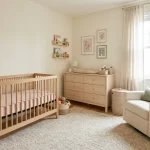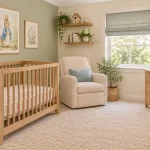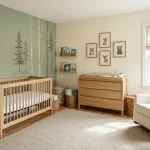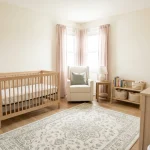
Quick answer:
The best Peter Rabbit nursery decor brings Beatrix Potter’s charming storybook world to life through soft sage green, warm cream, natural wood, and delicate botanical details. Instead of filling the room with rabbit-themed accessories, create a timeless look with classic Peter Rabbit artwork, subtle garden-inspired accents, and practical furniture. The key is balancing nostalgic charm with a calm, uncluttered design that can grow with your baby. For safety, keep the crib free of toys, pillows, and loose bedding, and position all wall decorations securely away from the sleep area.
What makes a Peter Rabbit nursery feel like a charming English countryside cottage rather than a room filled with cartoon characters? It’s the thoughtful details that bring Beatrix Potter’s beloved storybook world to life.
Inspired by The Tale of Peter Rabbit, this timeless nursery style captures the beauty of peaceful gardens, woodland creatures, and vintage illustrations. Soft sage greens, warm creams, natural wood, and delicate botanical patterns create a welcoming atmosphere that feels both playful and calming.
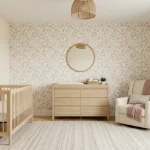
But creating beautiful Peter Rabbit nursery decor takes more than choosing adorable rabbit accessories. Too many themed decorations can overwhelm a small room, while poorly placed artwork, shelves, or hanging details can create unnecessary safety risks around the crib. The challenge is finding the right balance between storybook charm, practical furniture, and a comfortable space for everyday baby care.
If you love traditional Beatrix Potter illustrations, a modern woodland aesthetic, or a subtle vintage-inspired design, these Peter Rabbit nursery decor ideas will help you choose coordinating colors, create meaningful focal points, and avoid common decorating mistakes. You’ll discover how to bring this classic theme into your baby’s room without sacrificing comfort, functionality, or room to grow.
1. Classic Peter Rabbit Nursery Decor With Soft Pastel Colors
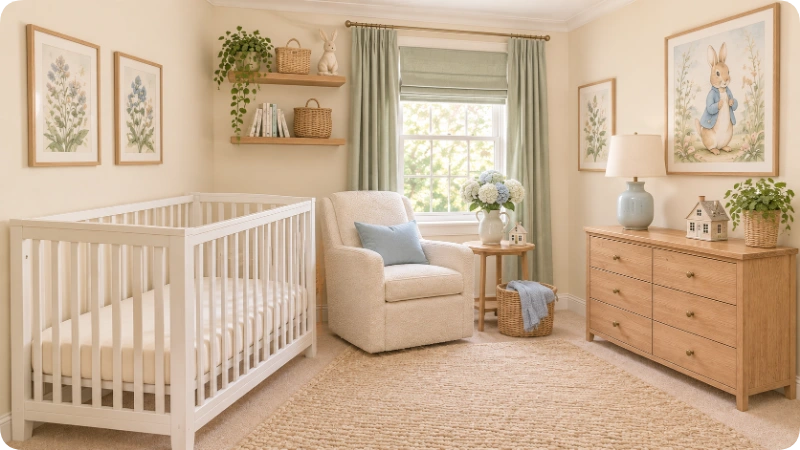
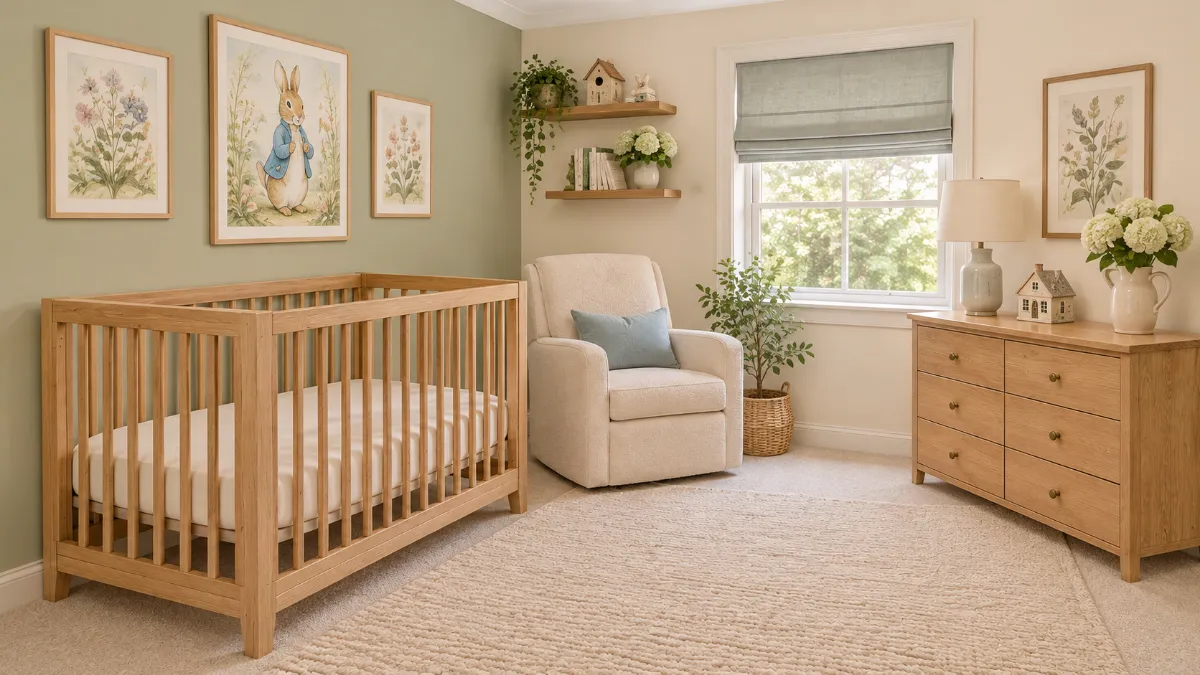
A traditional Peter Rabbit nursery draws inspiration from the gentle watercolor illustrations associated with Beatrix Potter’s stories.
Soft sage green, pale blue, warm cream, and muted beige create a peaceful backdrop for botanical artwork and rabbit-themed decorations.
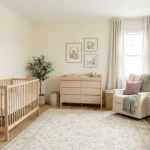
Start with warm ivory walls and introduce color through curtains, a washable rug, framed prints, and storage accessories. Natural oak furniture works especially well because its warm tones complement the countryside theme.
For a recognizable Peter Rabbit look, consider one licensed character print featuring the familiar blue jacket. Pair it with simpler botanical artwork rather than filling every wall with character illustrations.
Best for: Parents who want a recognizable, traditional Peter Rabbit theme without overwhelming the room.
Styling tip: Use pale blue as a small accent rather than the main wall color. This makes the theme easier to adapt as your child grows.
2. Sage Green Peter Rabbit Nursery With Botanical Details
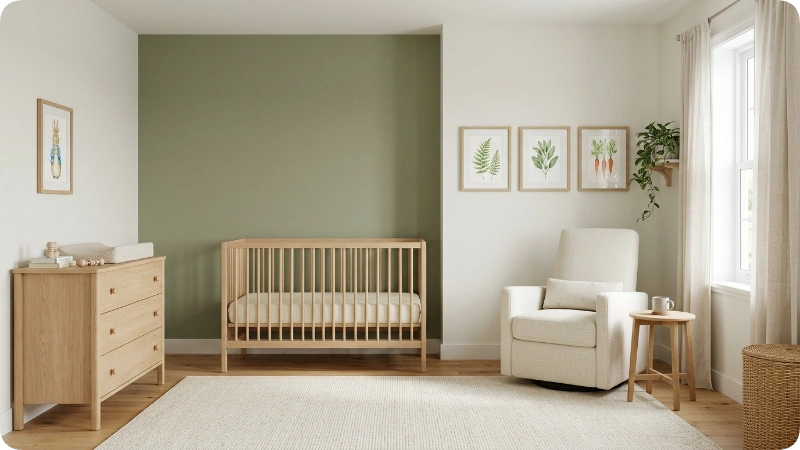
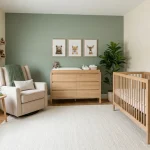
Sage green is an excellent foundation for a Peter Rabbit-inspired nursery because it echoes the garden setting of the original stories.
Choose a muted sage wall color with warm undertones and pair it with ivory furniture, light wood, and natural woven textures.
Botanical prints featuring garden vegetables, leaves, and wildflowers can suggest the storybook setting without relying entirely on character merchandise.
For a balanced arrangement:
- Paint one wall sage green and keep the remaining walls warm white.
- Choose a natural wood or white crib with simple lines.
- Hang lightweight-looking botanical prints securely on a wall away from the crib.
- Use cream curtains and a low-pile washable rug.
- Add a small rabbit figurine to a high, secure display area outside the child’s reach.
A sage green nursery also transitions easily into a toddler or older child’s bedroom. Removing a few character-specific accessories can create a more general nature-inspired space without repainting.
3. Vintage Peter Rabbit Nursery With Storybook Charm
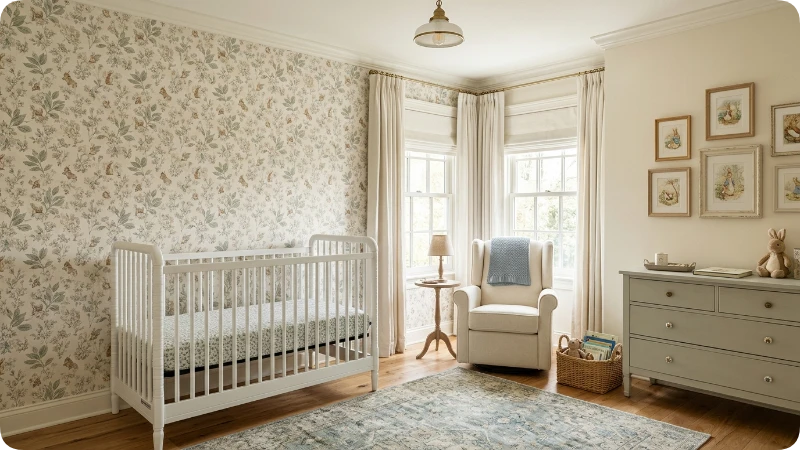
A vintage Peter Rabbit nursery works best when it feels collected and gentle rather than crowded with antiques.
The design can include traditional furniture shapes, faded botanical patterns, cream walls, and softly aged-looking decorative finishes.
A painted wooden dresser with simple knobs can provide the main vintage element. Combine it with a modern safety-compliant crib instead of using an antique crib, which may not meet current safety requirements.
Other suitable details include:
- Framed licensed storybook illustrations.
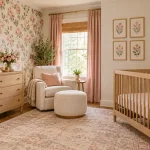
- Delicate floral wallpaper on a feature wall.
- A traditional upholstered feeding chair.
- Muted blue and dusty green accessories.
- Decorative vintage-style storage boxes kept securely out of reach.
Avoid relying on fragile antique objects in accessible areas. Older painted furniture also deserves caution because some finishes may contain lead.
Best for: A traditional nursery with a nostalgic English cottage atmosphere.
4. Peter Rabbit Nursery Wallpaper for a Gentle Feature Wall
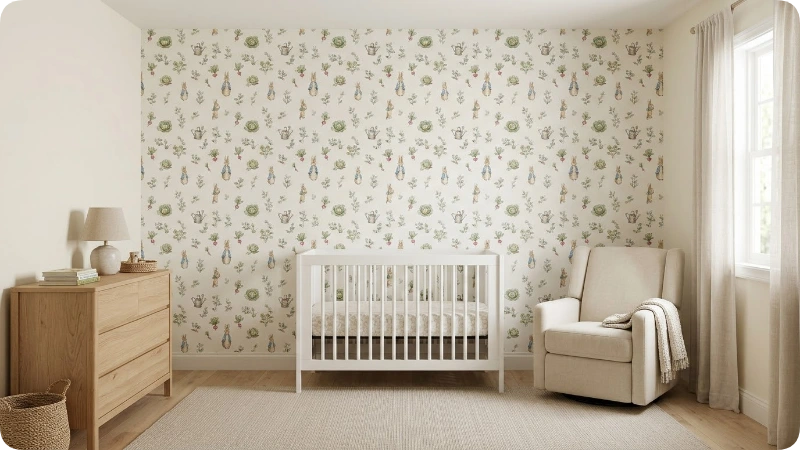
Wallpaper can establish the nursery theme without requiring numerous separate decorations.
A single accent wall is usually more effective than covering the entire room with detailed character patterns.
Three wallpaper approaches work particularly well.
Licensed Peter Rabbit wallpaper
Choose an appropriately licensed design with recognizable characters and a muted color palette. Smaller repeating illustrations can create a traditional storybook appearance.
Botanical garden wallpaper
A pattern featuring small leaves, garden vegetables, wildflowers, or climbing vines captures the countryside setting without making the room character-dependent.
Subtle woodland wallpaper
Rabbit silhouettes, scattered foliage, and delicate meadow patterns offer a quieter interpretation of the theme.
For smaller nurseries, consider wallpaper with a light background and widely spaced motifs. Dense, high-contrast patterns can make a compact room feel visually crowded.
Install wallpaper according to the manufacturer’s instructions. Ensure seams and edges are secure, particularly as your child becomes mobile, and choose materials appropriate for a nursery environment.
5. Peter Rabbit Nursery Wall Art and Storybook Prints
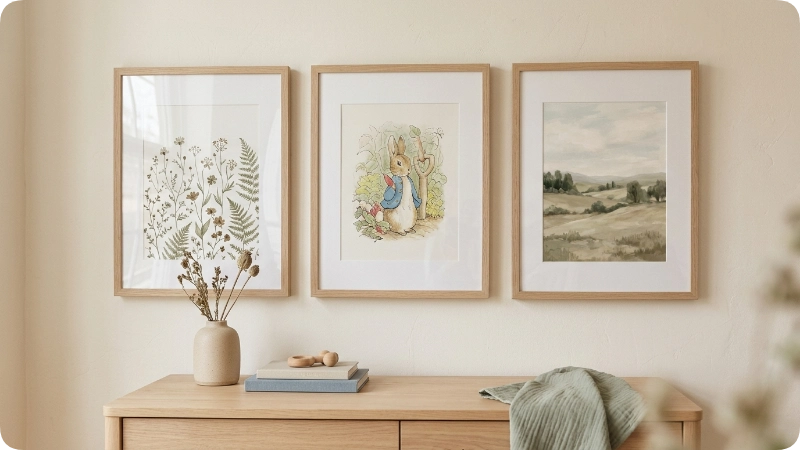
Wall art is one of the simplest ways to introduce Peter Rabbit nursery decor without changing the furniture or wall color.
A small gallery arrangement can combine licensed character illustrations with botanical artwork and soft landscape prints.
For example, arrange three coordinated pieces above a dresser: one Peter Rabbit illustration, one garden-themed print, and one simple botanical design.
Keep the frames consistent in material or color so the collection feels intentional.
Natural wood, cream, or understated white frames generally suit this theme better than highly decorative metallic finishes.
Placement matters: Secure frames with suitable hardware and follow wall and frame manufacturer instructions. Do not hang framed art, shelves, or other objects above the crib where they could fall into the sleep space.
For renters, a single larger print on an appropriate wall may be more practical than several installations.
6. Peter Rabbit Nursery Bedding and Soft Textiles
Textiles can bring the theme together through color, pattern, and texture, but nursery bedding should be chosen primarily for safe sleep.
For an infant, use a firm, flat mattress designed for the crib and a properly fitted sheet. Keep pillows, quilts, comforters, crib bumpers, stuffed animals, and other loose items out of the crib.
A Peter Rabbit-themed fitted crib sheet can provide a decorative touch while keeping the sleep surface simple.
Other ways to introduce coordinated textiles include:
- A washable cream-and-sage rug.
- Window curtains with subtle botanical patterns.
- A patterned changing-pad cover compatible with the changing setup.
- A decorative throw on an adult feeding chair, removed or kept out of reach during infant care.
- A wearable blanket or sleep sack appropriate for the baby’s size and the room conditions.
Choose easy-care fabrics because nursery textiles often need frequent washing.
If you receive a Peter Rabbit quilt as a gift, it can be stored or displayed securely outside the sleep area rather than placed in the infant’s crib.
7. Modern Peter Rabbit Nursery With Minimalist Furniture
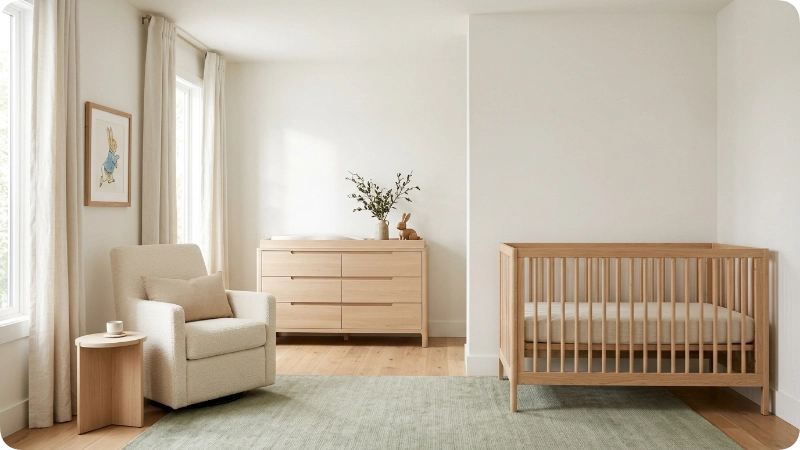
A modern Peter Rabbit nursery uses the storybook theme selectively instead of filling the room with themed products.
Begin with clean-lined furniture, plain walls, and a restrained color palette.
A white crib, light oak dresser, cream chair, and soft green rug create a practical foundation. Add one licensed Peter Rabbit print and a few subtle garden-inspired accessories to establish the theme.
The advantage of this approach is flexibility.
As your child grows, the nursery can change without replacing the main furniture. The Peter Rabbit artwork can eventually be exchanged for different prints while the larger pieces remain useful.
For a more contemporary look, avoid combining several competing character patterns. Let one focal illustration carry the theme.
Best for: Small rooms, modern homes, and parents who prefer a simple nursery that is easy to update.
8. Peter Rabbit Nursery Furniture and Natural Wood Finishes
Furniture has a greater effect on the room’s overall appearance than most small accessories.
For a Peter Rabbit nursery, natural wood, soft white, and warm painted finishes generally work better than glossy or heavily ornamented furniture.
| Furniture | Suitable style | Practical consideration |
| Crib | White or natural wood | Current safety requirements and mattress fit |
| Dresser | Light oak or painted cream | Secure anchoring to prevent tipping |
| Changing setup | Simple wood or white | Compatible equipment and constant supervision |
| Feeding chair | Cream or beige upholstery | Comfortable support and cleanable fabric |
| Storage unit | Low-profile enclosed storage | Stability and safe access |
| Side table | Small, sturdy wood design | Adult convenience and placement away from the crib |
A coordinated furniture set is not necessary. Mixing a white crib with a natural wood dresser can create a more relaxed, cottage-inspired appearance.
Prioritize furniture dimensions and walking space before choosing decorative details.
9. Peter Rabbit Nursery With a Woodland Garden Theme
A woodland garden interpretation expands the theme beyond Peter Rabbit himself.
Instead of relying on repeated character illustrations, use elements associated with a peaceful countryside setting.
Think leafy branches, small garden vegetables, delicate flowers, and understated animal motifs.
A muted green accent wall can serve as the background. Pair it with light wood furniture, a cream rug, and artwork showing garden plants or woodland scenery.
A botanical mobile can be displayed as decorative room art only when securely positioned outside the baby’s reach and away from the crib. Avoid hanging mobiles with accessible strings or detachable pieces over the sleep area.
This approach is particularly useful if you want the room to feel inspired by Beatrix Potter without making every object character-themed.
10. Peter Rabbit Nursery Decor for Small Rooms
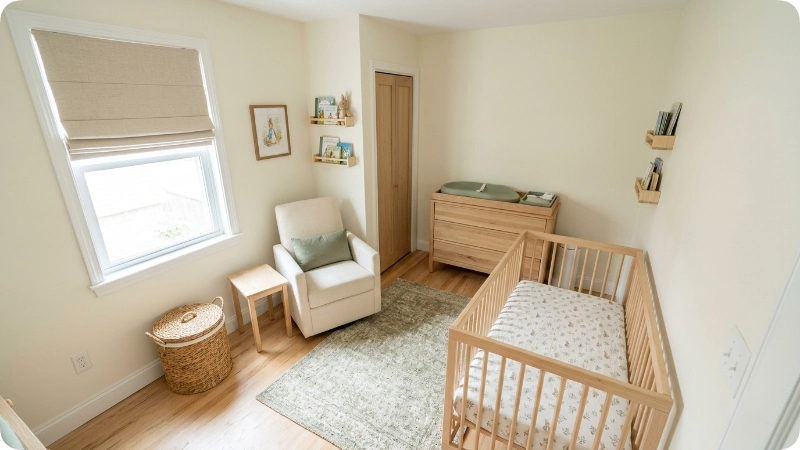
A small nursery benefits from a lighter interpretation of the Peter Rabbit theme.
Instead of adding numerous decorative objects, concentrate on a few pieces that establish the style while preserving useful floor space.
Start with a compact furniture arrangement that allows caregivers to move comfortably between the crib, changing area, and feeding chair.
Use pale wall colors to maintain a bright appearance, and introduce character details through one wall print, a fitted sheet, or a small storage accessory.
A dresser that supports a manufacturer-approved changing setup may reduce the need for a separate changing table.
Choose closed storage or securely anchored furniture where possible. Keep frequently used supplies organized in drawers so they do not accumulate on open surfaces.
A useful design rule: In a small room, give each decorative element a clear purpose. One well-positioned artwork arrangement is often more effective than several small displays.
11. Budget-Friendly Peter Rabbit Nursery Decor Ideas
You do not need to purchase an entire themed furniture collection to create a convincing Peter Rabbit nursery.
A more practical approach is to invest in safe, durable furniture and use affordable decorative accents to establish the theme.
| Budget priority | Where to focus | Where to save |
| Essential | Safe crib and mattress | Reuse suitable existing furniture |
| High | Secure storage and practical lighting | Avoid matching furniture sets |
| Medium | Washable rug and curtains | Choose plain colors instead of branded patterns |
| Low | Character prints and small accessories | Use fewer themed items |
| Optional | Feature wallpaper | Paint one wall instead |
For a low-cost transformation, keep your existing crib and dresser, paint the room a soft neutral color if needed, and add a licensed Peter Rabbit print.
A simple sage green rug or cream curtains can complete the look without a major renovation.
Secondhand dressers may be suitable after checking their condition, stability, finish, and anchoring options. Be especially careful with older painted pieces and avoid secondhand cribs unless you can verify their model, safety compliance, completeness, and recall status.
12. Peter Rabbit Nursery Decor for Boys, Girls, and Gender-Neutral Rooms
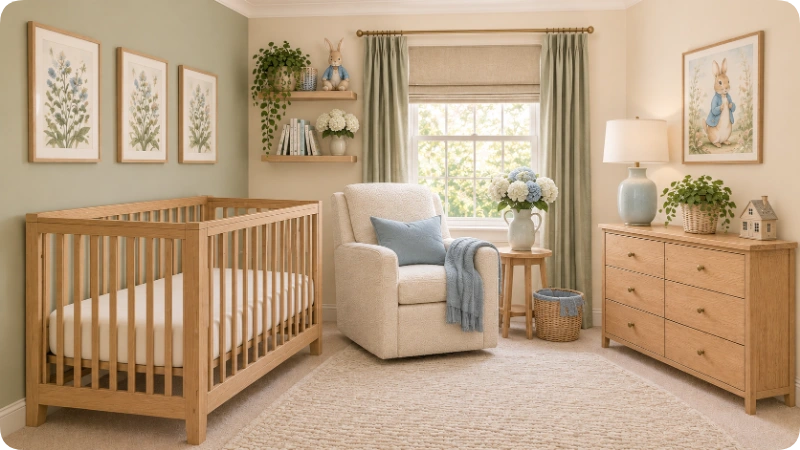
Peter Rabbit decor works naturally in a nursery for any baby.
The theme is based on gardens, animals, and countryside illustrations rather than a particular gender.
You can adjust the mood through color without changing the overall design.
Sage green and cream
A natural, gender-neutral palette with warm wood furniture and botanical artwork.
Dusty blue and ivory
A traditional storybook look that complements Peter Rabbit’s familiar blue jacket.
Muted blush and beige
A softer cottage-garden interpretation with delicate floral details.
Oatmeal and natural oak
A minimalist foundation that keeps the room flexible as your child grows.
Whichever palette you choose, repeating two or three main colors across the furniture, textiles, and artwork will help the room feel connected.
13. How to Create a Coordinated Peter Rabbit Nursery
A successful nursery theme depends more on coordination than on the number of themed items.
Begin with the room’s practical needs, then layer in decorative details.
Step 1: Choose your main color palette
Select one dominant neutral, one soft supporting color, and a small accent color.
For example, warm cream walls, sage green textiles, and pale blue artwork create a balanced traditional palette.
Step 2: Plan the furniture layout
Position the crib away from windows, cords, heaters, and reachable decorations.
Allow enough room for drawers and doors to open comfortably. Place the changing area where supplies can be organized within the caregiver’s reach without creating clutter or hazards.
Step 3: Add one main Peter Rabbit feature
Choose a licensed character print, a wallpaper accent, or another recognizable decorative element.
This gives the room a clear identity without requiring numerous themed accessories.
Step 4: Introduce natural textures
Light wood furniture, washable cotton textiles, and a soft rug can make the room feel welcoming.
Keep textures practical. Decorative tassels, long cords, loose fabrics, and small detachable pieces should not be accessible to the baby.
Step 5: Finish with useful accessories
Choose storage baskets, drawer organizers, and appropriate lighting that support daily routines.
Decorative items should remain secondary to comfort, safety, and convenience.
14. Common Peter Rabbit Nursery Decorating Mistakes
Even a gentle storybook theme can become visually crowded or impractical when too many decorative elements compete for attention.
Using too many character prints: Repeating Peter Rabbit across wallpaper, curtains, bedding, furniture, and accessories can make the room feel busy. Choose one or two focal pieces and let simpler patterns support them.
Choosing appearance over furniture safety: An antique-looking crib may suit the theme visually, but it is not a substitute for a crib that meets current safety requirements.
Installing decorations too close to the crib: Wall shelves, heavy frames, hanging decorations, and reachable cords can create hazards. Keep these away from the sleep space and secure all furniture and wall-mounted items appropriately.
Ignoring cleaning needs: Delicate fabrics and heavily textured accessories may be difficult to maintain. Favor washable textiles and easy-clean surfaces.
Buying everything in matching sets: A room can feel more natural when coordinated through color and material rather than identical character patterns.
Overlooking future changes: Permanent character wallpaper throughout the room may be harder to update than framed prints or removable decorative accents.
Frequently Asked Questions
Is Peter Rabbit nursery decor suitable for a gender-neutral nursery?
Yes. Peter Rabbit nursery decor works well with sage green, cream, beige, dusty blue, and natural wood. These colors create a gentle storybook setting without requiring gender-specific styling.
Where can I use Peter Rabbit decorations safely in a nursery?
Use securely installed wall art away from the crib, themed storage accessories outside the baby’s reach, and suitable fitted crib sheets. Keep toys, pillows, loose blankets, and other decorative items out of the infant’s sleep space.
Can I create a Peter Rabbit nursery without buying licensed character wallpaper?
Yes. Botanical prints, muted garden colors, light wood furniture, and subtle rabbit-inspired details can create a countryside atmosphere. If you want recognizable Peter Rabbit character artwork, choose appropriately licensed products rather than reproducing protected illustrations.
What color furniture works best with Peter Rabbit nursery decor?
White, cream, and light natural wood are versatile choices. They coordinate with soft green, pale blue, and botanical patterns while allowing the room to change over time.
Can Peter Rabbit nursery decor work in a modern home?
Yes. Use minimalist furniture, neutral walls, and a small number of storybook accents. A single framed Peter Rabbit print with a sage rug and light oak dresser can create a modern interpretation without overwhelming the room.
How can I make a Peter Rabbit nursery last beyond the baby stage?
Choose adaptable furniture and a neutral base, then use removable accessories for the theme. Artwork, rugs, and storage accents are easier to replace than built-in furniture or extensive wallpaper.
Conclusion
Peter Rabbit nursery decor works best when storybook charm supports a practical, comfortable room rather than competing with it.
A soft color palette, natural wood furniture, botanical details, and a few licensed character accents can create a recognizable theme without making the space feel crowded.
For a traditional nursery, choose sage green walls, vintage-inspired details, and framed storybook art. For a modern room, keep the furniture simple and introduce the theme through one or two carefully selected accessories.
Start by choosing the furniture layout and a color palette that suits your space. Once those foundations are in place, add Peter Rabbit details gradually, keeping the baby’s sleep area clear and prioritizing safe, durable furnishings.

I am Emma Brooks, a passionate Interior Design Writer and Home Décor Enthusiast at Decoridia. I share well-researched content on home décor, interior design, DIY decorating ideas, furniture selection, color palettes, home organization, and seasonal styling, helping readers create beautiful, functional, and inspiring living spaces for every lifestyle.