Quick answer:
Baby girl nursery themes can be charming without relying on pink walls or elaborate decor. From floral gardens and woodland retreats to vintage, coastal, and celestial designs, the possibilities go beyond the usual. The key is choosing a cohesive color palette, versatile furniture, and a few meaningful details that bring the theme to life. Keep the layout practical, the crib free of decorations, and the design flexible enough to grow with your baby.
A nursery can look absolutely beautiful in photos, yet feel completely different once the crib, changing essentials, and everyday baby gear are in place. That’s why choosing a baby girl nursery theme takes more than falling in love with a wallpaper pattern or a pretty color palette.
What makes some nurseries feel effortlessly charming while others look overly decorated? Often, it’s the small decisions that aren’t immediately obvious: how patterns interact, where furniture fits, and which details deserve attention. A floral nursery doesn’t need flowers on every wall, and a vintage-inspired room doesn’t have to feel old-fashioned.
From soft botanical spaces to playful storybook settings and timeless vintage designs, these 15 baby girl nursery themes explore how to create a room that feels personal, thoughtfully styled, and comfortable for everyday life without unnecessary clutter or expense.
1. Woodland Baby Girl Nursery Theme
BEST FOR: Natural textures and a calm, nature-inspired room
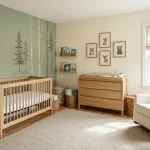
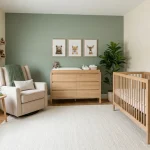
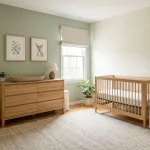
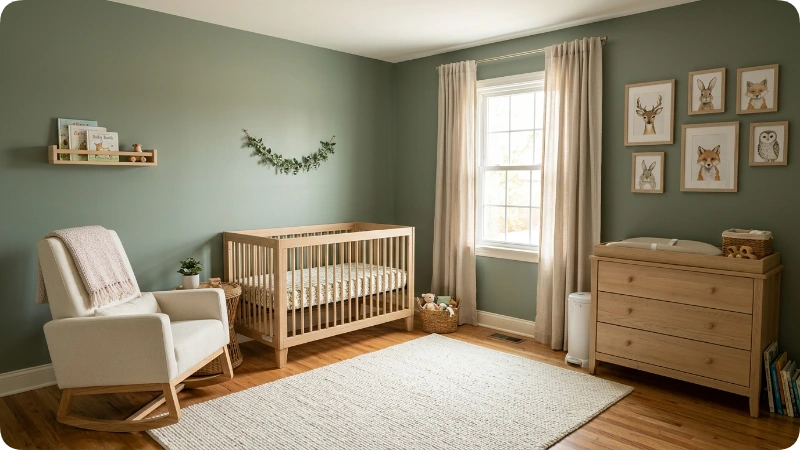
A woodland nursery brings the gentle colors and textures of the outdoors inside. Think muted sage walls, natural wood furniture, warm cream fabrics, and subtle illustrations of forest animals.
Rather than covering the room with animal prints, use a few recognizable woodland details to establish the theme.
How to create the look:
- Paint one wall muted sage or keep the walls warm white.
- Choose a natural oak or light wood crib.
- Add framed illustrations of deer, rabbits, foxes, or trees on a wall away from the crib.
- Use a washable cream rug to soften the floor.
- Introduce forest green through storage baskets, curtains, or adult-use accessories.
A woodland theme works particularly well with existing wooden furniture. You can refresh the room with paint and artwork instead of replacing major pieces.
Design tip: Choose either woodland animals or botanical prints as the main decorative focus. Using both heavily can make the room feel visually busy.
2. Floral Garden Nursery Theme
BEST FOR: Romantic details, soft colors, and traditional charm
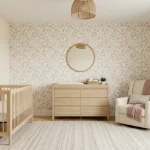
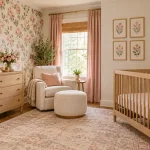
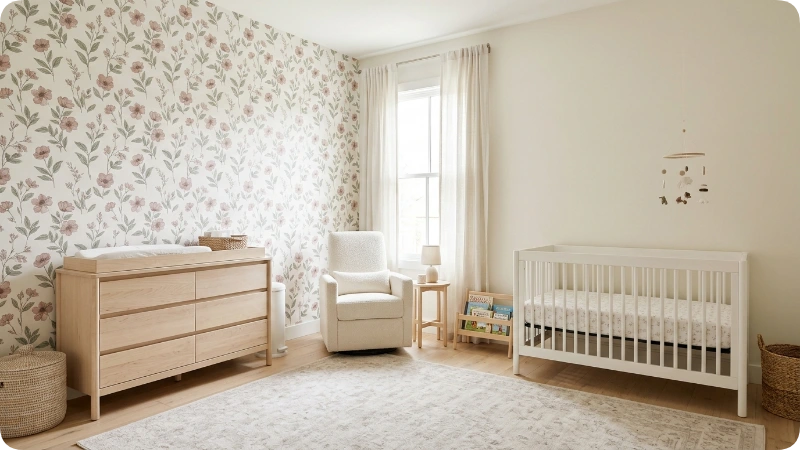
A floral garden theme creates a soft, cheerful atmosphere through botanical patterns, delicate colors, and classic furniture.
The key is controlling the scale of the floral print. Large flowers make a stronger visual statement, while tiny scattered flowers create a quieter, vintage-inspired look.
How to create the look:
- Use dusty rose, ivory, pale peach, and muted green.
- Install floral wallpaper on one wall or choose removable wallpaper where appropriate.
- Pair patterned walls with a simple white crib.
- Add a light wood dresser and a comfortable cream feeding chair.
- Repeat one color from the wallpaper in curtains or a washable rug.
For a small nursery, keep the other walls plain. This gives the floral pattern room to stand out without overwhelming the space.
Design tip: Floral wallpaper doesn’t have to be pink. Cream backgrounds with olive, lavender, or soft blue flowers can feel equally gentle and give you more flexibility as your child grows.
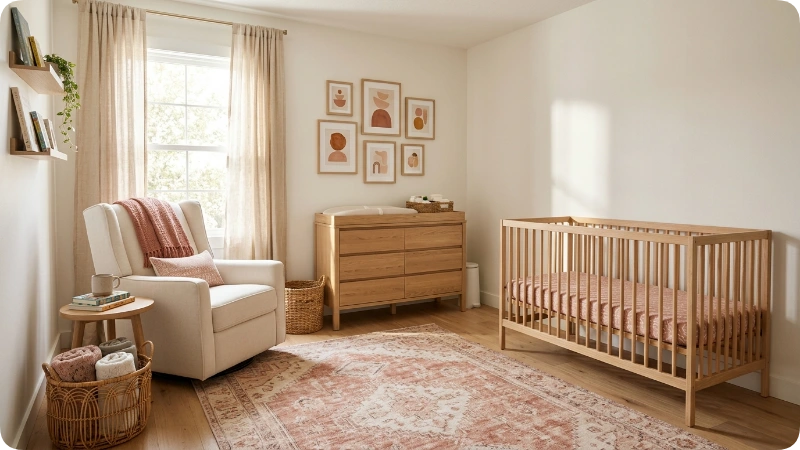
3. Soft Boho Baby Girl Nursery Theme
BEST FOR: Relaxed styling, warm neutrals, and layered textures
A boho nursery uses earthy colors, natural-looking materials, and varied textures to create a relaxed atmosphere.
Unlike a floral or character-based theme, boho style relies more on materials and color than decorative motifs.
Start with warm white walls, a light wood crib, and a simple dresser. Then add terracotta, muted blush, or caramel through a rug, window treatments, and storage accessories.
How to create the look:
- Combine ivory, sand, muted terracotta, and soft blush.
- Choose a washable rug with a subtle geometric pattern.
- Use woven-look storage baskets that are stable and kept out of the baby’s reach.
- Add a comfortable upholstered chair with easy-clean fabric.
- Display simple abstract artwork on a wall away from the crib.
Skip loose macramé, hanging tassels, and low decorative cords near the sleep area. The room can still have a bohemian character through furniture, colors, and textiles.
Design tip: Mix textures, not too many patterns. A textured chair, woven basket, and patterned rug can create enough variety without additional decorative clutter.
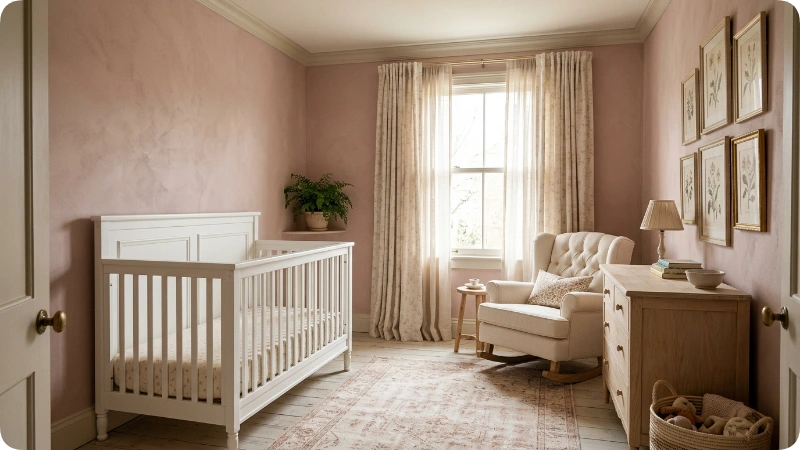
4. Vintage-Inspired Nursery Theme
BEST FOR: Classic furniture, antique-inspired details, and a nostalgic atmosphere
A vintage-inspired nursery feels collected rather than purchased as a matching furniture set. Soft colors, traditional furniture shapes, and old-fashioned artwork give the space character.
The safest way to achieve this style is to combine vintage-looking decorative furniture with a modern crib that meets current safety requirements.
How to create the look:
- Choose dusty pink, buttercream, muted sage, or faded blue.
- Use a contemporary crib with simple traditional styling.
- Consider a secondhand dresser that is sturdy and can be securely anchored.
- Add botanical prints, illustrated alphabet artwork, or reproduction vintage pictures.
- Select understated hardware and softly patterned window treatments.
If you refurbish older furniture, check its condition and finish carefully. Older painted surfaces may contain lead, and any refinishing should follow appropriate safety precautions.
Design tip: One distinctive dresser or framed print can establish the vintage character. You don’t need to fill the room with antiques.
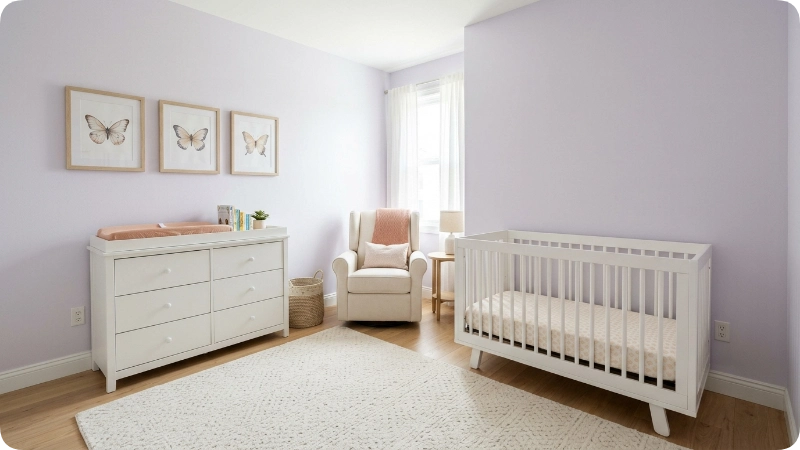
5. Butterfly Nursery Theme
BEST FOR: Playful elegance and delicate decorative details
A butterfly nursery feels light and playful without requiring bold colors or elaborate furniture.
Butterflies work especially well as a decorative accent because their shapes can be introduced through framed artwork, wallpaper, or printed fabrics.
How to create the look:
- Start with pale lavender, blush, cream, or muted peach.
- Choose butterfly artwork with a consistent illustration style.
- Keep the crib and dresser simple.
- Use subtle botanical details to connect the butterflies to a garden setting.
- Add a soft-colored rug to balance the wall decorations.
Avoid attaching lightweight paper butterflies, stickers, or dimensional decorations directly above the crib, where they could detach and fall.
Design tip: Choose either colorful watercolor butterflies or neutral line drawings. Both can work beautifully, but mixing several illustration styles may weaken the overall look.
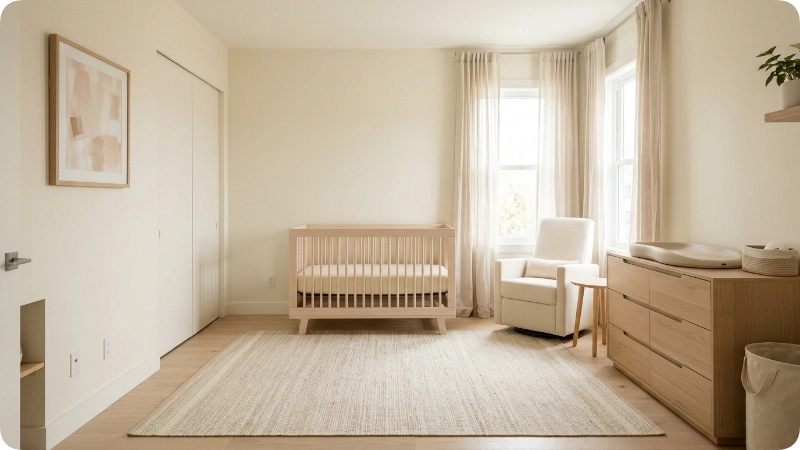
6. Modern Minimalist Nursery Theme
BEST FOR: Small rooms, simple furniture, and easy maintenance
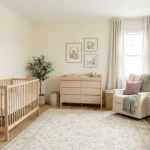
A modern minimalist nursery focuses on clean lines, open floor space, and furniture that serves a clear purpose.
It doesn’t have to feel cold or empty. Warm colors, natural wood, and comfortable upholstery can make a simple room feel welcoming.
How to create the look:
- Choose warm white, beige, pale gray, or muted blush walls.
- Use a crib with a straightforward silhouette.
- Select a dresser with enough storage to reduce visible clutter.
- Add one framed artwork grouping rather than multiple small decorations.
- Use a washable neutral rug and simple window coverings.
This theme is especially useful when the nursery shares space with a bedroom or home office.
Design tip: Leave some surfaces intentionally empty. Visual breathing room is part of the design, and it makes everyday cleaning easier.
7. Celestial Moon and Stars Nursery Theme
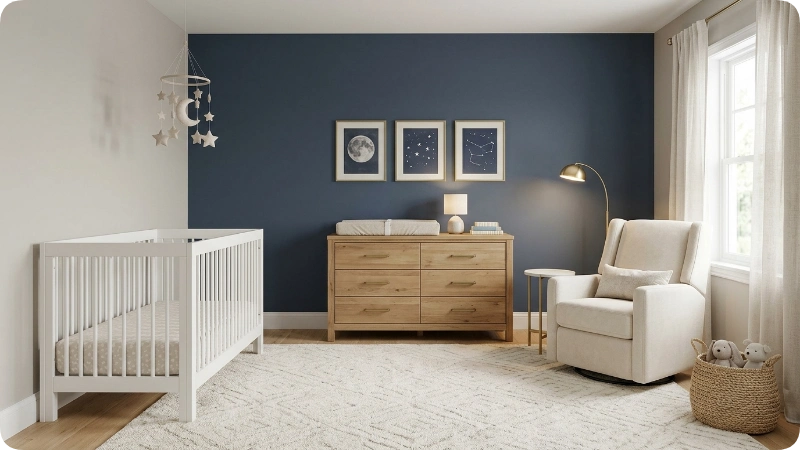
BEST FOR: Dreamy colors and gentle nighttime-inspired decor
A celestial nursery uses moons, stars, and night-sky colors to create a peaceful, imaginative setting.
Although dark blue is a natural choice, a celestial theme can also work with cream, lavender, warm gray, or dusty rose.
How to create the look:
- Choose one accent color, such as muted navy or smoky lavender.
- Use framed moon and star illustrations rather than loose hanging decorations.
- Pair darker walls with a white or pale wood crib.
- Add soft, indirect lighting for nighttime care.
- Keep window coverings simple and cordless.
A darker accent wall can look particularly effective behind a light-colored dresser or reading chair.
Design tip: Use metallic accents sparingly. A little brushed brass in a lamp or picture frame can suggest starlight without making the room overly decorative.
8. Coastal Baby Girl Nursery Theme
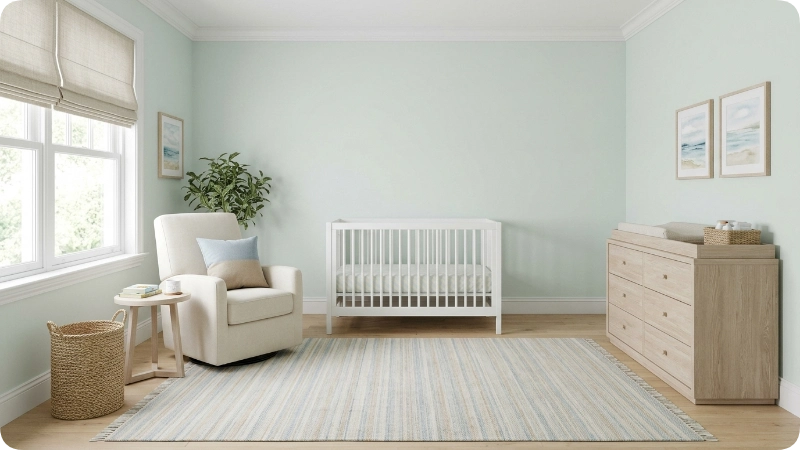
BEST FOR: Airy rooms, relaxed colors, and a fresh atmosphere
A coastal nursery draws inspiration from the beach through pale blues, sandy neutrals, natural textures, and an uncluttered layout.
You don’t need seashell decorations or nautical accessories everywhere. The coastal feeling can come primarily from color and materials.
How to create the look:
- Combine soft seafoam, sandy beige, white, and pale blue.
- Use light wood or white furniture.
- Choose a washable rug with a subtle stripe or organic pattern.
- Add framed ocean-inspired artwork on a wall away from the crib.
- Keep fabrics light in appearance while ensuring window treatments are safely installed.
For a more feminine interpretation, introduce a small amount of peach or coral rather than relying entirely on blue.
Design tip: Coastal rooms benefit from restrained contrast. Pale furniture, soft walls, and a slightly darker rug can create depth without losing the airy feeling.
9. Rainbow Nursery Theme
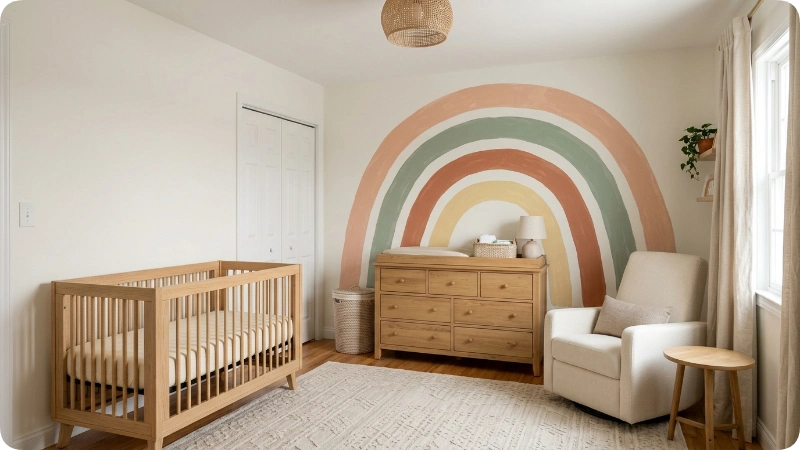
BEST FOR: Cheerful color without an overly bright room
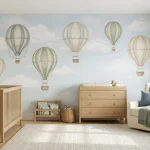
A rainbow nursery can be colorful without becoming overwhelming.
Instead of using saturated rainbow colors on every surface, try a muted palette of peach, sage, dusty pink, pale yellow, and terracotta.
How to create the look:
- Keep most walls warm white.
- Add a painted rainbow mural to a wall away from the crib.
- Choose simple natural wood furniture.
- Repeat two or three mural colors in small accessories.
- Keep the rug and larger textiles neutral.
A painted mural can be more economical than purchasing several matching decorative pieces, particularly if you already have the necessary supplies.
Design tip: Let the rainbow be the main decorative feature. Too many competing patterns can make the room feel more like a playroom than a restful nursery.
10. Storybook Nursery Theme
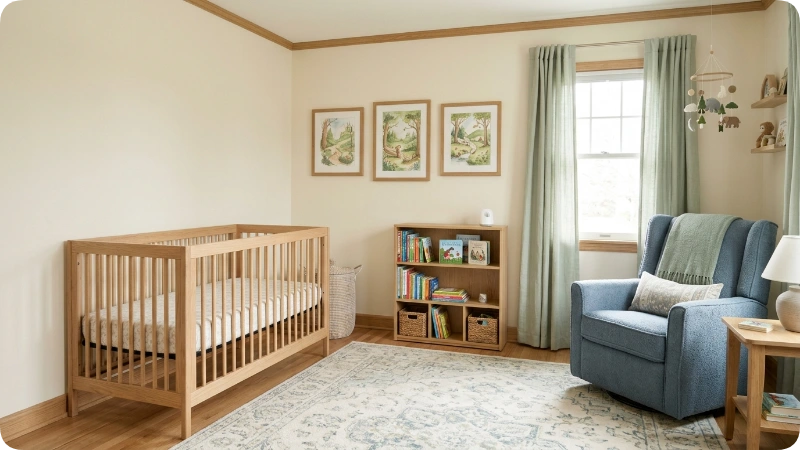
BEST FOR: Whimsical illustrations and a nursery that encourages reading
A storybook nursery takes inspiration from illustrated children’s books, gentle fantasy scenes, and classic storytelling.
The strongest version of this theme feels imaginative without filling every wall with characters.
How to create the look:
- Choose a soft background color such as cream, pale green, or powder blue.
- Display framed illustrations with a consistent artistic style.
- Add a stable, anchored bookshelf in a suitable location.
- Create a comfortable adult reading corner.
- Use colorful book covers as part of the room’s everyday visual character.
You can choose licensed artwork from a favorite children’s book or use original illustrations inspired by forests, gardens, and imaginary landscapes.
Design tip: A reading chair and accessible book storage make this theme functional as your child grows. Arrange books for adult use initially, then adjust storage as your child becomes mobile.
11. French Country Nursery Theme
BEST FOR: Refined details, soft patterns, and traditional interiors
A French country nursery blends traditional furniture, delicate patterns, and understated colors.
Its charm comes from balanced proportions and decorative details rather than large amounts of furniture.
How to create the look:
- Use ivory, faded blue, muted rose, or soft sage.
- Introduce a delicate toile or botanical pattern on one wall.
- Choose white or light wood furniture with classic lines.
- Add a simple upholstered chair.
- Use framed prints and understated hardware to complete the room.
A small nursery can still support this theme. Keep the walls mostly light and limit patterned elements to one or two areas.
Design tip: Choose one traditional detail to emphasize, such as toile wallpaper or a curved dresser front. Combining too many ornate features can make a small room feel crowded.
12. Safari and Animal Nursery Theme
BEST FOR: Warm earthy colors and cheerful animal illustrations
A safari nursery introduces animal illustrations and earthy colors for a playful but grounded design.
Unlike a woodland theme, which usually emphasizes forest greens and temperate woodland animals, a safari theme works with sandy beige, ochre, terracotta, and olive.
How to create the look:
- Start with warm beige or ivory walls.
- Choose a natural wood crib and matching or complementary dresser.
- Add framed illustrations of giraffes, elephants, or lions.
- Use olive and terracotta in small decorative accents.
- Choose a washable rug in a neutral color.
Keep plush animals on shelves or in secure storage away from the crib rather than using them as sleep accessories.
Design tip: Animal artwork in a matching color palette looks more coordinated than mixing brightly colored cartoon animals with realistic wildlife prints.
13. Lavender Nursery Theme
BEST FOR: A soft alternative to traditional pink
A lavender nursery uses color as the main design feature rather than relying on a specific decorative motif.
Soft lavender pairs well with white, cream, pale wood, and muted green. The result can feel delicate without becoming overly sweet.
How to create the look:
- Paint the walls a pale, muted lavender.
- Use white or light oak furniture.
- Choose cream upholstery and a neutral rug.
- Add small sage accents through framed prints or storage.
- Keep patterns subtle so the wall color remains the focus.
Test paint samples in both daylight and artificial light. Some lavender shades appear cooler or grayer as the lighting changes.
Design tip: A gray-based lavender is often easier to coordinate with neutral furniture than a highly saturated purple.
14. Cottagecore Nursery Theme
BEST FOR: Cozy traditional styling and gentle countryside details
A cottagecore nursery celebrates simple countryside details: small floral patterns, gingham, painted furniture, and warm natural materials.
It shares some characteristics with vintage and floral nurseries, but its overall mood is more casual and homey.
How to create the look:
- Choose buttercream, pale sage, soft peach, or dusty blue.
- Use a small-scale floral wallpaper or a subtle gingham pattern.
- Pair a modern crib with a painted, securely anchored dresser.
- Add framed botanical illustrations.
- Choose washable fabrics that suit everyday nursery use.
If you enjoy DIY projects, updating the finish of a suitable dresser can help establish the look without changing the entire furniture set. Follow the manufacturer’s guidance and use appropriate precautions for surface preparation and coatings.
Design tip: Limit the room to one main pattern and one supporting pattern. Small florals and gingham can work together when their colors are closely related.
15. Scandinavian-Inspired Nursery Theme
BEST FOR: Practical layouts, light wood, and long-term flexibility
A Scandinavian-inspired nursery emphasizes useful furniture, natural light, simple shapes, and a restrained color palette.
While it overlaps with minimalist design, Scandinavian interiors often introduce more visible natural wood and a few playful color accents.
How to create the look:
- Use warm white or pale gray walls.
- Choose birch, ash, or light oak furniture.
- Add muted peach, dusty blue, or sage through artwork.
- Use practical closed storage to reduce clutter.
- Keep the furniture arrangement open and easy to navigate.
This theme is particularly adaptable. As your child grows, you can update artwork, bedding appropriate to their age, and storage without changing the entire room.
Design tip: Choose furniture for its dimensions and function first. Matching wood tones perfectly matters less than keeping the overall palette balanced.
How to Choose the Right Baby Girl Nursery Theme
The best theme is not necessarily the one with the most elaborate decorations. It is the one that works with your room, furniture, budget, and everyday routine.
Use this comparison to narrow down your options.
| Nursery theme | Main colors | Overall feel | Practical advantage |
| Woodland | Sage, cream, oak | Natural and calm | Works with wood furniture |
| Floral garden | Blush, ivory, green | Romantic | Strong decorative focal point |
| Soft boho | Sand, terracotta, cream | Relaxed | Easy to mix textures |
| Vintage | Dusty pink, cream | Nostalgic | Allows selective furniture reuse |
| Butterfly | Lavender, peach | Playful | Artwork can be changed easily |
| Minimalist | White, beige, blush | Clean and simple | Less visible clutter |
| Celestial | Navy, lavender, cream | Dreamy | Flexible lighting and color choices |
| Coastal | Seafoam, blue, sand | Light and airy | Suits bright rooms |
| Rainbow | Peach, sage, yellow | Cheerful | Colorful without matching sets |
| Storybook | Cream, green, blue | Whimsical | Supports a reading area |
| French country | Ivory, faded blue | Refined | Traditional furniture appeal |
| Safari | Beige, olive, terracotta | Playful and earthy | Easy-to-find color combinations |
| Lavender | Lavender, white | Soft and delicate | Simple color-led design |
| Cottagecore | Sage, cream, peach | Warm and homey | Supports DIY accents |
| Scandinavian | White, oak, muted accents | Practical and airy | Easy to adapt over time |
Consider Your Room Size
For a small nursery, minimalist, Scandinavian, coastal, and simple lavender themes can be easier to execute because they don’t require many decorative elements.
That doesn’t mean dark walls or bold patterns are off-limits. A small room can support a strong feature wall when the remaining surfaces and furniture are visually restrained.
Consider How Long You Want the Theme to Last
Woodland, coastal, Scandinavian, and minimalist designs can transition into toddler and children’s rooms with relatively few changes.
Highly specific motifs, such as butterflies or illustrated animals, can also be flexible when they appear mainly in removable artwork rather than permanent finishes.
Consider What You Already Own
If you already have a white crib and dresser, floral, French country, coastal, and lavender themes are easy starting points.
Natural wood furniture works especially well with woodland, boho, safari, and Scandinavian-inspired designs.
Reusing suitable furniture can have a greater impact on your budget than choosing inexpensive decorative accessories.
Baby Girl Nursery Color Combinations That Work
A nursery color palette should support the chosen theme without making every item match exactly.
Sage + Warm White + Oak
Woodland or Scandinavian
Dusty Rose + Cream + Olive
Floral or vintage
Lavender + Ivory + Pale Wood
Butterfly or lavender
Seafoam + Sand + White
Coastal
Terracotta + Beige + Sage
Boho or safari
A useful starting point is to choose one main wall color, one furniture finish, and one or two accent colors.
For example, a woodland nursery might use warm white walls, an oak crib, sage artwork, and a cream rug. This creates a recognizable theme without making every object green.
If you prefer a stronger color, use it on a single wall or in a defined area. This makes it easier to adjust the room later.
How to Decorate a Baby Girl Nursery on a Budget
A nursery theme doesn’t require a complete furniture set or custom decorations.
Start with the items that affect daily care and safety, then use affordable decorative changes to establish the look.
Prioritize these purchases:
- A crib and mattress that meet current safety requirements.
- Suitable clothing and supply storage, with furniture anchored where required.
- A safe changing arrangement that fits your routine.
- Practical lighting and cordless window coverings.
- A comfortable adult feeding chair if space and budget allow.
Once these essentials are addressed, choose one or two decorative features that communicate the theme.
For example, a floral nursery might need only a wallpaper accent, two framed prints, and a muted rug. A woodland nursery could rely on sage paint, wood furniture, and animal illustrations.
Affordable Ways to Create a Theme
- Paint instead of wallpaper: A single painted accent wall can establish the palette without adding many accessories.
- Reuse existing furniture: A suitable dresser can often work with several decorating styles.
- Choose inexpensive framed prints: Matching artwork can establish a clear theme without filling every wall.
- Use removable accents selectively: Choose products appropriate for the surface and follow installation instructions.
- Buy practical storage: Attractive bins and organizers can support the design while serving a daily purpose.
Avoid buying decorative crib pillows, bumpers, loose blankets, or sleep-positioning accessories simply to complete a themed look. These do not belong in an infant’s sleep space.
How to Combine Two Nursery Themes Without Making the Room Look Busy
You don’t have to choose a single theme if two styles genuinely complement each other.
The easiest combinations share a similar color palette or material selection.
For example:
- Woodland + Scandinavian: Light wood furniture, sage walls, simple forest illustrations.
- Floral + Vintage: Small botanical prints, traditional furniture, muted pink and cream.
- Boho + Rainbow: Warm neutrals, a muted rainbow mural, natural-looking textures.
- Coastal + Minimalist: Pale blue accents, white furniture, simple artwork.
- Cottagecore + Storybook: Gentle florals, illustrated landscapes, and a comfortable reading area.
Choose one theme as the foundation and let the second appear through a few accents.
A woodland-Scandinavian room, for instance, might use Scandinavian furniture and storage with woodland artwork. Giving both themes equal emphasis can produce a cluttered result.
Nursery Safety Considerations That Affect Your Design
A nursery can be decorative without placing unnecessary items near a sleeping baby.
In the United States, the American Academy of Pediatrics (AAP) recommends a firm, flat sleep surface with a fitted sheet and no loose bedding, pillows, bumper pads, or soft toys in the infant’s sleep space. The Consumer Product Safety Commission (CPSC) provides crib and other nursery product safety requirements.
Keep these principles in mind when decorating:
- Crib placement: Position the crib away from windows, blind cords, curtain cords, and reachable wall decorations.
- Wall artwork: Install framed pictures securely on walls away from the crib, rather than directly above it.
- Furniture stability: Anchor dressers, bookshelves, and other furniture that could tip according to appropriate instructions.
- Lighting: Keep electrical cords inaccessible and install wall-mounted fixtures securely.
- Storage: Keep small objects, loose decorative items, and potentially hazardous supplies out of reach as your child grows.
- Sleep area: Keep the crib free of decorative cushions, stuffed animals, loose blankets, and hanging accessories.
If you choose a canopy, hanging mobile, shelf, or decorative garland, assess If it could fall, be pulled down, or become reachable. Avoid decorative canopies and garlands around the crib. For any mobile, follow the manufacturer’s age, placement, and removal instructions.
Before purchasing or installing nursery products, check current AAP safe-sleep guidance, CPSC requirements, product recalls, and the manufacturer’s instructions.
A beautiful nursery should remain functional and safe as your baby develops new abilities.
Frequently Asked Questions About Baby Girl Nursery Themes
Do baby girl nursery themes have to include pink?
No. Sage green, lavender, cream, soft blue, terracotta, and warm beige all work well in baby girl nurseries. Choose colors based on the atmosphere you want and the furniture you already have rather than traditional gender expectations.
Can I decorate a nursery without painting the walls?
Yes. Neutral walls can support nearly any nursery theme. Use framed artwork, furniture finishes, a washable rug, and carefully selected storage accessories to establish the design. This is especially useful for renters or anyone who wants to avoid permanent changes.
What is a good nursery theme for a room without much natural light?
Warm cream, pale sage, soft peach, and light wood can help a dim room feel more welcoming. A woodland, minimalist, or Scandinavian-inspired theme can work well. Prioritize layered artificial lighting and test paint samples under the room’s actual lighting conditions.
Should the crib and dresser match?
Not necessarily. A white crib can work with an oak dresser, while a natural wood crib can pair with a painted dresser. Repeating colors or materials elsewhere in the room can make different furniture pieces feel coordinated.
When should I finish decorating the nursery?
Aim to complete major painting, furniture assembly, anchoring, and electrical work well before the room is needed. This leaves time for ventilation, checking installations, cleaning, and arranging supplies without rushing. Follow product-specific drying, curing, and safety instructions rather than relying on a fixed number of days.
Can a baby girl nursery theme work in a shared bedroom?
Yes. Use a coordinated palette and a small amount of wall artwork to visually define the baby’s area without dividing the room with unnecessary furniture. Prioritize a safe sleep space, clear circulation, and convenient storage over large decorative installations.
Conclusion
The best baby girl nursery theme is one that feels personal, fits your room, and makes daily care easier.
If you prefer natural materials, woodland and Scandinavian-inspired nurseries are strong choices. For softer traditional styling, floral, vintage, and French country themes offer plenty of possibilities. If you want something more playful, butterfly, rainbow, safari, and storybook designs can introduce character without requiring elaborate decorations.
Start by choosing your favorite theme and three coordinating colors. Then arrange the essential furniture before adding artwork, textiles, and decorative details. This keeps the room practical while giving you a clear design direction.

I am Emma Brooks, a passionate Interior Design Writer and Home Décor Enthusiast at Decoridia. I share well-researched content on home décor, interior design, DIY decorating ideas, furniture selection, color palettes, home organization, and seasonal styling, helping readers create beautiful, functional, and inspiring living spaces for every lifestyle.