Quick answer:
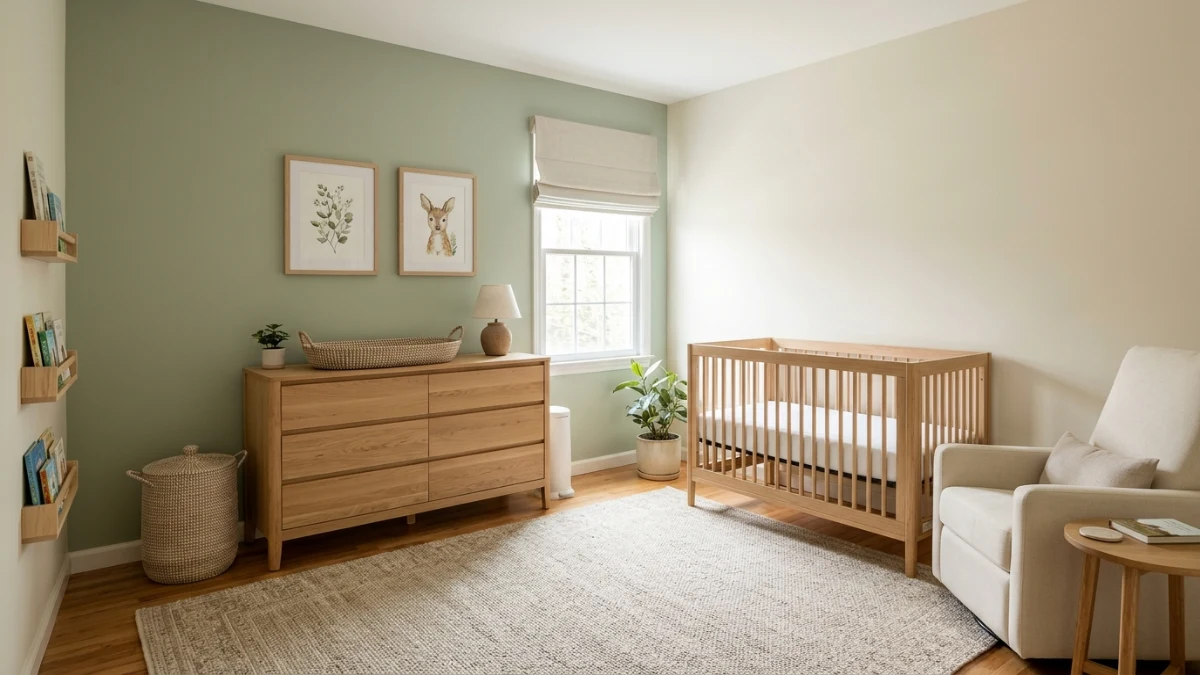
Gender neutral nursery themes go far beyond beige. Woodland, safari, celestial, ocean, and botanical designs bring personality through unexpected colors and thoughtful details. Choose versatile furniture, balance playful accents with calming tones, and keep the crib free of decorations for a safe, stylish space that grows with your baby.
A beautiful nursery isn’t defined by pink, blue, or beige. Sometimes, the most memorable spaces come from unexpected color combinations, playful details, and a theme that reflects your family’s personality.
But here’s what nursery inspiration photos rarely show: how a gorgeous design fits around midnight diaper changes, growing collections of baby essentials, and the need for practical storage. A theme should make everyday life easier, not just look good on the walls.
That’s where thoughtful decorating makes a difference. Whether you’re drawn to woodland adventures, dreamy night skies, or cheerful rainbows, these 17 gender neutral nursery themes will help you create a room that feels personal, works for your space, and can evolve as your child grows.
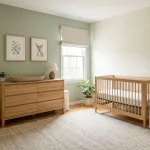
1. Woodland Animal Nursery Theme
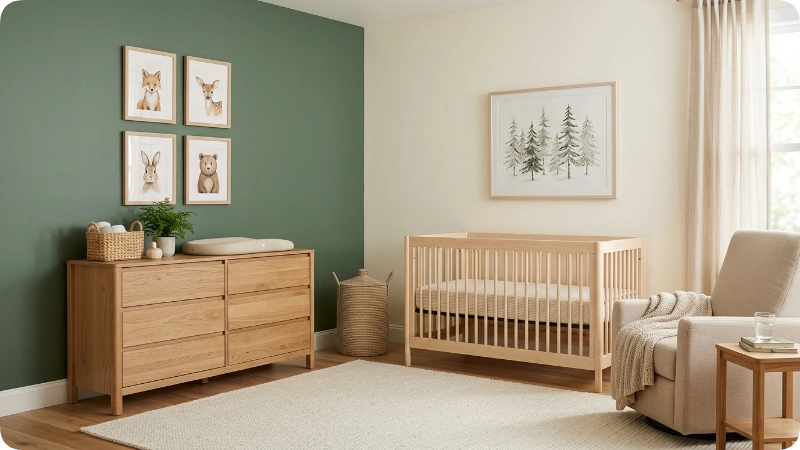
A woodland nursery uses forest animals, trees, and natural materials to create a warm, nature-inspired room.
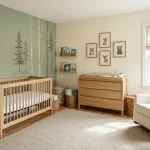
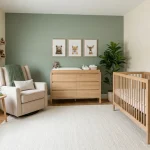
Picture a soft sage green wall, a natural oak crib, and framed illustrations of foxes, deer, rabbits, and bears.
The appeal comes from combining gentle animal imagery with earthy colors rather than filling the room with decorations.
Start with cream or warm white walls and introduce forest green through a painted accent wall or artwork. Natural wood furniture adds warmth, while a beige rug keeps the floor visually quiet.
For a more detailed design, use a forest landscape mural behind a dresser. Keep the crib against a separate plain wall, away from heavy decorations.
Color palette: Sage green, warm cream, forest green, and natural brown.
Best for: Families who enjoy nature-inspired interiors and want a theme that can transition into childhood.
Design tip: Choose illustrations with similar colors and drawing styles. This creates a more cohesive appearance than mixing realistic wildlife photographs with brightly colored cartoon animals.
2. Safari Adventure Nursery Theme
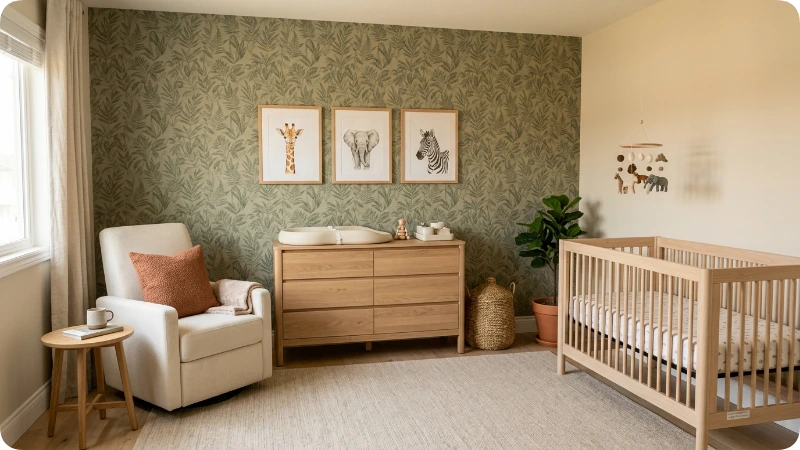
A safari nursery combines wildlife illustrations with warm earth tones and botanical details.
Giraffes, elephants, zebras, and lions can establish the theme without requiring bold cartoon wallpaper.
Use sandy beige walls, olive green accents, and natural wood furniture. A small amount of muted terracotta adds warmth.
A botanical wallpaper accent wall can create a distinctive background behind a dresser or reading chair.
Alternatively, use a coordinated set of animal illustrations for a simpler design.
The difference between safari and woodland decor is the atmosphere: woodland rooms often use cooler forest greens, while safari rooms can emphasize sun-warmed colors and open landscapes.
Color palette: Olive green, sand, camel, and terracotta.
Best for: Parents who want an animal theme with a warmer, more adventurous character.
Design tip: Let either the botanical wallpaper or the wildlife artwork become the main feature. Using both extensively can make a small room feel crowded.
3. Celestial Moon and Stars Nursery Theme
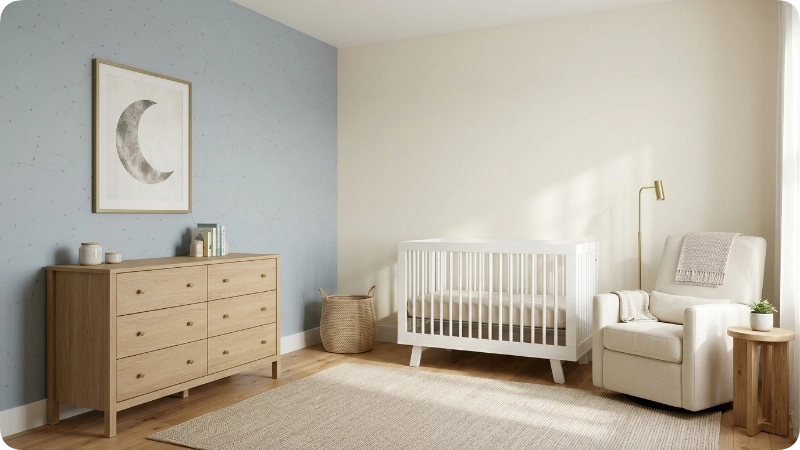
A celestial nursery creates a gentle night-sky atmosphere through moons, stars, and constellation illustrations.
Instead of using dark walls throughout the room, consider warm ivory with muted blue-gray accents.
A framed crescent moon illustration can become the main decorative feature. Subtle constellation wallpaper can add pattern without overwhelming the room.
Pair these elements with a white crib, light oak dresser, and cream upholstered chair.
If you prefer a richer palette, introduce navy through one painted wall while keeping the remaining surfaces light.
Color palette: Blue-gray, ivory, muted gold, and navy.
Best for: Families who want a peaceful, imaginative nursery that can grow into a child’s bedroom.
Design tip: Use flat artwork or printed wallpaper rather than hanging stars or other decorative objects near the crib.
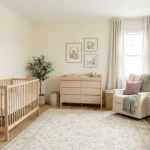
4. Modern Minimalist Nursery Theme
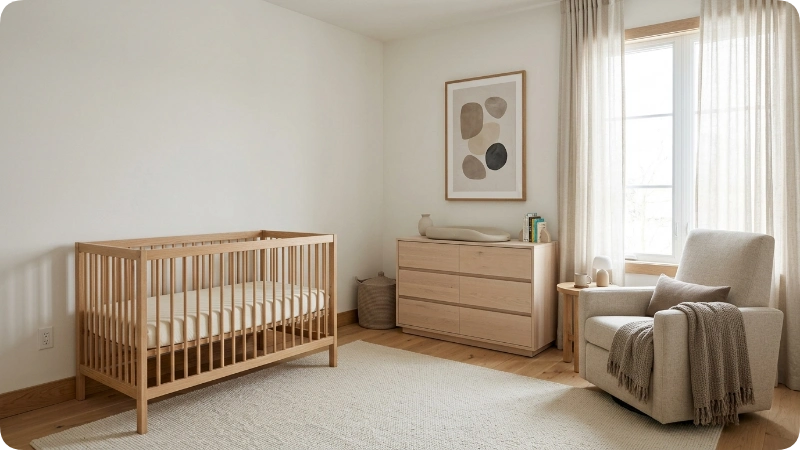
A minimalist nursery focuses on simple shapes, useful furniture, and a restrained color palette.
It doesn’t need to feel empty or cold.
Start with warm white walls and natural wood furniture. Add a comfortable upholstered chair and a washable rug with a subtle texture.
Choose one large framed print rather than several smaller decorative objects.
Soft beige, taupe, and warm gray work well together when the room includes different materials such as wood, cotton upholstery, and painted surfaces.
The result is a nursery where each element has a clear purpose.
Color palette: Warm white, oatmeal, taupe, and natural oak.
Best for: Small rooms, modern homes, and parents who prefer uncluttered interiors.
Design tip: Use texture to create interest. A smooth painted wall, visible wood grain, and woven-look rug can provide contrast without requiring additional colors.
5. Rainbow Nursery Theme
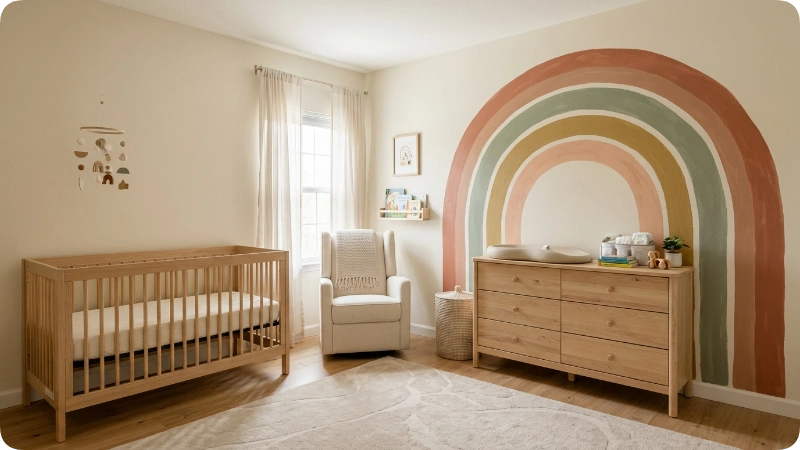
A rainbow nursery is a good option if you want cheerful color without choosing a traditional pink or blue scheme.
The key is deciding whether you prefer soft, muted rainbows or brighter, more playful colors.
For a gentle design, choose dusty peach, muted mustard, sage green, terracotta, and cream.
A large painted rainbow on a wall behind the dresser can establish the theme.
Keep the crib and larger furniture simple so the colorful feature remains the focal point.
For a less permanent approach, choose framed rainbow artwork instead of painting the wall.
Color palette: Muted mustard, peach, sage, terracotta, and ivory.
Best for: Families who enjoy colorful interiors and want a flexible design.
Design tip: Repeat the rainbow colors selectively in artwork and the rug. Avoid using rainbow patterns on every surface.
6. Ocean and Marine Life Nursery Theme
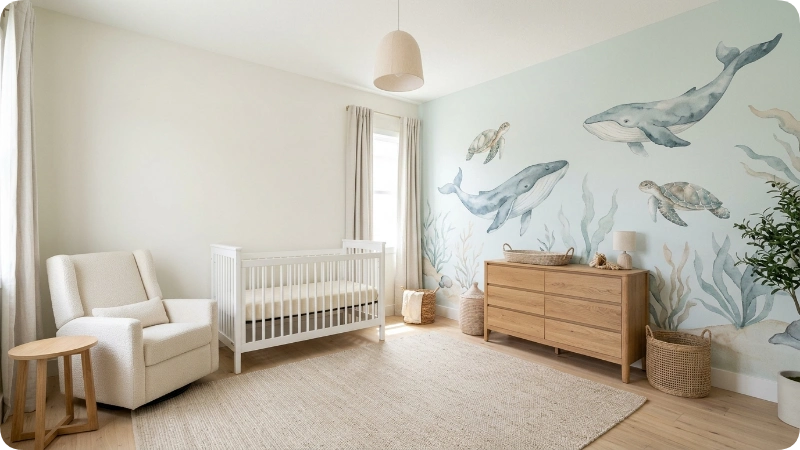
An ocean nursery draws inspiration from underwater landscapes and marine animals.
Soft blues, seafoam greens, and sandy neutrals create a fresh, airy appearance.
Choose watercolor illustrations of whales, turtles, fish, or coral.
A marine-life mural can make a beautiful feature wall, particularly when the surrounding furniture is simple.
Use a white or pale oak crib and a cream rug to balance the blue tones.
For a smaller nursery, choose two or three framed ocean prints instead of a full mural.
Color palette: Seafoam green, muted ocean blue, sand, and ivory.
Best for: Bright rooms and families who enjoy coastal colors.
Design tip:Look for illustrations with open background space. Dense underwater patterns can make narrow rooms feel visually busy.
7. Botanical Garden Nursery Theme

A botanical nursery uses leaves, flowers, and plant-inspired artwork without depending on a specific animal or character.
The theme can feel modern, traditional, or slightly vintage depending on the artwork.
Choose soft green walls, warm ivory furniture, and botanical prints in natural wood frames.
For a more detailed look, use wallpaper featuring small leaves or delicate branches.
A pale oak dresser and cream nursing chair help keep the room light.
This is an especially flexible theme because the botanical elements can remain suitable as the child grows.
Color palette: Sage green, ivory, olive, and warm beige.
Best for: Parents who enjoy garden-inspired interiors and understated patterns.
Design tip: Use illustrated plants rather than relying on live greenery. If you add real plants, check their toxicity and keep them securely out of children’s reach.
8. Mountain Adventure Nursery Theme
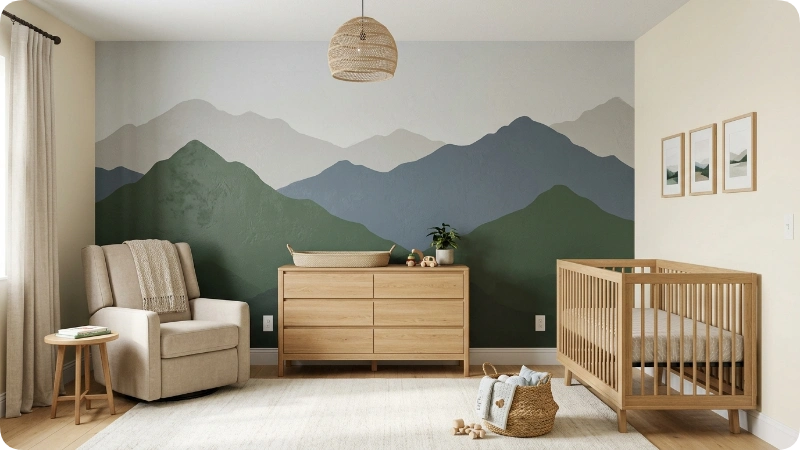
A mountain nursery uses landscapes, outdoor colors, and simple shapes to create a room inspired by nature.
A painted mountain mural can become the main feature.
Choose muted slate blue, forest green, warm gray, and cream.
Use broad mountain silhouettes rather than many sharp peaks and contrasting colors.
Natural wood furniture complements the landscape, while a neutral rug prevents the room from feeling overly themed.
If you rent, framed mountain landscapes provide a similar atmosphere without permanent painting.
Color palette: Slate blue, forest green, gray, and warm white.
Best for: Outdoorsy families and parents who want a theme that can remain appealing during childhood.
Design tip: Place the mural behind a dresser or on an open wall so the design remains visible without crowding the crib area.
9. Vintage Storybook Nursery Theme
A storybook nursery uses gentle illustrations, traditional furniture shapes, and soft colors.
Think watercolor animals, imaginary landscapes, small cottages, and classic book-inspired scenes.
Start with warm cream walls and a natural wood or white crib.
A vintage-style dresser can add character if it is structurally sound, appropriately finished, and securely anchored.
Frame original storybook-inspired illustrations above the dresser or near a reading chair.
Avoid filling the room with unrelated characters. A consistent illustration style helps the nursery feel like one complete design.
Color palette: Cream, dusty blue, sage, and muted mustard.
Best for: Families who love reading and traditional interiors.
Design tip:Choose original artwork or appropriately licensed character designs rather than reproducing protected illustrations.
10. Scandinavian Nature Nursery Theme
A Scandinavian-inspired nursery combines light wood, pale walls, simple furniture, and subtle nature motifs.
Unlike a purely minimalist nursery, this style introduces gentle patterns inspired by trees, animals, and landscapes.
Choose warm white walls, a light oak crib, and a simple dresser.
Add one framed landscape print or a small collection of botanical illustrations.
A low-pile cream rug can soften the floor without creating a busy pattern.
Keep storage mostly closed to maintain the clean appearance.
Color palette: Warm white, pale oak, light gray, and muted sage.
Color palette: Compact nurseries and homes with simple, modern interiors.
Design tip:Design tip: Choose furniture with visually light proportions. Slim legs and uncomplicated silhouettes can make a small room feel less crowded, provided the pieces are stable and suitable for nursery use.
11. Sunshine and Cloud Nursery Theme
A sunshine nursery uses cheerful weather imagery and warm colors to create a bright, welcoming room.
Soft yellow works particularly well with warm white, pale beige, and muted blue.
Choose a warm ivory wall color and introduce sunshine illustrations through framed prints.
A subtle cloud-patterned wallpaper can add detail without making the room too colorful.
Natural wood furniture helps balance the yellow accents.
For a more modern look, choose abstract sun illustrations rather than cartoon faces.
Color palette: Butter yellow, cream, pale blue, and warm beige.
Best for: Rooms that need a cheerful appearance without strong contrasting colors.
Design tip: Use yellow as an accent rather than covering every surface. A few warm details can have more impact against a calm background.
12. Desert and Cactus Nursery Theme
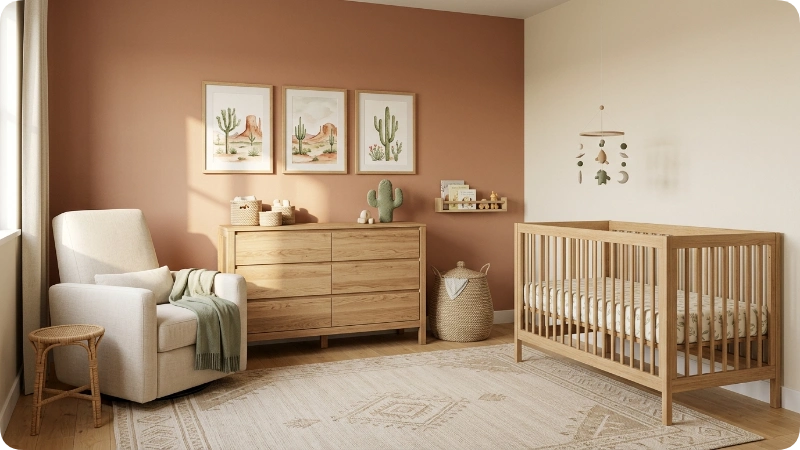
A desert nursery creates a warm, earthy atmosphere using terracotta, sand, and muted green.
The visual identity comes from open landscapes, soft desert mountains, and illustrated cacti.
Start with sandy beige walls and a natural wood crib.
Add a framed desert landscape or a painted terracotta accent wall.
Use cream textiles and muted sage details to keep the room balanced.
This theme works particularly well with furniture in warm wood finishes.
Color palette: Terracotta, sand, muted sage, and cream.
Best for: Parents who enjoy warm, earthy interiors and understated adventure themes.
Design tip: Use cactus illustrations rather than real spiny plants in accessible areas.
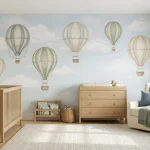
13. Hot Air Balloon Nursery Theme
A hot air balloon nursery creates a gentle sense of movement and imagination.
Choose pale sky blue, warm cream, muted peach, and soft mustard.
Watercolor illustrations of hot air balloons floating among clouds can become the main decorative feature.
A white crib and light wood dresser complement the airy palette.
For a more traditional look, choose vintage-inspired balloon illustrations in subdued colors.
For a modern nursery, use a single large print with plenty of open space.
Color palette: Sky blue, cream, muted peach, and mustard.
Best for: Parents who want a whimsical theme without bold cartoon characters.
Design tip:Use framed artwork or wallpaper rather than suspended decorative balloons near the sleeping area.
14. Farmhouse Animal Nursery Theme
A farmhouse nursery combines country-inspired furniture, gentle animal artwork, and simple patterns.
Choose warm ivory walls and natural wood furniture.
Framed illustrations of sheep, cows, horses, and chickens can introduce the theme.
A subtle gingham rug or checked curtain pattern adds traditional character.
Keep the rest of the room simple to avoid a busy appearance.
The style works particularly well with cream upholstery and warm wood tones.
Color palette: Ivory, sage green, dusty blue, and warm brown.
Best for: Traditional homes and families who enjoy country-inspired decor.
Design tip: Choose one supporting pattern, such as gingham, and use it sparingly rather than repeating it across curtains, wallpaper, and rugs.
15. Vintage Travel Nursery Theme
A travel nursery uses maps, landscapes, and transportation illustrations to create a room inspired by exploration.
Unlike a vehicle-specific nursery, this theme can include several destinations and forms of travel.
Choose warm beige walls, dusty blue accents, and natural wood furniture.
A framed illustrated world map can become the main decorative feature.
Pair it with simple landscape prints or vintage-style travel illustrations.
As your child grows, the artwork can be updated to reflect new interests without changing the furniture.
Color palette: Beige, dusty blue, olive, and warm brown.
Best for: Families who enjoy travel and want a theme with long-term flexibility.
Design tip: Use a framed map or removable wall artwork if you want the option to change the room later.
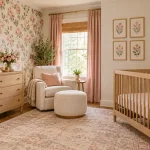
16. Cottage Garden Nursery Theme
A cottage garden nursery combines delicate floral patterns, warm colors, and traditional furniture details.
Unlike a botanical nursery focused mainly on leaves, this theme emphasizes small flowers, soft textures, and a collected appearance.
Choose warm cream walls with muted sage, dusty rose, and pale yellow accents.
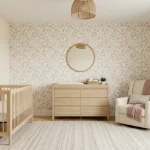
A small-scale floral wallpaper can create a gentle feature wall.
Pair it with a white crib, natural wood dresser, and simple upholstered chair.
Use one floral pattern as the main decorative element and keep the other surfaces quiet.
Color palette: Cream, dusty rose, sage, and butter yellow.
Best for: Parents who enjoy vintage-inspired, garden-style interiors.
Design tip: Gender neutral doesn’t mean avoiding floral patterns. Flowers can work in any nursery when the colors and overall design suit your preferences.
17. Colorful Geometric Nursery Theme
A geometric nursery uses shapes, blocks of color, and simple patterns rather than animals or characters.
This creates a modern room that can easily transition into a child’s bedroom.
Choose a palette of muted teal, terracotta, mustard, and warm white.
Paint a large arch or simple color-blocked feature behind the dresser.
Keep the crib and larger furniture neutral.
A rug with a subtle geometric pattern can reinforce the design, but avoid competing with an already bold wall.
Color palette: Muted teal, terracotta, mustard, and cream.
Best for: Modern homes and parents who want a colorful design without a specific character theme.
Design tip: Limit the number of large shapes and colors. A simple composition often feels more intentional than a wall filled with small, competing patterns.
How to Choose the Best Gender Neutral Nursery Theme
The best theme is the one that fits your room and can be created without compromising practical needs.
Before choosing wallpaper, paint, or decorative accessories, think about the room’s size, natural light, and existing furniture.
| Nursery theme | Main visual feature | Best room setting | Ease of updating |
| Woodland | Forest animals and trees | Most room sizes | Easy |
| Safari | Wildlife and warm botanicals | Bright rooms | Easy |
| Celestial | Moons and constellations | Small or medium rooms | Easy |
| Minimalist | Simple furniture and textures | Small rooms | Very easy |
| Rainbow | Multicolored arches | Most room sizes | Easy to moderate |
| Ocean | Marine animals and watercolor blues | Bright rooms | Easy |
| Botanical | Leaves and plant illustrations | Most room sizes | Easy |
| Mountain | Landscape mural | Rooms with a feature wall | Moderate |
| Storybook | Illustrated scenes | Most room sizes | Easy |
| Scandinavian | Pale wood and nature motifs | Small rooms | Easy |
| Sunshine | Sun and cloud artwork | Most room sizes | Easy |
| Desert | Terracotta and desert landscapes | Bright rooms | Easy |
| Hot air balloon | Floating balloon illustrations | Small or medium rooms | Easy |
| Farmhouse | Farm animals and checks | Traditional interiors | Easy |
| Travel | Maps and destination artwork | Most room sizes | Easy |
| Cottage garden | Small floral patterns | Traditional interiors | Easy to moderate |
| Geometric | Color blocks and shapes | Modern interiors | Easy to moderate |
The ease-of-updating comparisons assume ordinary paint, artwork, and accessories. Permanent murals, extensive wallpaper, or built-in features will require more effort to change.
Choose a Theme That Fits the Room Size
Small nurseries usually benefit from a simple background and one clear decorative feature.
A celestial, minimalist, or Scandinavian theme can be established through artwork and color without taking up extra floor space.
Larger rooms can accommodate more detailed murals and stronger patterns.
However, the amount of decoration should still reflect the available wall space and furniture layout.
Consider Natural Light
A nursery with limited daylight may feel brighter with warm white, pale beige, or soft yellow walls.
Dark forest green or navy can also work, particularly as an accent.
Test paint colors at different times of day before committing to a full room.
Think About Long-Term Flexibility
If you want to update the nursery easily, choose neutral furniture and introduce the theme through removable artwork.
Woodland, mountain, celestial, travel, and geometric designs can all adapt as a child’s interests change.
A theme doesn’t have to last forever. It simply helps to avoid making every expensive item dependent on the same design.
Best Gender Neutral Nursery Color Combinations
Color plays a major role in how a nursery feels, even when the theme is based on animals, landscapes, or patterns.
Here are several combinations that work well with different decorating styles.
| Color combination | Overall appearance | Suitable themes |
| Sage green + cream + oak | Natural and calm | Woodland, botanical, Scandinavian |
| Terracotta + sand + ivory | Warm and earthy | Desert, safari |
| Dusty blue + warm white + beige | Light and gentle | Ocean, celestial, travel |
| Mustard + peach + sage | Cheerful and playful | Rainbow, sunshine |
| Olive + camel + cream | Earthy and adventurous | Safari, woodland |
| Taupe + ivory + natural wood | Simple and understated | Minimalist, storybook |
| Muted teal + terracotta + cream | Colorful and modern | Geometric, travel |
These are design suggestions rather than rules.
If you already own a crib or dresser, use its finish as a starting point. A warm oak crib may coordinate more naturally with cream and earthy colors, while white furniture can work with both warm and cool palettes.
How to Decorate a Gender Neutral Nursery on a Budget
A recognizable nursery theme doesn’t require matching furniture or custom wallpaper.
Start with the features that have the greatest visual impact.
Use Paint to Establish the Theme
A painted accent wall can introduce a color palette without requiring many accessories.
For example, sage green can establish a woodland or botanical atmosphere.
Terracotta can support a desert theme, while pale blue can complement celestial or ocean artwork.
Follow paint instructions for ventilation and drying. In older homes, check for lead-paint hazards before disturbing existing finishes.
Choose Framed Artwork Instead of Expensive Murals
A coordinated set of prints can introduce almost any theme.
Choose illustrations with similar colors and frame finishes.
Hang them securely on a wall away from the crib.
Reuse Suitable Furniture
A simple dresser can work in many nursery styles.
If you’re reusing older furniture, inspect its stability, finish, and condition. Anchor tip-prone pieces according to appropriate instructions.
Avoid using furniture that cannot be made safe for the intended purpose.
Decorate Gradually
Arrange the crib, dresser, and feeding chair first.
Once the room is functional, decide whether it needs a rug, artwork, or additional storage.
This prevents you from purchasing decorative pieces that don’t fit the final layout.
Gender Neutral Nursery Themes for Small Rooms
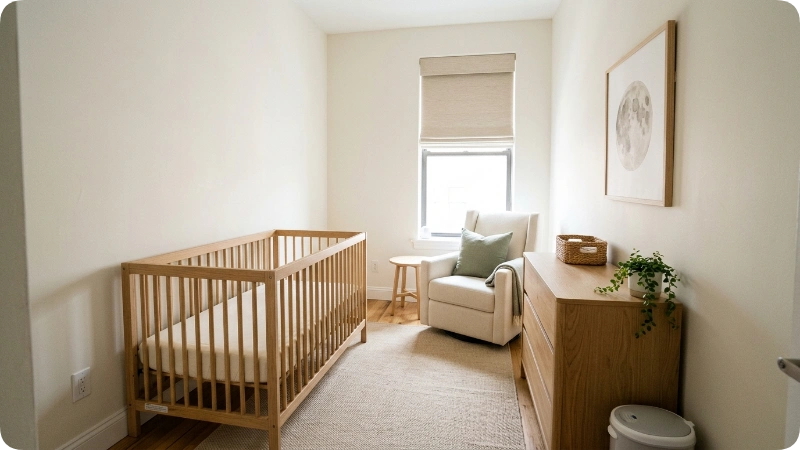
A small nursery can support almost any theme when the design doesn’t interfere with furniture placement.
Use a simple wall color and one decorative feature rather than several competing patterns.
For example, a small woodland nursery might have cream walls and two framed animal illustrations instead of full-room forest wallpaper.
A celestial nursery could use one moon print above the dresser rather than a large night-sky mural.
Choose furniture that fits the room.
Measure the crib, dresser, and chair before purchasing, including the space needed to open drawers and move around comfortably.
Closed storage helps reduce visual clutter.
If a separate feeding chair won’t fit, it’s reasonable to create a comfortable feeding area elsewhere in your home.
Practical tip: Mark furniture dimensions on the floor with painter’s tape before buying. This makes it easier to see whether the layout leaves clear walking paths.
Nursery Safety Considerations for Every Theme
A nursery should be safe regardless of its colors or decorative style.
Keep the Crib Free of Decorative Items
The American Academy of Pediatrics recommends a firm, flat, non-inclined sleep surface with a properly fitted sheet and no loose bedding or soft objects.
Do not place pillows, stuffed animals, crib bumpers, decorative blankets, or other accessories inside the crib.
Position Wall Decor Carefully
Avoid hanging heavy artwork, shelves, mirrors, or other objects where they could fall into the crib.
Keep hanging decorations and cords outside the baby’s reach.
Use secure mounting hardware appropriate for the wall and the object’s weight.
Anchor Furniture
Dressers, bookcases, and other furniture that could tip should be securely anchored.
Follow the manufacturer’s instructions and choose hardware suitable for the wall construction.
Use Safe Window Treatments
Choose cordless window coverings where possible.
Keep cribs and climbable furniture away from windows and window-covering cords.
Review Safety as Your Child Grows
A nursery that works for a newborn may need changes once a baby begins rolling, crawling, pulling up, or climbing.
Reassess reachable decorations, storage, furniture placement, and other potential hazards as your child develops.
Before purchasing or installing nursery products, review current guidance from the American Academy of Pediatrics and the U.S. Consumer Product Safety Commission.
Frequently Asked Questions About Gender Neutral Nursery Themes
Does a gender neutral nursery have to use neutral colors?
No. Gender neutral refers to the decorating approach, not a requirement to use beige, white, or gray. You can choose bright rainbows, colorful geometric patterns, floral wallpaper, or bold nature-inspired colors.
Can I combine two nursery themes?
Yes, when the themes share a visual connection. Woodland and mountain themes work well together because both draw from outdoor landscapes. Botanical and cottage garden themes can also complement each other. Use one consistent color palette to keep the room cohesive.
What gender neutral nursery theme is easiest to update?
Minimalist, botanical, celestial, and travel-inspired nurseries can be easy to update when the theme is introduced mainly through framed artwork and accessories rather than permanent wall treatments.
Can I use floral wallpaper in a gender neutral nursery?
Yes. Floral patterns are not limited to any gender. Small botanical prints, cottage-style flowers, and abstract floral designs can work with natural wood, white furniture, and a wide range of colors.
Should the crib match the nursery theme?
No. A simple white or natural wood crib can work with nearly any theme. Choosing versatile furniture makes it easier to change the room’s appearance without replacing major pieces.
Final Thoughts
The best gender neutral nursery themes give you a clear decorating direction without limiting your choices.
A woodland room can feel warm and natural. A celestial nursery can be quiet and imaginative. A rainbow or geometric design can bring cheerful color into the space.
What matters most is how the theme works with the actual room.
Start with furniture that fits, choose a color palette you enjoy, and introduce the theme through one main decorative feature.
Then add only the details that make the nursery more comfortable, useful, or personal.
A well-planned nursery doesn’t need every accessory to match. It needs to feel welcoming, function smoothly, and provide a safe place for your baby.

I am Emma Brooks, a passionate Interior Design Writer and Home Décor Enthusiast at Decoridia. I share well-researched content on home décor, interior design, DIY decorating ideas, furniture selection, color palettes, home organization, and seasonal styling, helping readers create beautiful, functional, and inspiring living spaces for every lifestyle.