Quick answer:
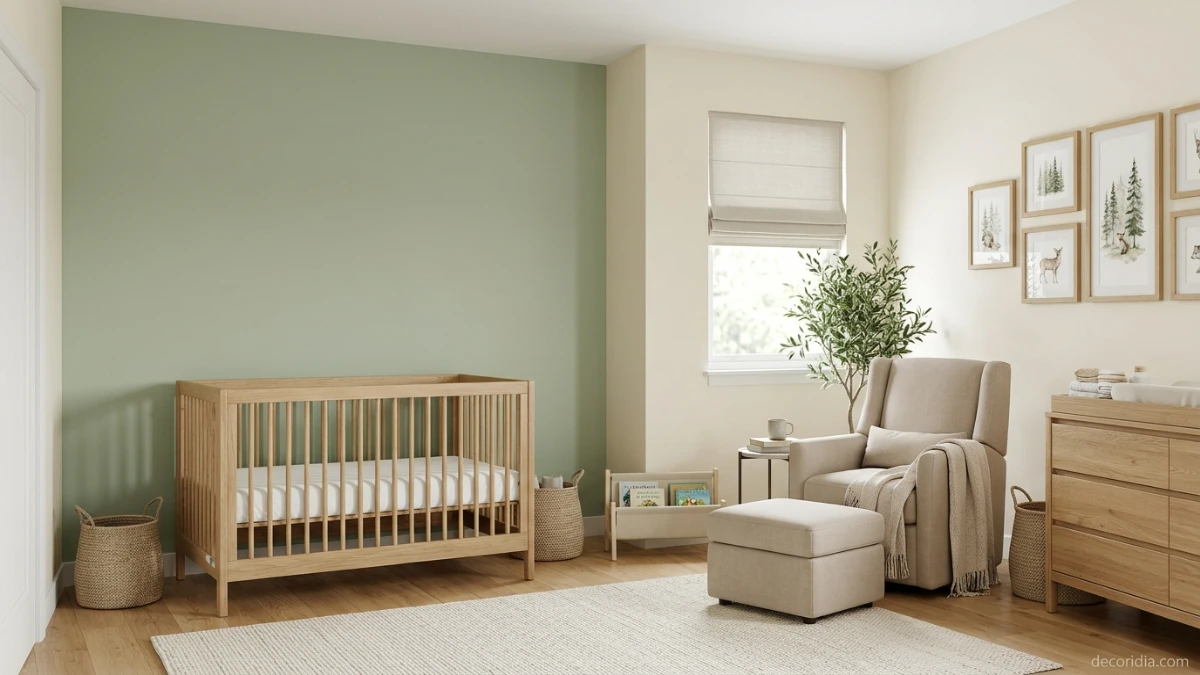
The best baby boy nursery ideas combine a calming color palette, practical furniture, smart storage, and personal touches. Popular styles include woodland, safari, modern neutral, coastal, and vintage-inspired nurseries. Choose a theme that suits your space and budget while prioritizing safe sleep arrangements and everyday functionality.
Planning a nursery for your baby boy should feel exciting, not overwhelming. Yet choosing the right colors, furniture, and decor can quickly turn into a long list of decisions. Should you go with classic blue, calming neutrals, or a playful woodland theme? And how do you make everything fit without overspending?
The secret to a beautiful nursery isn’t expensive furniture or a perfectly coordinated theme. It’s creating a comfortable, practical space with thoughtful details that make everyday routines easier. A soft color palette, smart storage, and a few personal touches can make even a small room feel warm and welcoming.
These 20 baby boy nursery ideas offer inspiration for every style and budget, from cozy woodland retreats and modern neutral rooms to playful dinosaur themes and timeless vintage designs. Along the way, you’ll discover simple decorating tips, space-saving solutions, and important safety considerations to help you create a nursery that’s as functional as it is beautiful.
Modern Neutral Baby Boy Nursery
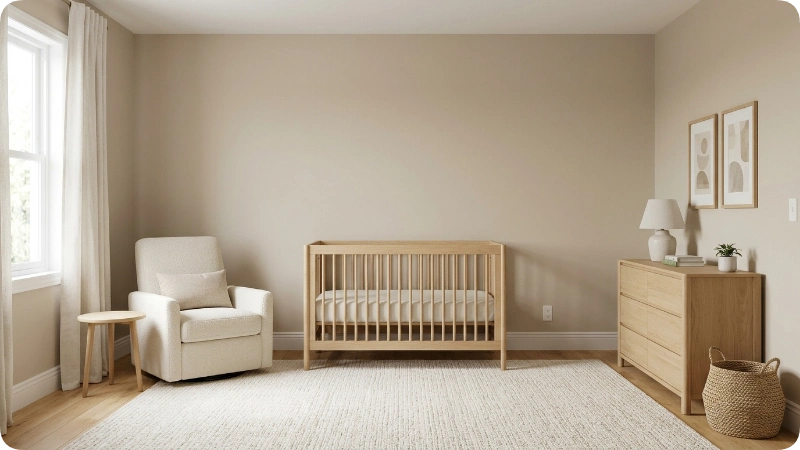
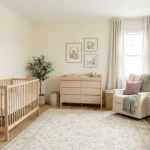
A modern neutral nursery is perfect if you prefer a calm, uncluttered space that feels warm without relying on bright colors or bold patterns.
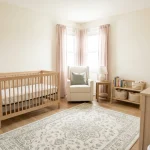
Start with soft beige, cream, oatmeal, or warm white walls. Pair these shades with a natural oak crib, a simple wooden dresser, and a comfortable upholstered nursing chair.
To keep the room from looking too plain, introduce texture through a washable rug, woven storage baskets, and curtains with a subtle fabric weave.
A large framed abstract print or gentle landscape illustration can provide a focal point without overwhelming the room. Place artwork securely on a wall away from the crib.
Why it works: Neutral colors make it easier to update the room as your child grows. You can introduce new colors through artwork and accessories without replacing the main furniture.
Best for: Minimalist homes, small nurseries, and parents who want a flexible design.
Design tip: Combine warm white, oatmeal, and light wood rather than using the same beige shade throughout the room.
Woodland-Themed Baby Boy Nursery
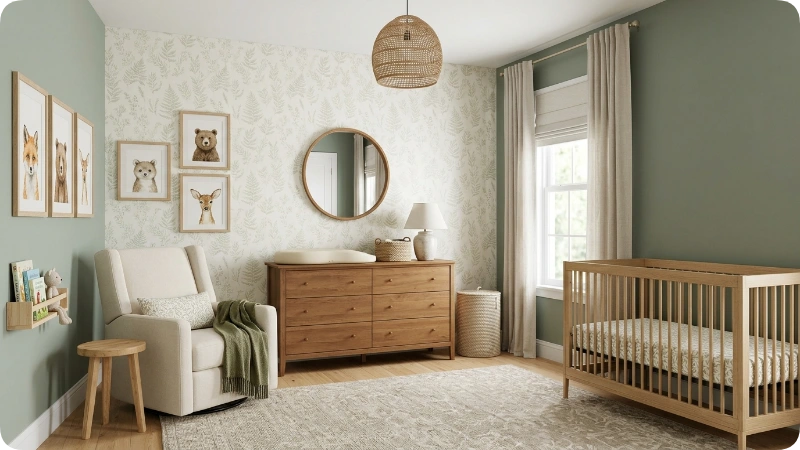
A woodland nursery brings the peaceful colors and textures of nature indoors.
Think muted forest greens, warm brown wood, soft cream, and gentle illustrations of woodland animals.
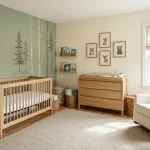
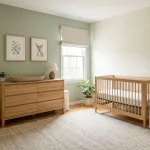
Start with a sage green accent wall and natural wood furniture. Add framed watercolor prints featuring foxes, bears, deer, or rabbits.
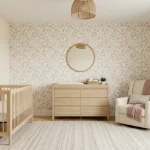
If you want a stronger theme, use botanical wallpaper behind the dresser or reading chair. A simple forest-inspired pattern can make the room feel connected to nature without requiring elaborate decorations.
Keep the crib area simple and place decorative animals on secure shelves outside the baby’s reach.
Why it works: Woodland colors pair naturally with wood furniture, making the room feel coordinated without requiring matching furniture sets.
Best for: Nature-loving families and parents who want a theme that can transition into childhood.
Design tip: Choose animal illustrations in a consistent style. Soft watercolor prints usually work well with muted green walls and natural wood.
Classic Blue and White Nursery
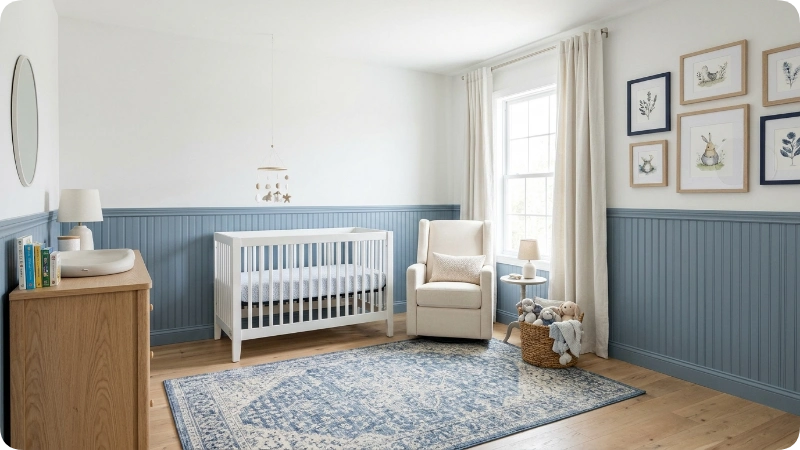
Blue and white is a traditional nursery combination, but it can look fresh and contemporary with the right balance.
Instead of choosing a bright blue for every wall, consider powder blue, dusty blue, or muted navy.
Pair blue walls with white furniture, light wood accents, and cream textiles. A white crib creates a clean contrast against a blue wall, while a natural wood dresser adds warmth.
For a more distinctive look, paint the lower half of the walls blue and keep the upper half white.
Alternatively, leave the walls white and introduce blue through curtains, a washable rug, and framed artwork.
Why it works: Blue and white provide clear contrast while remaining easy to coordinate with different furniture finishes.
Best for:Parents who enjoy traditional nursery colors but prefer an updated appearance.
Design tip: Test blue paint samples in different lighting conditions. Some pale blues appear noticeably gray in rooms with limited daylight.
Safari and Jungle Baby Boy Nursery
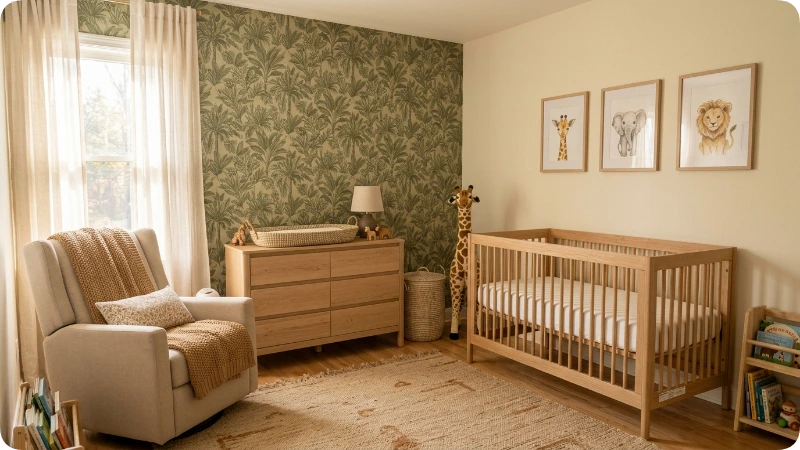
A safari-themed nursery is a playful choice that combines animal illustrations with warm, natural colors.
Start with an ivory or beige background. Add olive green, camel, warm brown, and muted terracotta accents.
Choose framed illustrations of giraffes, elephants, lions, or zebras. A botanical wallpaper accent wall can introduce a jungle feeling without covering every surface in patterns.
Natural wood furniture works particularly well with this theme.
A beige upholstered chair and simple rug can balance more decorative elements.
Why it works: The combination of animal artwork and earthy colors creates a recognizable theme without requiring highly specialized furniture.
Best for: Families who want a cheerful, animal-inspired nursery.
Design tip: Choose either botanical wallpaper or a collection of animal illustrations as the main decorative feature. Using both extensively may make a small room feel crowded.
Sage Green Baby Boy Nursery
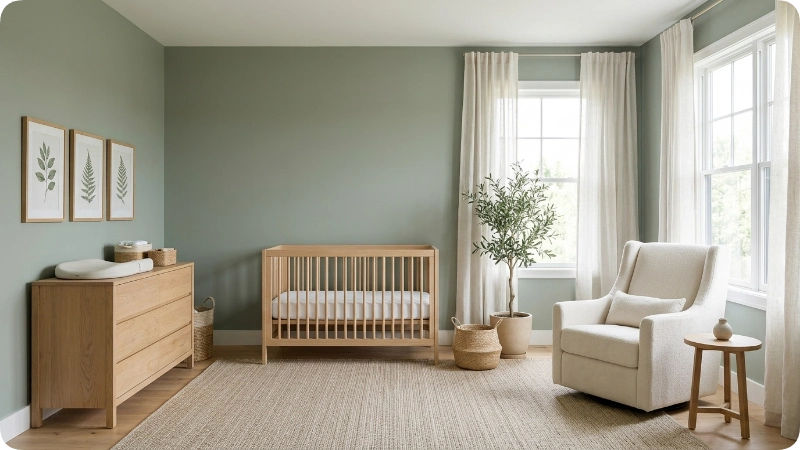
Sage green is a versatile nursery color that works with modern, traditional, and nature-inspired interiors.
Its muted tone pairs beautifully with cream, beige, white, and natural wood.
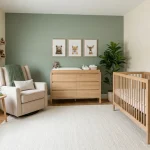
For a simple design, paint the walls sage green and choose a light oak crib and dresser. Add a cream nursing chair, a beige rug, and understated botanical artwork.
If you prefer a lighter appearance, use sage green on one accent wall and keep the remaining walls warm white.
Why it works: Sage green introduces color without demanding a strong decorating theme, so it remains easy to update.
Best for: Parents who prefer gentle, nature-inspired colors.
Design tip: Compare several sage samples against your flooring and furniture. Some shades lean gray, while others have warmer olive undertones.
Coastal Baby Boy Nursery
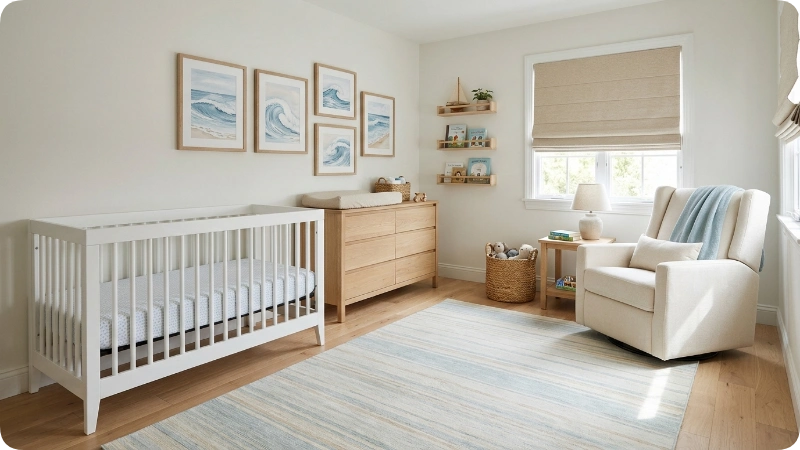
A coastal nursery creates a light, airy atmosphere using pale blue, sandy beige, white, and natural wood.
Unlike a heavily nautical room, a modern coastal nursery doesn’t need anchors, boats, or rope decorations everywhere.
Start with off-white walls and a white crib. Add a pale oak dresser, a cream chair, and subtle blue accents.
Framed illustrations of ocean waves, beaches, or sea creatures can establish the theme.
A soft striped rug can add pattern without making the room feel busy.
Why it works: Light colors and simple furniture can make the room feel visually open, particularly when natural daylight is available.
Best for: Bright rooms and parents who enjoy relaxed, coastal interiors.
Design tip: Avoid decorative fishing nets, hanging ropes, and loose cords near the crib. Use securely mounted artwork to introduce seaside details.
Space-Themed Baby Boy Nursery
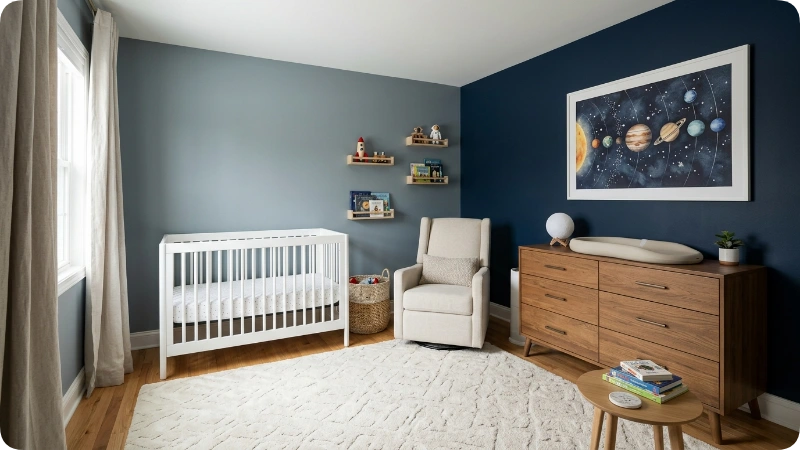
A space-themed nursery can feel imaginative without becoming overly colorful or crowded.
Choose deep navy, muted blue-gray, white, and warm wood.
A navy accent wall can create a dramatic background for a white crib. Add framed illustrations of planets, rockets, or the solar system on a wall away from the sleeping area.
Keep the furniture simple and use a neutral rug to balance the darker colors.
Soft ambient lighting can complement the theme while remaining useful during nighttime care.
Why it works: Space-inspired artwork can be updated as your child grows, allowing the room to evolve without replacing furniture.
Best for: Parents who want a playful theme with long-term appeal.
Design tip: Avoid attaching detachable stars or hanging decorations within your baby’s reach.
Rustic Farmhouse Baby Boy Nursery
A rustic farmhouse nursery combines warm wood, simple furniture, and traditional patterns.
Start with creamy white walls and a medium-tone wood dresser. Add a natural wood crib and a comfortable neutral chair.
A washable checked rug can introduce pattern, while framed landscapes or vintage-inspired animal illustrations provide subtle decoration.
Wall paneling can reinforce the farmhouse style, but it isn’t essential. Painted walls and carefully chosen furniture can achieve a similar effect with less work.
Why it works: Natural wood and traditional patterns create warmth without relying on bright colors.
Best for: Farmhouse, country, and traditional homes.
Design tip: Balance darker wood furniture with light walls and soft textiles to prevent the room from feeling heavy.
Avoid unsecured decorative ladders and heavy reclaimed wood decorations.
Minimalist Baby Boy Nursery
A minimalist nursery focuses on useful furniture, open floor space, and simple design.
Choose a restrained palette such as white, warm gray, and natural wood.
Start with a crib, dresser, and comfortable feeding chair if space allows. Use closed storage to keep everyday supplies organized and out of sight.
A single framed print and a textured washable rug may be enough to make the room feel finished.
You don’t need several shelves, decorative tables, or themed accessories.
Why it works: Fewer unnecessary items make the room easier to organize and leave more space for everyday activities.
Best for: Small nurseries, limited budgets, and parents who prefer simple interiors.
Design tip: Prioritize practical storage over decorative accessories. A well-organized dresser is more useful than several display shelves.
Adventure and Mountain-Themed Nursery
A mountain-inspired nursery brings an outdoor atmosphere indoors through landscape artwork and earthy colors.
Choose slate blue, forest green, soft gray, and warm beige.
A mountain mural on one wall can become the main decorative feature. Use broad mountain silhouettes in two or three muted shades for a clean appearance.
Pair the mural with light wood furniture and a cream rug.
For a simpler option, keep the walls neutral and hang framed mountain landscape illustrations.
Why it works: Mountain scenery provides a strong visual theme without requiring specialized furniture or numerous accessories.
Best for: Outdoorsy families and parents who want a nursery that can grow into a child’s bedroom.
Design tip: Position the mural where furniture won’t cover its most interesting details.
Terracotta and Earth-Tone Nursery
Terracotta offers a warm alternative to traditional blue and green nursery colors.
Pair muted clay tones with ivory, camel, tan, and pale wood.
A terracotta accent wall can provide visual warmth, especially in rooms with light flooring.
Choose a natural wood crib, a cream upholstered chair, and simple geometric artwork.
Avoid combining several highly saturated orange and red shades, which can compete for attention.
Why it works: Earth tones create a coordinated palette that works with natural materials and simple furniture.
Best for: Parents who enjoy warm, contemporary interiors.
Design tip: Choose dusty terracotta rather than bright orange for a softer appearance.
Scandinavian-Style Baby Boy Nursery
Scandinavian-inspired nurseries combine light colors, simple furniture, and practical organization.
Start with white or pale gray walls. Choose a light wood crib and a dresser with clean lines.
Add a washable patterned rug and a few muted green or charcoal accents.
Keep decorative accessories limited and focus on comfortable, functional furniture.
Closed drawers can help maintain the uncluttered appearance.
Why it works: Simple furniture and neutral colors make it easy to change the room’s style as your child grows.
Best for: Modern homes and compact nurseries.
Design tip: Introduce a few darker accents to create contrast against pale walls and light wood.
Sports-Themed Baby Boy Nursery
A sports-themed nursery can celebrate a family interest without covering the room in oversized logos.
Choose navy, cream, and tan as your main colors.
Add framed illustrations of baseballs, basketballs, or footballs. Subtle stripes can reinforce the theme.
Keep larger furniture pieces neutral so the room can adapt to your child’s interests later.
Why it works: Sports-inspired artwork introduces personality while remaining easy to replace.
Best for: Sports-loving families who want a playful but coordinated nursery.
Design tip: Keep real sports equipment, hard balls, and bats securely stored away from the crib.
Soft Yellow and Cream Nursery
Soft yellow creates a cheerful appearance without requiring a strong theme.
Choose buttery yellow walls, cream furniture, and pale wood accents.
Simple sunshine illustrations or subtle geometric prints can add character.
A white crib, cream rug, and light curtains help balance the warmth of the walls.
Why it works: Yellow introduces warmth while pairing easily with neutral furniture.
Best for: Parents who prefer gentle, cheerful colors.
Design tip: Test yellow paint before using it throughout the room. Some shades appear much brighter in direct sunlight.
Storybook-Inspired Baby Boy Nursery
A storybook nursery uses gentle illustrations and nostalgic details to create an imaginative room.
Choose cream, sage, dusty blue, or warm beige for the walls.
Add framed illustrations inspired by forests, animals, castles, or imaginary landscapes.
A comfortable reading chair and securely anchored bookcase can create a reading corner.
As your child grows, the room can transition naturally into a reading and play space.
Why it works: Books and artwork can change over time without requiring major decorating work.
Best for: Families who enjoy reading and imaginative interiors.
Design tip: Choose illustrations with a shared color palette, even when they feature different subjects.
Black, White, and Natural Wood Nursery
A black-and-white nursery can feel modern and welcoming when balanced with warmer materials.
Use white walls, black picture frames, and a natural wood crib or dresser.
Add a cream rug and warm-toned curtains to soften the contrast.
Introduce geometric patterns sparingly through artwork or a washable rug.
Why it works: The simple color scheme makes furniture and decorative pieces easy to coordinate.
Best for: Contemporary homes and parents who prefer adaptable interiors.
Design tip: Use black as an accent rather than the dominant color for a lighter overall appearance.
Dinosaur-Themed Baby Boy Nursery
A dinosaur nursery offers a playful theme that can continue into the preschool years.
Start with sage green, beige, and warm brown.
Add framed dinosaur illustrations or a single dinosaur mural as the main feature.
Keep the crib and dresser neutral so the room can be updated easily when your child’s interests change.
Why it works: A recognizable theme can be introduced through artwork rather than expensive themed furniture.
Best for: Parents who want a playful nursery with long-term flexibility.
Best for: Display dinosaur toys on secure shelves outside the crib rather than placing them in the sleep area.
Boho Baby Boy Nursery
A bohemian-inspired nursery combines warm colors, natural textures, and relaxed styling.
Start with cream walls and accents of olive, rust, tan, or muted mustard.
Choose a natural wood crib, a washable patterned rug, and abstract botanical artwork.
A sturdy woven-look basket can hold extra clothing or blankets outside your baby’s reach.
Why it works: Different textures create visual interest even when the room uses a limited color palette.
Best for: Parents who enjoy warm, casual interiors.
Design tip: Avoid hanging macramé, loose tassels, and fabric canopies near the crib. Introduce texture through rugs and upholstery instead.
Vintage-Inspired Baby Boy Nursery
A vintage-inspired nursery combines classic furniture shapes with nostalgic decorative details.
Choose muted blue, warm cream, and soft brown.
Traditional patterns such as gingham or narrow stripes can add character.
A contemporary dresser with vintage-style hardware can provide practical storage while supporting the theme.
Add framed storybook illustrations or classic landscape artwork.
Why it works: Vintage-inspired details can give the room personality without requiring antique furniture.
Best for: Parents who enjoy traditional interiors and collected decor.
Design tip: Avoid antique cribs. Choose a crib that meets current applicable safety requirements, and inspect older decorative furniture for stability and potential paint hazards.
Personalized Baby Boy Nursery
A personalized nursery reflects your family’s interests rather than following a specific decorating trend.
Consider framed name artwork, a favorite landscape, or illustrations connected to a meaningful place.
Choose a flexible color scheme and introduce personal details through decorations that are easy to replace.
A securely mounted family photograph on a wall away from the crib can add a personal touch.
Why it works: Meaningful details can make the room feel distinctive without requiring a large decorating budget.
Best for: Parents who want a unique nursery that reflects their family.
Design tip: Keep personalized decorations easy to change as your child grows.
How to Choose the Best Baby Boy Nursery Colors
Choosing the right nursery colors depends on your preferred style, existing furniture, and the room’s natural light.
You don’t have to choose blue simply because you’re decorating for a boy. Sage green, cream, terracotta, olive, and soft yellow can work equally well.
| Color combination | Overall appearance | Furniture pairing |
| Sage green and cream | Natural and understated | Light oak |
| Dusty blue and white | Classic and gentle | White or light wood |
| Navy and beige | Bold but balanced | Oak and cream |
| Terracotta and ivory | Warm and earthy | Natural wood |
| Gray and pale blue | Cool and minimal | White |
| Olive and camel | Woodland-inspired | Medium-tone wood |
| Butter yellow and white | Bright and cheerful | Pale wood |
Before painting, place sample swatches on more than one wall.
Observe how the colors look in morning light, afternoon light, and artificial lighting.
A simple approach is to choose one main wall color, one furniture finish, and one accent color. Add more shades only where they improve the overall design.
Small Baby Boy Nursery Ideas That Make the Most of Space
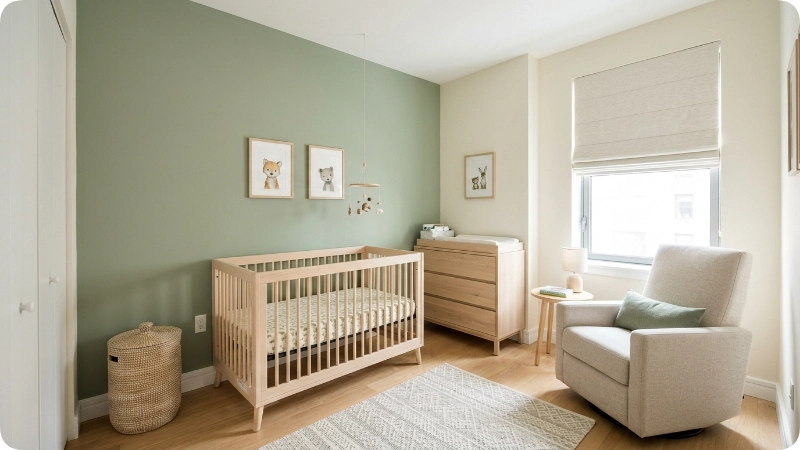
A small nursery can still feel comfortable and organized when furniture placement comes before decoration.
The goal isn’t to fit every traditional nursery item into the room. It’s to create a safe sleep area, accessible storage, and enough space for everyday care.
Choose a Compact Crib
A compact crib may free up floor space, but check its dimensions and applicable safety requirements before purchasing.
Use only a mattress designed to fit the specific crib according to the manufacturer’s instructions.
Don’t assume that every compact crib offers the same usable lifespan as a full-size crib.
Use a Dresser as a Changing Station
A dresser can provide clothing storage and, when permitted by its manufacturer, support a compatible changing setup.
Keep diapers, wipes, and clean clothing within adult reach.
Secure the dresser against tipping and never leave your baby unattended on an elevated changing surface.
Use Wall Space Carefully
Wall-mounted shelves can free up floor space, but placement matters.
Install shelves with hardware appropriate for the wall and expected load. Keep them away from the crib and any area where falling objects could reach your baby.
Keep the Floor Clear
Avoid filling the room with unnecessary tables, baskets, and decorative furniture.
A crib, dresser, and comfortable chair may be enough for many nurseries.
If the room is extremely narrow, consider placing the feeding chair elsewhere in your home.
Small-room tip: Measure furniture and mark its footprint on the floor with painter’s tape before ordering. This helps you check walking paths and drawer clearance.
Budget-Friendly Baby Boy Nursery Decorating Ideas
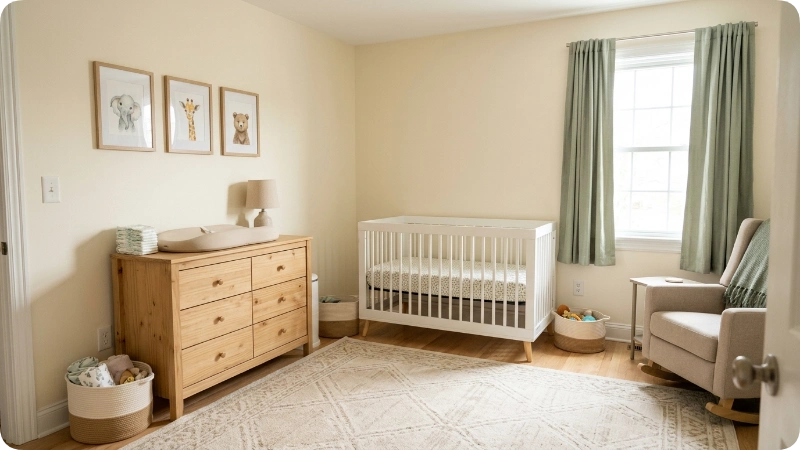
Creating a beautiful nursery doesn’t require expensive furniture collections or elaborate decorations.
Focus your budget on items that affect safety and daily use. Decorative details can be added gradually.
Refresh the Walls With Paint
A fresh coat of paint can transform the room without requiring major renovations.
Try a sage green accent wall, soft blue walls, or a warm neutral palette.
Choose appropriate interior paint, follow ventilation instructions, and allow the room to air out according to product directions before use.
In older homes, check for lead-based paint hazards before sanding or disturbing existing surfaces.
Reuse Suitable Furniture
An existing dresser may work in the nursery if it is sturdy, in good condition, and properly anchored.
New hardware or an appropriate furniture finish can refresh its appearance.
Inspect older furniture for damaged parts, unstable drawers, and potentially hazardous old paint.
Choose Affordable Artwork
Framed prints can establish a nursery theme without expensive wallpaper.
Choose artwork that matches your color palette, If that’s woodland animals, landscapes, planets, or abstract shapes.
Mount frames securely and away from the crib.
Buy Multipurpose Storage
Drawer organizers, washable bins, and sturdy baskets can make existing furniture more useful.
Choose storage that fits your available shelves and drawers rather than purchasing decorative containers without a clear purpose.
Decorate Gradually
You don’t need to complete every decorative detail before your baby arrives.
Start with essential furniture, organize daily supplies, and add accessories as you discover what the room needs.
This can help prevent unnecessary purchases.
Essential Furniture for a Practical Baby Boy Nursery
A practical nursery supports everyday activities such as sleeping, changing, feeding, and organizing supplies.
Choose furniture based on your room size and routine rather than purchasing a complete matching set.
| Furniture | Main purpose | What to consider |
| Crib | Dedicated infant sleep space | Safety compliance, mattress fit, placement |
| Dresser | Clothing and supply storage | Stability, drawer access, anchoring |
| Changing surface | Diaper changes | Compatibility, secure use, supervision |
| Nursing chair | Comfortable adult seating | Support, cleaning, room dimensions |
| Storage bins | Organizing smaller items | Stability and safe placement |
| Rug | Comfort underfoot | Washability and trip hazards |
| Lighting | Daytime and nighttime care | Visibility, cords, secure installation |
A separate changing table isn’t essential for every family. Some parents use a compatible changing setup on a dresser, while others prefer a safe floor-level arrangement.
Similarly, a dedicated nursery chair is helpful but not mandatory if you already have a comfortable feeding area elsewhere.
Baby Boy Nursery Layout Ideas for Comfort and Convenience
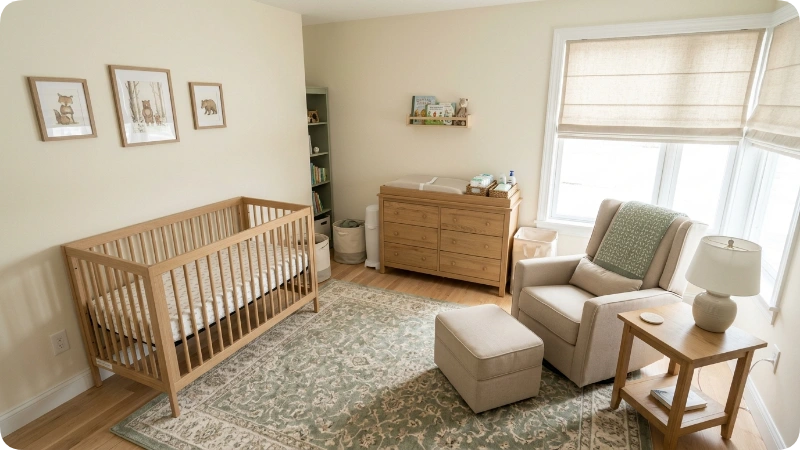
A good nursery layout makes daily care easier, particularly during nighttime feedings and diaper changes.
Start by choosing a safe location for the crib. Then arrange the changing area, storage, and seating around it.
Position the Crib Safely
Place the crib away from windows, blind cords, curtain cords, heaters, and objects that could fall into the sleep area.
Avoid installing shelves, heavy artwork, mirrors, or other decorations above the crib.
For infant sleep, the American Academy of Pediatrics recommends a firm, flat, non-inclined sleep surface with a fitted sheet and no pillows, blankets, bumper pads, stuffed animals, or other loose items.
The AAP also recommends room-sharing without bed-sharing for at least the first six months.
Organize the Changing Area
Keep diapers, wipes, clean clothes, and other essentials within adult reach.
Use drawer dividers to organize supplies.
Never leave your baby unattended on a raised changing surface.
Create a Comfortable Feeding Corner
If space allows, place a supportive chair near a stable surface for adult necessities.
Choose soft lighting that provides enough visibility during nighttime care.
Keep electrical cords and charging cables secured and out of reach.
Maintain Clear Walking Paths
Make sure doors and drawers can open comfortably.
Avoid placing small tables or baskets where someone could trip while carrying the baby.
A layout that works during the day should also be easy to navigate at night.
Baby Boy Nursery Lighting Ideas
Good lighting makes the nursery more comfortable and functional.
Instead of relying on one bright ceiling fixture, consider combining general lighting with softer light for nighttime care.
A ceiling light can provide illumination for cleaning and organizing. A securely positioned lamp or suitable wall-mounted fixture can provide gentler lighting during feeding.
Choose lighting that offers adequate visibility without shining directly into the crib.
Cordless window shades can help control daylight while avoiding dangling cord hazards.
If new electrical wiring is needed, use a qualified electrician where appropriate.
Practical tip: Test the lighting after dark. Sit in the feeding chair and check If you can comfortably see what you’re doing.
Baby Boy Nursery Storage Ideas That Reduce Clutter
Good storage makes everyday care easier and helps keep the nursery organized.
The most effective approach is to arrange supplies according to how often you use them.
Organize Dresser Drawers
Keep frequently used clothing and changing supplies in easily accessible drawers.
Use dividers to separate bodysuits, pajamas, socks, and other small items.
Sort Clothing by Size
Store the current clothing size in the main dresser.
Keep larger sizes in labeled bins or separate drawers until needed.
Remove outgrown clothing regularly to prevent overcrowding.
Use Closed Storage
Closed drawers and cabinets can make a nursery look less cluttered than several open shelves filled with supplies.
Use open storage only when it improves convenience and remains safe as your child becomes mobile.
Keep Toys Outside the Crib
Use stable, age-appropriate storage for toys.
Avoid storage chests with heavy, unsupported lids and furniture that could tip.
Reassess storage as your baby begins crawling, pulling up, and exploring.
Common Baby Boy Nursery Decorating Mistakes to Avoid
Even a beautifully decorated nursery can become inconvenient or unsafe if important practical details are overlooked.
Overdecorating the crib: Pillows, decorative blankets, stuffed animals, and bumper pads don’t belong in an infant’s sleep space.
Buying furniture before measuring: A large dresser or rocking chair may block doors and walking paths. Measure the room before purchasing.
Ignoring storage: Plan where diapers, clothing, bedding, and supplies will go before buying decorative accessories.
Using too many themes: Mixing jungle animals, dinosaurs, sports prints, and nautical decorations can make the room feel disconnected.
Hanging decorations too close to the crib: Keep shelves, frames, cords, and hanging objects away from the sleep area. Follow manufacturer instructions for mobiles and remove them before they become reachable.
Choosing difficult-to-clean materials: Washable rugs, durable upholstery, and practical storage can reduce maintenance.
Forgetting future childproofing: Anchor furniture that could tip and reassess reachable objects, drawers, and cords as your child grows.
How to Decorate a Baby Boy Nursery Step by Step
If you’re starting with an empty room, this order can help you avoid unnecessary purchases and decorating mistakes.
- Measure the room. Record wall lengths, window positions, door swings, and available floor space.
- Choose essential furniture. Select a safe crib and practical storage before buying decorative pieces.
- Plan the layout. Position the crib safely and check that walking paths remain clear.
- Choose a color palette. Select one main wall color, a furniture finish, and one or two accent shades.
- Complete painting and installation work. Follow ventilation, curing, and installation instructions.
- Arrange and secure furniture. Anchor furniture where needed and check stability.
- Organize everyday supplies. Make diapers, clothing, and feeding essentials easy for adults to access.
- Add decorative details. Use carefully positioned artwork, a suitable rug, and secure lighting.
- Perform a final safety check. Review the crib, furniture, cords, window coverings, and reachable objects.
The goal is to create a room that works well before adding the finishing touches.
Frequently Asked Questions About Baby Boy Nursery Ideas
What is the best theme for a baby boy nursery?
The best theme depends on your preferred style, room size, and budget. Woodland, modern neutral, coastal, and Scandinavian-inspired designs are flexible choices because you can update them through artwork and accessories as your child grows.
Can I decorate a baby boy nursery without blue?
Yes. Sage green, cream, beige, terracotta, olive, and soft yellow are all attractive options. Choose colors that work with your home’s interior and the room’s natural light rather than following traditional gender conventions.
How can I make a baby boy nursery look expensive on a budget?
Use a consistent color palette, choose simple furniture finishes, limit competing patterns, and keep storage organized. Fresh paint and carefully selected artwork can create a polished appearance without expensive decorations.
When should I start decorating the nursery?
Begin early enough to allow time for furniture delivery, assembly, painting, ventilation, and safety checks. Complete disruptive work before the baby uses the room and follow the instructions for all materials and products.
Does a newborn need a separate nursery?
No. A separate nursery is not essential for a newborn. The AAP recommends that babies sleep in their parents’ room, on a separate appropriate sleep surface, for at least the first six months. A nursery can still be useful for changing, feeding, and storage.
What nursery colors work well in small rooms?
Warm white, cream, pale blue, light sage, and soft beige can create a visually open appearance. However, layout, lighting, and furniture scale often matter more than the wall color alone.
How can I design a nursery that grows with my child?
Choose versatile furniture, a flexible wall color, and decorations that are easy to replace. Framed prints, rugs, and accessories are generally easier to update than elaborate permanent murals or themed built-in furniture.
Final Thoughts
The best baby boy nursery ideas balance beautiful design with comfort, practicality, and safety.
If you prefer a modern neutral nursery, a woodland theme, classic blue walls, or a playful dinosaur design, the room should reflect your taste while supporting everyday care.
Start with a safe sleep space and furniture that fits comfortably. Choose a cohesive color palette, organize essential supplies, and add a few meaningful decorative details.

I am Emma Brooks, a passionate Interior Design Writer and Home Décor Enthusiast at Decoridia. I share well-researched content on home décor, interior design, DIY decorating ideas, furniture selection, color palettes, home organization, and seasonal styling, helping readers create beautiful, functional, and inspiring living spaces for every lifestyle.