Quick answer:
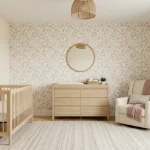
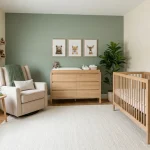
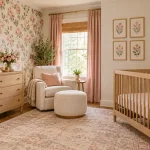
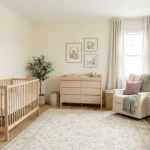
The best baby girl nursery ideas for small rooms combine space-saving furniture, clever storage, soft colors, and practical layouts. The secret to making a tiny nursery feel bigger isn’t adding more storage, it’s choosing furniture that serves multiple purposes and keeping the floor open. Try warm ivory, blush pink, or sage green with natural wood accents for a light, welcoming look. Choose a crib that meets current safety standards, securely anchor furniture, and keep the sleep space free of toys, pillows, and loose bedding.
Baby girl nursery ideas for small rooms can turn even the tiniest bedroom into a beautiful, comfortable, and practical space. But how do you fit a crib, storage, and everyday essentials without making the room feel crowded? The secret lies in thoughtful furniture placement, clever storage solutions, and simple design choices that make every square foot count.
Decorating a small baby girl’s nursery can feel challenging when every piece of furniture competes for limited space. A gorgeous rocking chair might look perfect in inspiration photos but leave no room to open the closet. An oversized dresser may solve one storage problem while creating another by blocking valuable floor space.
The good news is that you don’t need a large room, expensive furniture, or elaborate decorations to create something special. Thoughtful furniture placement, balanced proportions, and simple design choices can make even a compact nursery feel welcoming and organized.
These baby girl nursery ideas for small rooms will help you work with your space rather than against it. Whether you’re decorating a narrow bedroom, converting a guest room, or creating a nursery corner, you’ll discover practical ways to avoid common layout mistakes and make every inch count.
1. Start With a Space-Saving Nursery Layout
Before buying furniture or choosing wallpaper, plan where everything will go.
In a small nursery, the arrangement of furniture often matters more than the amount of furniture you own.
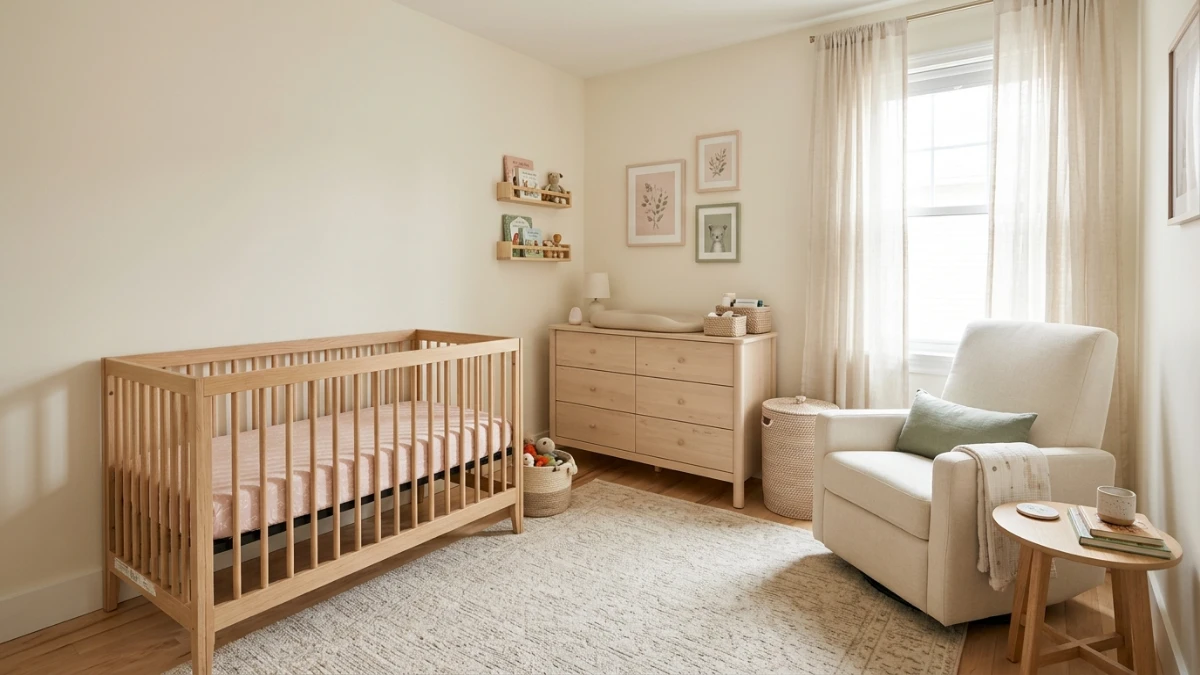
A practical nursery layout usually includes three areas:
- Sleeping area: A crib positioned safely away from windows, cords, and anything that could fall into the sleeping space.
- Changing and storage area: A dresser with organized supplies and a safe changing arrangement.
- Feeding area: A comfortable adult chair, if the room has enough space.
How to arrange furniture in a small nursery
Start by measuring the room, including doors, windows, closets, and any awkward corners.
Place the crib against a suitable wall where it won’t interfere with walking paths or access to other furniture.
Position the dresser where its drawers can open fully. If possible, leave the center of the room open so you can move around comfortably while carrying your baby.
A feeding chair can go in an available corner, but don’t force one into the layout if it makes the room difficult to use.
Practical tip: Mark furniture dimensions on the floor with painter’s tape before buying anything. This helps you visualize how much space each piece will occupy.
2. Choose a Soft, Light Color Palette
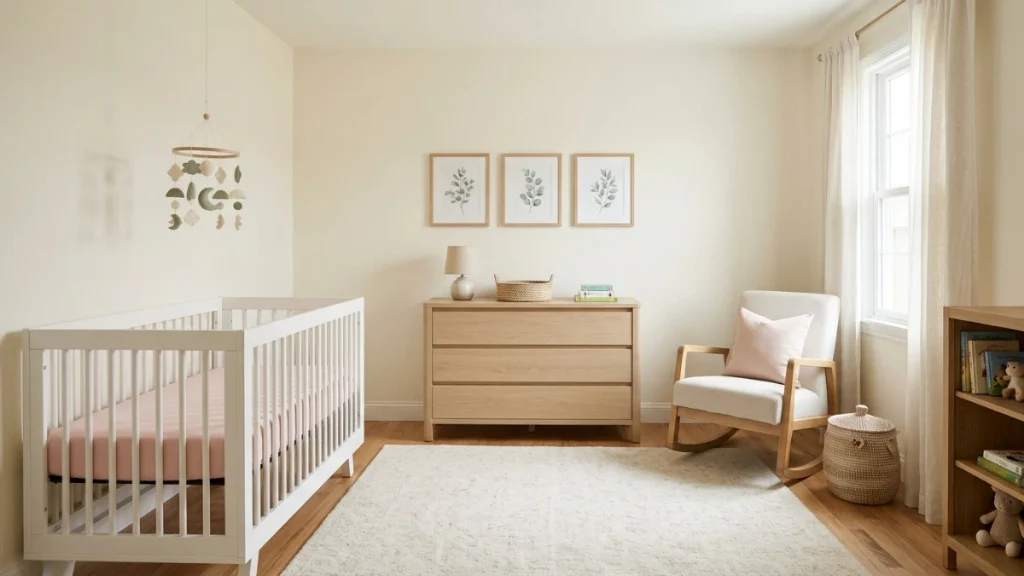
Color can make a noticeable difference in how spacious a small nursery feels.
Light shades create a gentle visual background and can make the room appear more open, especially when paired with natural daylight.
However, a baby girl’s nursery doesn’t have to be entirely pink.
Warm ivory and natural wood
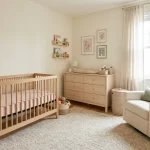
Warm ivory walls paired with natural oak furniture create a bright, comfortable atmosphere.
Add subtle blush accents through artwork, a washable rug, or decorative items positioned safely away from the crib.
This combination works particularly well in small rooms because it keeps the overall appearance simple.
Blush pink and cream
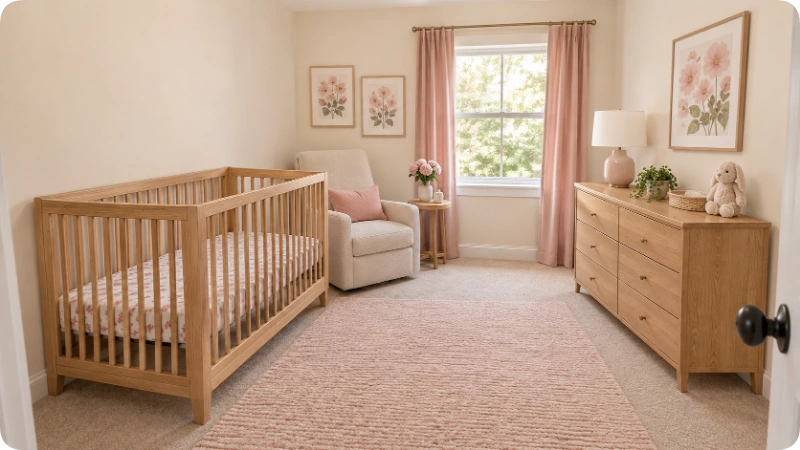
Soft blush pink adds warmth without overwhelming the room.
Try pale pink walls with a white crib and cream-colored furniture. If you prefer a more restrained look, use pink on one wall and keep the remaining surfaces neutral.
Sage green and white
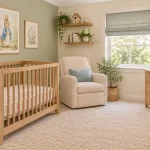
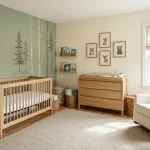
Sage green is a beautiful alternative to traditional pink nursery colors.
It pairs naturally with white furniture, light wood, and botanical decorations.
This palette also works well as your child grows because it isn’t strongly associated with a particular age.
Dusty lavender and gray
Muted lavender can create a gentle, calming appearance when combined with warm gray or ivory.
Avoid using too many competing colors. A simple palette usually makes a compact room feel more organized.
Design tip: Choose one main wall color, one furniture finish, and one or two accent colors. This creates visual consistency without making the nursery look plain.
3. Use a Compact Crib That Fits the Room
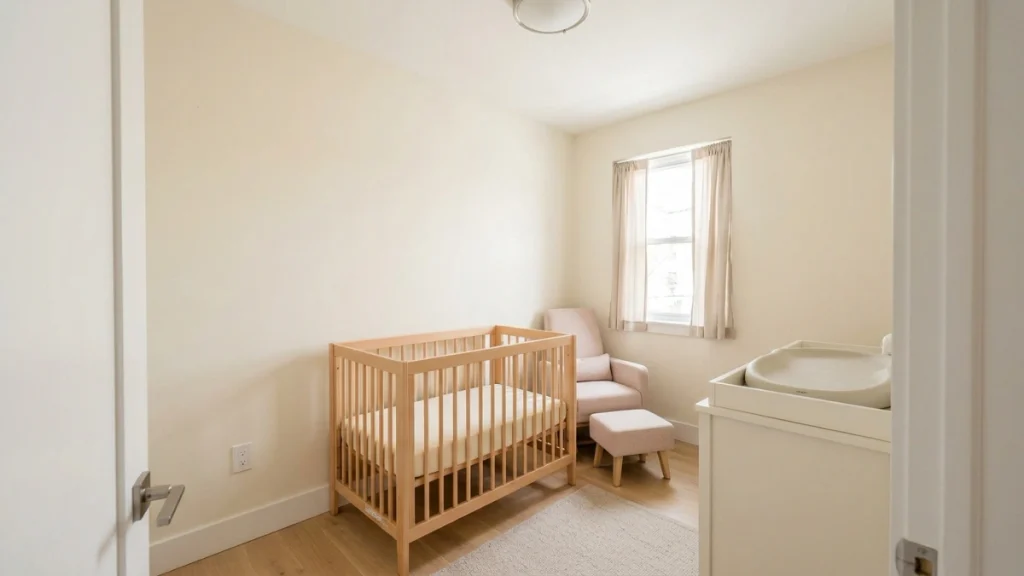
The crib is usually the largest essential piece of nursery furniture, so its dimensions should guide the layout.
A standard crib may work perfectly in a small bedroom, but a mini crib can be helpful when floor space is particularly limited.
Mini crib vs. standard crib
| Feature | Mini crib | Standard crib |
| Size | Smaller footprint | Larger footprint |
| Best for | Very small rooms | Rooms with more space |
| Mattress | Compatible mini mattress | Compatible standard mattress |
| Longevity | May be outgrown sooner | Often usable longer |
| Main benefit | Saves floor space | More room for a growing baby |
Before purchasing, check the crib’s actual measurements, mattress requirements, developmental limits, and applicable safety standards.
A mini crib is not automatically better simply because the room is small. Choose the option that fits safely and supports your family’s needs.
Keep the crib simple and safe
According to American Academy of Pediatrics safe-sleep recommendations, babies should sleep on a firm, flat mattress with a fitted sheet.
Keep pillows, loose blankets, stuffed animals, crib bumpers, and decorative bedding out of the crib.
Avoid hanging canopies or placing shelves, artwork, and other objects where they could fall into or be reached from the sleeping area.
A simple crib can look beautiful without unnecessary accessories.
4. Replace a Separate Changing Table With a Dresser
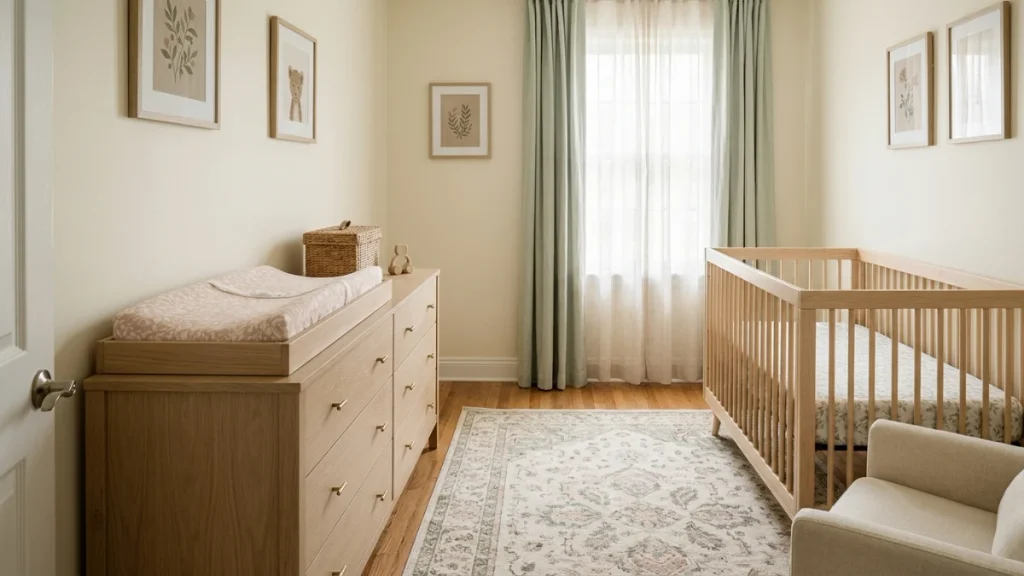
One of the smartest ways to save space in a small nursery is to choose furniture that serves more than one purpose.
Instead of buying both a dresser and a separate changing table, consider a dresser with a manufacturer-approved changing setup.
This arrangement can reduce the amount of furniture needed while keeping everyday supplies organized.
What to look for in a nursery dresser
Choose a dresser with:
- Enough drawers for clothing, diapers, and other essentials.
- A comfortable working height for caregivers.
- Stable construction and appropriate anti-tip anchoring.
- Manufacturer-approved compatibility with any changing accessory placed on top.
Not every dresser is designed to support a changing station. Follow the furniture and changing equipment manufacturers’ instructions rather than assuming any changing pad will work.
Never leave your baby unattended on an elevated changing surface.
Organize the dresser efficiently
Use the upper drawers for frequently needed supplies such as diapers, wipes, and everyday clothing.
Keep spare sheets, seasonal clothing, and less frequently used items in lower drawers.
Drawer dividers can help organize small baby clothes without requiring additional furniture.
This simple arrangement makes daily routines easier and reduces clutter.
5. Make Better Use of Vertical Storage
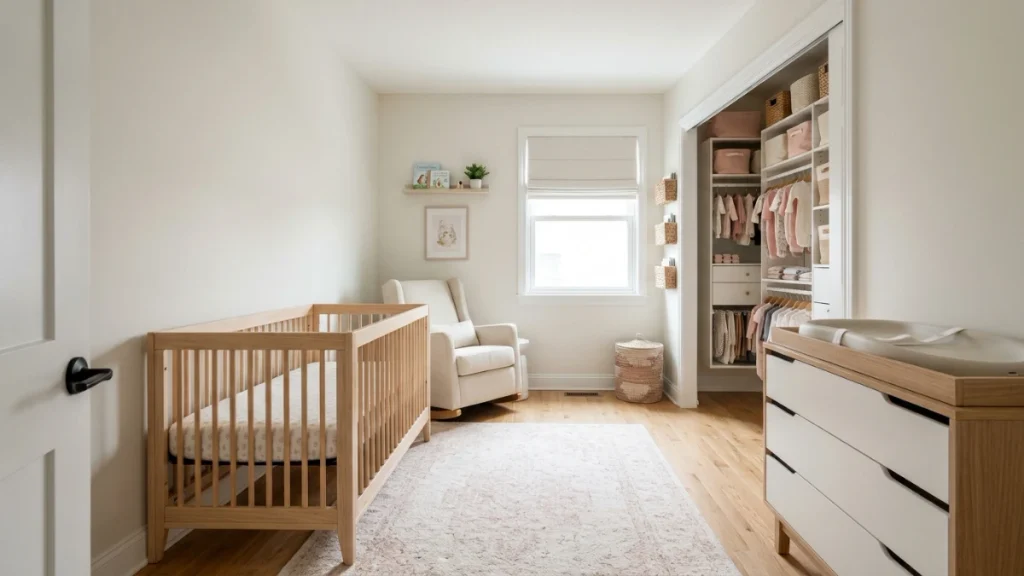
When floor space is limited, walls can provide useful storage opportunities.
However, the goal isn’t to cover every wall with shelves. Too many wall-mounted items can make a small nursery feel busy.
Instead, choose a few practical storage solutions.
Install shallow wall shelves
Shallow shelves can hold lightweight decorative objects or supplies intended for adult use.
Install them securely using hardware appropriate for the wall material and expected weight.
Keep shelves and their contents away from the crib, changing surface, and areas where a child could reach or pull objects down.
Use wall-mounted organizers
Wall-mounted organizers may be useful for lightweight items, provided they are securely installed and positioned out of children’s reach.
Avoid hanging bags, cords, or organizers from the crib.
Take advantage of closet space
If the nursery has a closet, use it efficiently before purchasing more furniture.
Add suitable shelf organizers, clothing dividers, or storage bins to separate different categories of baby supplies.
Closed storage is particularly helpful for keeping the room visually uncluttered.
Practical tip: Prioritize storage that solves an actual problem. A single useful shelf is better than several decorative shelves that collect unnecessary objects.
6. Create a Cozy Nursery With Soft Textures
A small nursery can feel warm and welcoming without using bulky furniture or excessive decorations.
Texture adds depth to a simple color palette and helps the room feel more comfortable.
Consider combining a washable low-pile rug, natural wood furniture, a comfortable upholstered chair, and subtle decorative textiles in adult-use areas.
Choose a practical nursery rug
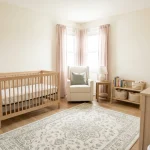
A washable rug can make the floor more comfortable for adults and provide a designated play area as your child grows.
Look for a rug that lies flat, is easy to clean, and doesn’t create a tripping hazard.
Avoid thick rugs that interfere with doors or make furniture unstable.
Add a comfortable feeding chair
If space allows, choose a chair with supportive seating and dimensions appropriate for the room.
Compact upholstered chairs may work better than oversized recliners.
Remember to account for the chair’s movement and the space needed to sit down and stand up safely.
Keep decorative textiles away from the crib
Decorative pillows, throws, and cushions can add softness to adult seating areas.
They should never be placed inside the baby’s sleeping space.
A nursery can feel comfortable and inviting while keeping the crib completely clear.
7. Try a Minimalist Baby Girl Nursery
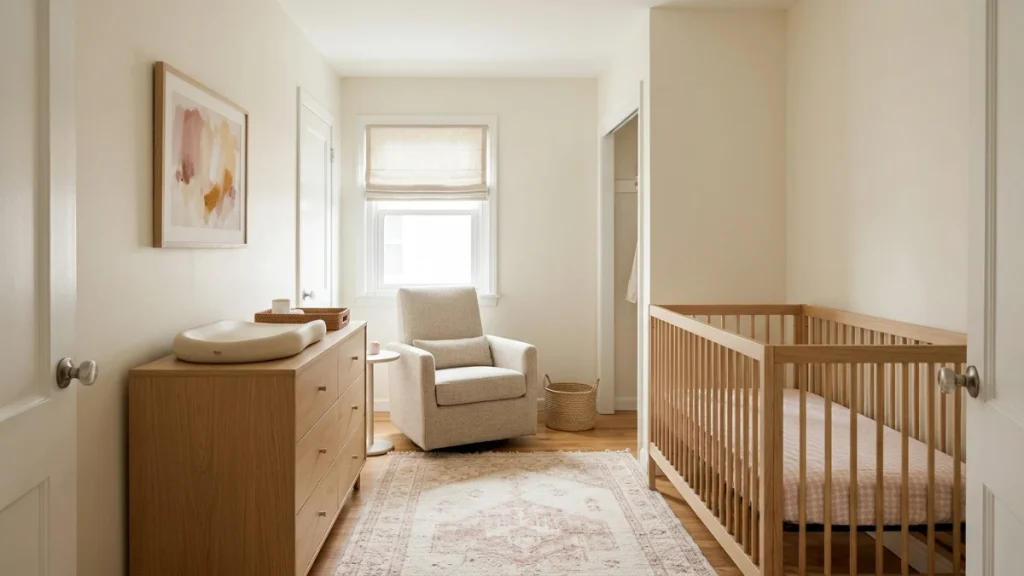
Minimalist decorating is particularly effective in small rooms because it reduces visual clutter.
Instead of filling the nursery with themed accessories, focus on a few useful pieces of furniture and carefully chosen details.
Start with a simple crib, a practical dresser, suitable window coverings, and appropriate lighting.
Then add one focal feature, such as a softly colored wall or a framed print securely mounted away from the crib.
Why minimalist nurseries work well
A minimalist approach offers several advantages:
- Fewer unnecessary items occupying floor space.
- Easier cleaning and organization.
- Greater flexibility as your child grows.
- Less visual competition between furniture and decorations.
- More freedom to update the room without replacing everything.
Minimalism doesn’t mean eliminating useful storage.
Choose furniture with drawers and closed compartments so everyday supplies remain accessible without being constantly visible.
A small nursery with thoughtful storage can feel peaceful without sacrificing practicality.
8. Add a Subtle Floral or Botanical Theme
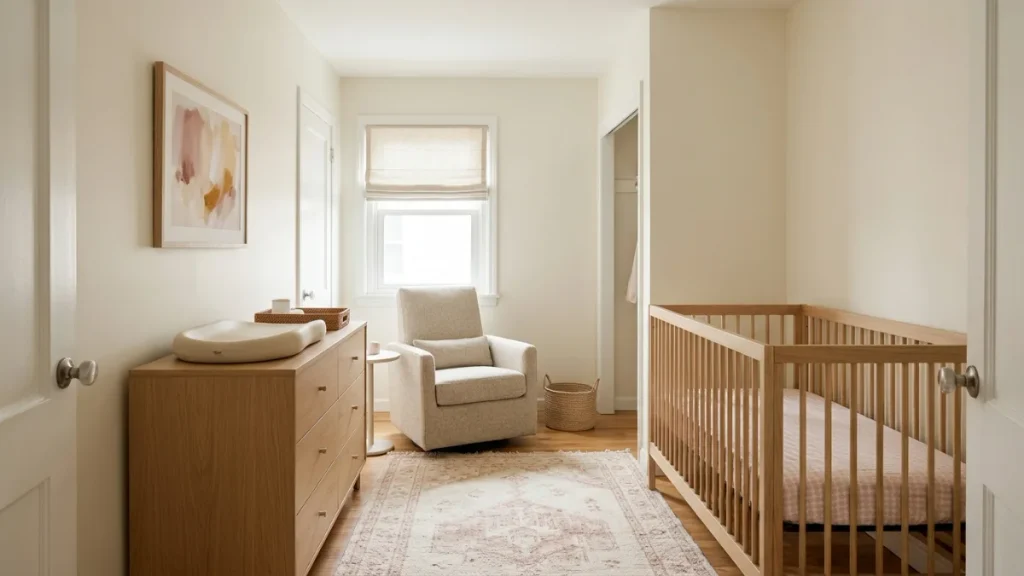
Floral nursery decor can be beautiful in a small room when patterns are used selectively.
Instead of covering every surface with flowers, choose one main decorative feature.
Try a floral accent wall
Delicate floral wallpaper on one suitable wall can create a charming focal point.
Pair it with plain furniture, a neutral rug, and simple accessories to avoid overwhelming the room.
Small-scale botanical patterns often blend easily with soft color palettes, although larger prints can also work when surrounding surfaces remain simple.
Use botanical artwork
Framed botanical prints can introduce a floral theme without committing to wallpaper.
Choose artwork that coordinates with the room’s colors and mount it securely on a wall away from the crib.
Add natural materials
Natural oak, rattan-style accents in safe locations, and woven textures can complement a botanical theme.
Avoid placing baskets or decorative objects where a baby could reach them or pull them down.
For renters, removable wallpaper may offer flexibility, but check the product’s compatibility with your wall finish. Some removable products can still damage paint.
9. Use a Narrow Nursery Layout for Awkward Rooms
A long, narrow bedroom requires a different approach from a compact square room. When exploring baby boy nursery ideas for small rooms, choosing the right furniture arrangement can make even an awkward layout feel comfortable and functional.
The main challenge is maintaining enough open space to move comfortably without sacrificing essential nursery furniture.
Place Furniture Along Suitable Walls
Consider placing the crib along a safe side wall and positioning a shallow dresser near the opposite end of the room.
Avoid arranging bulky furniture directly across from each other if doing so creates an uncomfortable passage.
A thoughtful layout should allow parents to move easily between the crib, dresser, and doorway, especially during nighttime care.
Choose Shallow Storage
A shallow dresser or suitable closet organizer may provide enough storage without taking up excessive floor space.
Measure the depth of drawers when fully opened, not just the dimensions of the closed dresser.
Choose furniture that provides practical storage while preserving enough room for daily activities.
Keep the Center of the Room Open
An open central walkway makes it easier to move between the crib, storage, and doorway.
A flat, washable runner can visually connect a narrow room, provided it doesn’t slip or create a tripping hazard.
Avoid unnecessary floor accessories that make the room feel crowded or restrict movement.
Practical tip: When measuring a narrow nursery, account for how much space you need while carrying your baby, opening drawers, and accessing the closet.
10. Choose Furniture With Slim Profiles
Furniture can feel visually bulky even when its measurements aren’t especially large.
One of the most practical baby boy nursery ideas for small rooms is choosing furniture with slim profiles that provide essential functionality without overwhelming the available space.
In a compact nursery, both the actual dimensions and the visual appearance of furniture matter.
Choose pieces with simple silhouettes and proportions suited to the room.
Look for Compact Dressers
A dresser with a shallow depth may fit better than a wide, bulky cabinet.
Look for designs with practical drawers, smooth edges, and enough storage for everyday baby essentials.
Make sure the dresser can be properly anchored to prevent tipping.
Consider Visually Open Crib Designs
Cribs with simple slatted sides may appear less visually heavy than designs with bulky decorative panels.
Natural wood, white, and other light finishes can also help maintain an airy appearance.
However, safety compliance, mattress fit, and suitable dimensions should always determine your final choice.
Avoid Oversized Accessories
Large decorative baskets, oversized lamps, and bulky side tables can quickly crowd a small room.
Choose accessories according to their practical function rather than their appearance alone.
A compact storage basket or small decorative accent can add personality without occupying unnecessary space.
The goal is to preserve usable space while keeping the nursery attractive, organized, and comfortable for everyday care.
11. Make a Small Nursery Feel Brighter With Lighting
Lighting affects both the appearance and functionality of a small nursery.
When planning baby boy nursery ideas for small rooms, thoughtful lighting can make a compact space feel brighter, more welcoming, and easier to use throughout the day.
A room with limited daylight may feel more comfortable when it has several appropriate light sources rather than one overly bright fixture.
Maximize Natural Daylight
Keep windows visually simple and avoid placing unnecessary furniture where it blocks daylight.
Choose cordless window coverings that provide appropriate light control.
Light-colored walls, simple window treatments, and carefully positioned furniture can help distribute natural light throughout the room.
Use Soft Nighttime Lighting
A dimmable light can make nighttime feeding and diaper changes more comfortable.
Choose a warm, gentle light that supports a calming environment without creating unnecessary glare.
The light should still provide enough visibility for safe care.
Position lamps and electrical equipment so cords cannot be reached or pulled by a child.
Keep Lighting Simple
A properly installed ceiling light may provide sufficient general illumination.
If additional lighting is needed, choose secure fixtures suitable for the room.
Avoid dangling electrical cords, unstable lamps, and decorative string lights near the crib.
Simple lighting choices can help create a comfortable atmosphere without taking up valuable floor space.
You don’t need elaborate lighting to make a small nursery feel warm, functional, and inviting.
12. Create a Nursery Corner in a Shared Bedroom
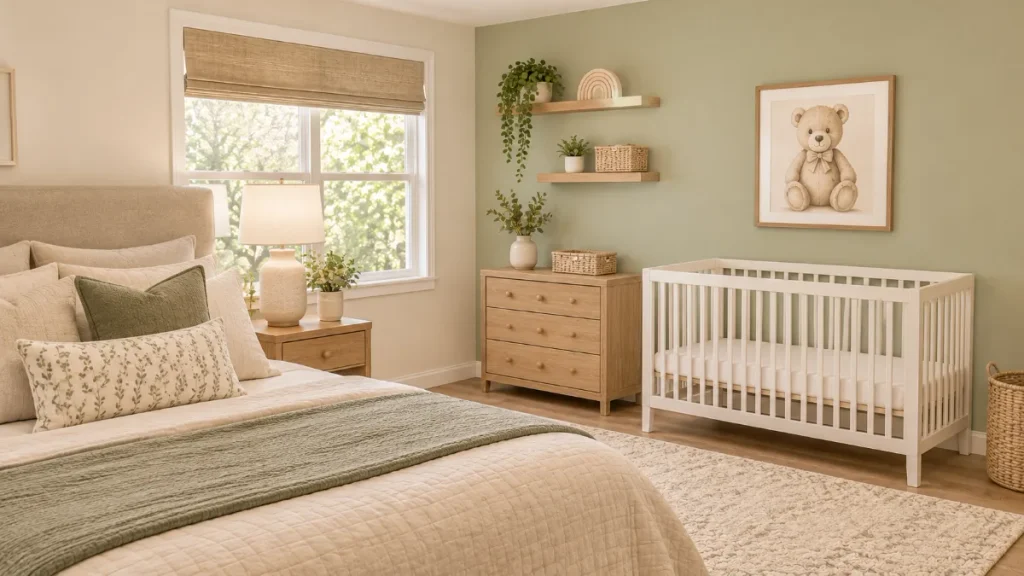
Not every family has a separate room available for a nursery.
A dedicated baby corner in the parents’ bedroom can provide a practical solution, especially during the early months.
The American Academy of Pediatrics recommends room-sharing without bed-sharing for at least the first six months.
Choose a suitable sleeping space
Use a crib or bassinet that meets applicable safety requirements and is appropriate for your baby’s developmental stage.
Position it safely within the bedroom, away from window cords, loose bedding, and other hazards.
The baby should have a separate sleep surface rather than sharing an adult mattress.
Create simple visual separation
You can distinguish the nursery corner with a subtle wall color, a coordinating dresser, or securely mounted artwork positioned away from the crib.
Avoid bulky room dividers, hanging canopies, or loose curtains around the baby’s sleeping area.
Keep essential supplies nearby
Use a dresser drawer or secure organizer for diapers, wipes, and spare clothing.
A shared bedroom nursery doesn’t need every item found in a traditional nursery.
Focus on the essentials that make daily and nighttime care easier.
13. Decorate a Small Nursery on a Budget
Creating a beautiful nursery doesn’t require expensive matching furniture or elaborate decorations.
A small room often benefits from fewer, more carefully selected purchases.
Reuse suitable furniture
An existing dresser may work well for clothing storage if it is stable, appropriately anchored, and in good condition.
A separate changing station may not be necessary if you have another safe, practical changing arrangement.
Choose affordable decorative updates
Paint, simple artwork, and a washable rug can change the room’s appearance without requiring a complete furniture replacement.
Use a limited color palette to help inexpensive pieces look coordinated.
Spend carefully on essential items
Prioritize a compliant crib, compatible mattress, stable furniture, and appropriate safety equipment.
Be cautious with secondhand cribs. Verify the model, applicable safety compliance, recalls, condition, missing parts, and assembly instructions before considering one.
Avoid used cribs with uncertain histories or modifications.
Budget-friendly nursery priorities
| Priority | Item | Money-saving approach |
| Essential | Crib and mattress | Choose a suitable compliant model |
| Essential | Clothing storage | Reuse an appropriate dresser |
| Useful | Changing arrangement | Avoid unnecessary duplicate furniture |
| Useful | Lighting | Use suitable existing fixtures |
| Optional | Feeding chair | Purchase only if space allows |
| Decorative | Wall art and accessories | Add gradually |
The most effective way to control your budget is to purchase essential items first and decorate once the layout is complete.
14. Plan Storage for the Toddler Years
A nursery that works for a newborn may need adjustments once your child becomes mobile.
Thinking ahead can help you avoid buying furniture that becomes impractical after a short period.
Choose flexible storage
A sturdy dresser with ordinary drawers can remain useful beyond the baby stage.
Closed storage can help organize clothing, toys, and everyday supplies as your child’s needs change.
Avoid unnecessary permanent themes
Highly specialized nursery furniture and elaborate themed decorations may be difficult to adapt later.
Neutral furniture combined with replaceable decorative accents allows the room to change without a major redesign.
Reassess safety as your child grows
When your baby starts rolling, sitting, pulling up, and exploring, review the room’s safety arrangements.
Check furniture anchoring, accessible drawers, electrical cords, window coverings, and objects that could be climbed or pulled down.
Move items that become reachable and follow manufacturer instructions for adjusting or discontinuing use of baby equipment.
A practical nursery should evolve with your child’s development.
How to Choose the Best Small Nursery Design
The right nursery design depends on the room’s biggest limitation.
| Your challenge | Recommended approach |
| Very limited floor space | Consider a mini crib and compact storage |
| Long, narrow bedroom | Use shallow furniture and maintain an open walkway |
| Limited closet storage | Prioritize a practical dresser |
| Dark room | Choose lighter finishes and appropriate lighting |
| Rental restrictions | Focus on movable furniture and low-commitment decor |
| Tight budget | Reuse suitable furniture and reduce unnecessary purchases |
| Shared bedroom | Create a compact nursery corner with a separate safe sleep space |
Rather than choosing a theme first, identify the problem you most need to solve.
For example, floral wallpaper won’t improve a nursery if the dresser blocks the doorway. Solve the layout first, then add decorations that complement the available space.
Common Small Nursery Decorating Mistakes
A nursery can look attractive in photographs while being inconvenient in everyday life.
Avoid these common mistakes when planning your room.
Buying furniture before measuring
A crib and dresser may technically fit inside the room but leave insufficient space for opening drawers or moving comfortably.
Always measure furniture and the room before purchasing.
Using too many decorations
Excessive shelves, baskets, wall art, and accessories can make a compact nursery feel crowded.
Choose decorations that contribute to the overall design rather than filling every available surface.
Choosing a theme over function
Matching furniture sets aren’t necessary if individual pieces better suit the room.
Practical furniture placement should take priority over achieving a perfectly coordinated appearance.
Ignoring future childproofing
Furniture and accessories that seem harmless during the newborn stage may become hazards when your child begins exploring.
Plan for anchoring, cord management, and accessible storage from the beginning.
Placing decorations too close to the crib
Avoid hanging canopies, loose fabric, reachable wall decorations, and heavy objects that could fall into the sleeping area.
Keep the crib free from unnecessary accessories.
Forgetting caregiver comfort
The nursery should support feeding, diaper changes, cleaning, and safe movement.
A beautiful room that is difficult to use will quickly become frustrating.
Small Baby Girl Nursery Planning Checklist
Before finishing your nursery, review these essentials:
- Measure the room, including doors, windows, and closet openings.
- Choose a crib and compatible mattress that meet applicable safety requirements.
- Plan safe crib placement away from cords and falling objects.
- Arrange furniture to maintain clear walking paths.
- Secure dressers and other furniture that require anchoring.
- Choose a safe, practical changing arrangement.
- Organize clothing, diapers, and everyday supplies.
- Select appropriate cordless window coverings.
- Plan safe lighting for daytime and nighttime care.
- Choose a simple color palette.
- Add only decorative accessories that suit the available space.
- Keep the baby’s sleeping area clear.
- Reassess the nursery as your child grows.
Frequently Asked Questions
What is the best crib for a very small nursery?
A mini crib can be a practical choice if a standard crib leaves insufficient space for other essentials. Compare actual dimensions, mattress compatibility, safety requirements, and manufacturer limits before deciding.
Can a small nursery have dark walls?
Yes. Dark colors can create a comfortable, intimate atmosphere, especially when balanced with lighter furniture and adequate lighting. A muted green, dusty blue, or warm taupe accent wall can add character without overwhelming the entire room.
How can I make a baby girl’s nursery look bigger?
Choose appropriately sized furniture, keep walking paths open, reduce unnecessary accessories, and use a consistent color palette. Light finishes, simple window treatments, and furniture with less visual bulk can also help the room feel more spacious.
Is a rocking chair necessary in a small nursery?
No. A nursery chair is optional. If it blocks essential furniture or makes movement difficult, a comfortable feeding location elsewhere in the home may be a better solution.
Where should a crib go in a small bedroom?
Place the crib in a suitable location away from windows, window-covering cords, electrical cables, reachable decorations, and furniture that could create climbing hazards. Follow the crib manufacturer’s instructions and current safe-sleep guidance.
How do I decorate a nursery without drilling holes?
Use freestanding decorative furniture positioned safely away from the crib, suitable removable wallpaper, and decorative textiles in adult-use areas. Avoid relying on adhesive strips for heavy wall decorations or furniture anchoring.
What furniture is essential in a small baby nursery?
The essential furniture depends on your household, but a safe crib or other age-appropriate sleep space and practical storage are usually the starting points. A separate changing table, nursing chair, or large storage cabinet may not be necessary.
Can I create a nursery in a room without a closet?
Yes. An anchored dresser, suitable closed storage, and carefully organized drawers can provide space for clothing and baby supplies. Prioritize storage capacity without crowding the room.
Conclusion
Creating a beautiful baby girl nursery in a small room is less about fitting in more furniture and more about choosing what genuinely belongs there.
Start with a safe sleeping space and a practical layout. Add storage that supports everyday care, choose a comfortable color palette, and introduce decorative details gradually.
Whether you prefer a minimalist nursery, delicate floral patterns, soft pink accents, or natural wood furniture, the best design is one that works for your available space and daily routine.
Before purchasing furniture or decorations, measure the room and sketch a simple layout. This first step will help you make confident decisions, avoid unnecessary spending, and create a nursery that remains comfortable and functional as your baby gro

I am Emma Brooks, a passionate Interior Design Writer and Home Décor Enthusiast at Decoridia. I share well-researched content on home décor, interior design, DIY decorating ideas, furniture selection, color palettes, home organization, and seasonal styling, helping readers create beautiful, functional, and inspiring living spaces for every lifestyle.