Quick answer:
The best baby girl nursery ideas include soft floral themes, blush pink palettes, sage green accents, vintage details, woodland designs, and modern neutrals. Choose a calming color scheme, space-saving furniture, practical storage, and charming wall decor to create a beautiful, functional room. Keep the crib free of loose bedding, pillows, and toys for safer sleep.
How do you create a beautiful nursery for your baby girl that’s cozy, practical, and full of personality? From delicate floral wallpaper and soft blush pink to calming sage green and timeless vintage details, there are so many lovely ways to make her room feel special.
But the best baby girl nursery ideas go beyond pretty colors and charming decorations. A well-designed nursery should make everyday routines easier, with comfortable seating for feeding, convenient diaper-changing essentials, practical storage, and a safe place for your baby to sleep.
And who says a baby girl’s nursery has to be pink? Warm neutrals, natural wood, muted lavender, and playful woodland themes can create an equally welcoming space.
Whether you’re decorating a small room, working with a limited budget, or planning a complete makeover, these 18 inspiring nursery ideas will help you find a style you love while creating a comfortable, functional space that can grow with your little one.
Soft Blush Pink Nursery
Soft color • Traditional with a modern finish
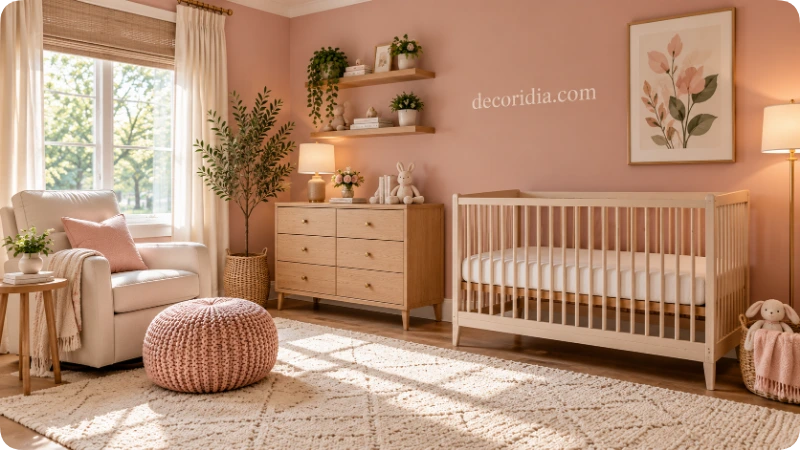
A blush pink nursery uses gentle color without making the entire room feel saturated.
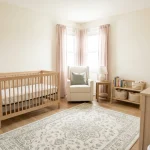
Choose a dusty blush rather than a bright bubblegum pink. Paint the walls a soft pink, then balance them with an ivory crib, light oak dresser, and cream upholstered chair.
The contrast between pink walls and natural wood helps the furniture stand out. A beige or ivory rug can soften the transition between the walls and floor.
For decoration, use a single framed botanical print or a pair of understated abstract artworks on a wall away from the crib.
Best for: Parents who love traditional pink nurseries but prefer a quieter, more adaptable look.
Design tip: Test blush paint beside your flooring. Pink can appear peachy next to warm wood and cooler next to gray floors.
Floral Garden Nursery
Botanical patterns • Romantic and decorative
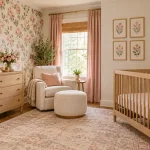
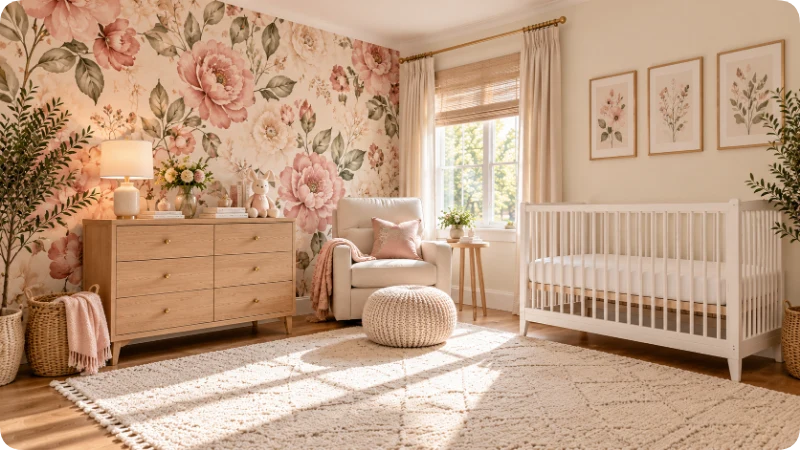
A floral nursery works best when the flowers are treated as the main design feature rather than repeated on every surface.
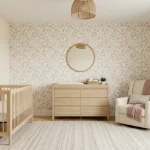
Choose one wall for floral wallpaper, preferably behind a dresser or an open part of the room. Large, loosely spaced botanical prints create a different effect from tiny, densely packed flowers: the former feels more contemporary, while the latter creates a cottage-inspired atmosphere.
Pair the wallpaper with a simple white crib and pale wood furniture. Pull one or two colors from the flowers into a rug or chair cushion used only on adult seating.
If wallpaper feels like too much commitment, use framed floral illustrations on painted walls instead.
Best for:Parents who enjoy decorative walls and soft, romantic interiors.
Design tip: Avoid competing floral patterns on the wallpaper, curtains, and rug. Give the room one dominant pattern and let the other surfaces stay quieter.
Sage Green and Cream Nursery
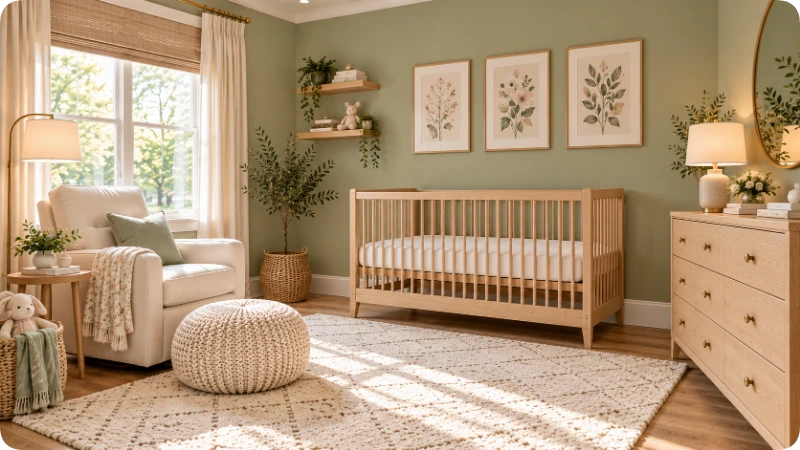
Nature-inspired • Gender-neutral and flexible
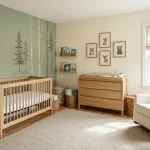
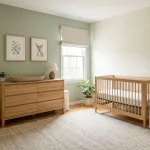
Sage green offers a gentle alternative to pink while still creating a welcoming nursery.
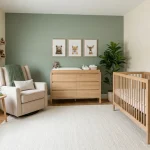
Use sage on the walls and pair it with cream, warm white, and natural oak. A light wood crib and dresser reinforce the natural palette, while a cream nursing chair adds softness.
Instead of adding a strong theme, introduce simple botanical prints or landscape artwork. The room can later accommodate brighter accessories without requiring repainting.
Sage also works as an accent rather than the main wall color. In a smaller room, one muted green wall with three cream walls can create a clear focal point.
Best for:Parents who want a nursery that can transition easily into a toddler’s room.
Design tip: Compare sage samples in daylight and under your room’s lamps. Some greens become noticeably gray in cooler light.
Vintage-Inspired Baby Girl Nursery
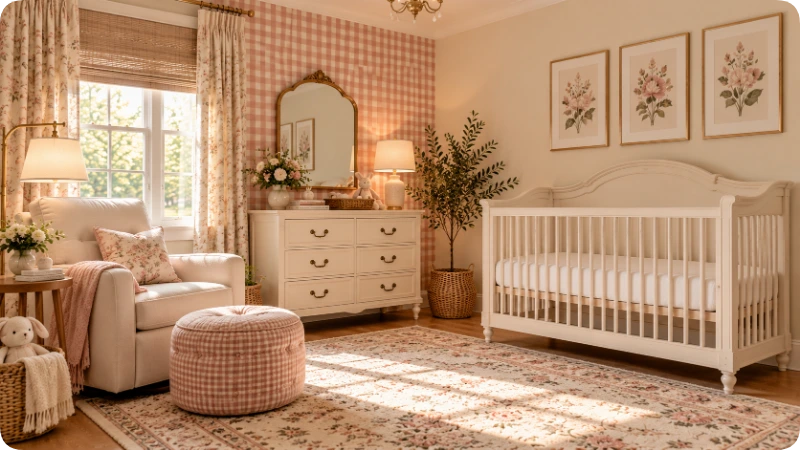
Traditional details • Nostalgic character
A vintage-inspired nursery combines classic patterns, warm furniture, and a few carefully selected decorative pieces.
Start with cream or pale pink walls. Add a modern crib with traditional-looking lines and a contemporary dresser with vintage-style knobs.
Small-scale gingham, narrow stripes, or delicate floral prints can reinforce the style. A traditional-style washable rug adds pattern at floor level.
For artwork, choose botanical illustrations, gentle landscapes, or classic storybook-inspired prints.
Best for: Traditional homes and parents who enjoy collected, characterful interiors.
Trade-off: Older furniture may have stability or paint hazards. Use a crib that meets current applicable safety requirements, and inspect any secondhand dresser carefully before placing it in the nursery.
Modern Minimalist Baby Girl Nursery
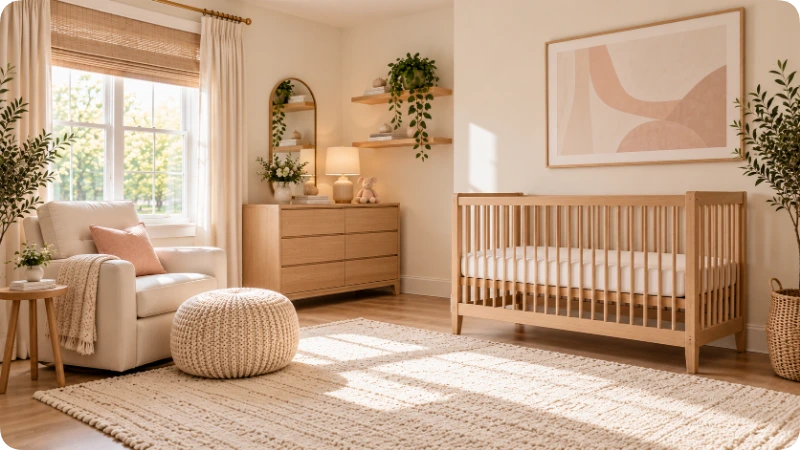
Clean lines • Low-clutter design
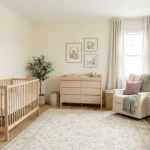
A minimalist nursery focuses on useful furniture and a limited number of decorative elements.
Choose warm white walls, a natural wood crib, and a dresser with simple fronts. A cream chair and washable rug can add comfort without introducing a new theme.
Keep smaller supplies inside drawers rather than displaying everything on open shelves.
For a little personality, use one large framed abstract print in blush, beige, or muted green.
Best for: Small rooms, contemporary homes, and parents who prefer easy-to-maintain spaces.
Design tip: Minimalism doesn’t require a bare room. Layering two or three textures wood, upholstery, and a woven-look rug adds warmth without clutter.
Butterfly-Themed Nursery
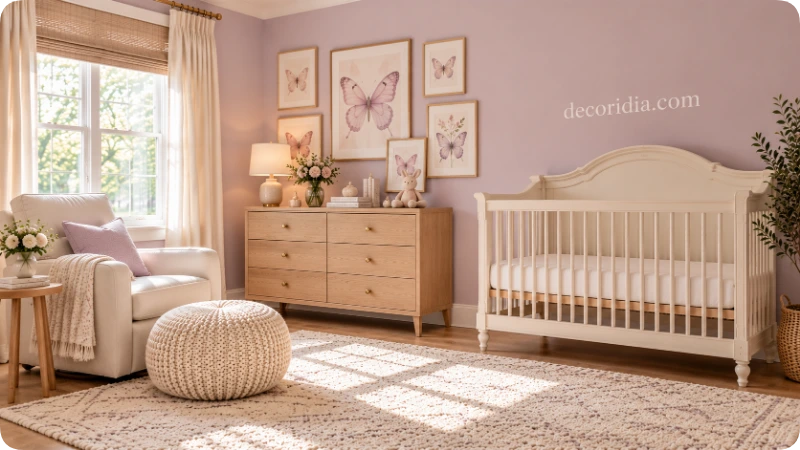
Playful details • Light, delicate pattern
A butterfly nursery can be whimsical without relying on large, brightly colored wall decals.
Start with ivory, pale lavender, or blush walls. Add a small collection of framed butterfly illustrations in coordinated colors.
A natural wood or white crib keeps the furniture simple, while a subtle patterned rug adds interest near the floor.
If you prefer a more decorative design, use butterfly wallpaper on one wall rather than scattering individual decals around the crib.
Best for: Parents who want a recognizable theme that feels light and delicate.
Safety consideration: Avoid loose three-dimensional butterfly decorations, peelable stickers, or hanging ornaments within reach of the crib. Use securely installed artwork away from the sleeping area.
Woodland Baby Girl Nursery
Forest animals • Earthy and playful
A woodland nursery pairs animal illustrations with earthy colors and natural materials.
Use warm beige walls with accents of sage, dusty rose, and soft brown. Choose a wooden crib and dresser, then add framed illustrations of deer, rabbits, foxes, or birds.
For a distinctive look, introduce a muted forest mural on a wall away from the crib.
The artwork gives the room a playful identity, while neutral furniture keeps the design flexible.
Best for:Families who enjoy nature-inspired rooms with a gentle storybook feel.
Design tip: Use dusty rose as a small accent instead of painting every wall pink. It adds warmth without competing with the woodland colors.
Lavender and Lilac Nursery
Soft purple • Airy and understated
Lavender creates a softer alternative to pink and pairs well with white, pale wood, and warm gray.
Choose a muted lavender wall color, then use white furniture to keep the room light.
A cream rug and natural wood details prevent the palette from feeling too cool.
For decoration, consider subtle floral artwork or abstract shapes in lilac and beige.
Best for: Parents who prefer gentle pastel colors without a traditional pink scheme.
Design tip: Choose a lavender with a little gray in it if you want a restrained appearance. Highly saturated purple can dominate a small room.
Boho Baby Girl Nursery
Natural texture • Relaxed and earthy
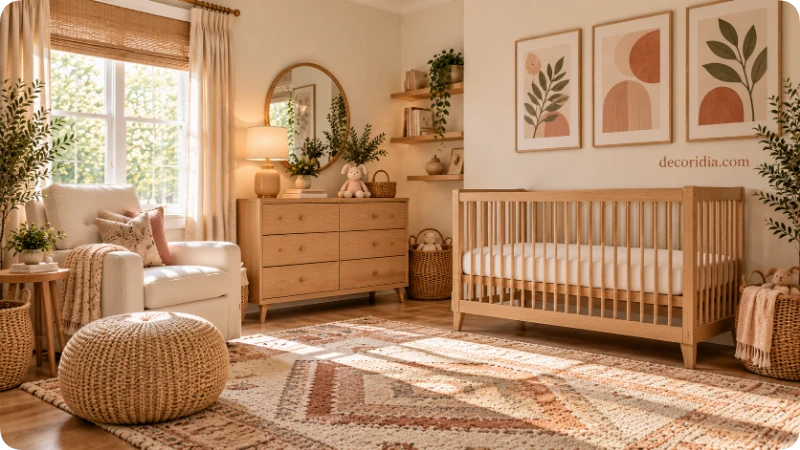
A boho nursery brings together warm neutrals, textured materials, and simple handmade-looking details.
Start with cream walls, a natural oak crib, and a dresser in a similar wood tone. Add a washable rug with a subtle geometric pattern in rust, tan, or muted pink.
A woven-look storage basket can hold spare blankets outside the baby’s reach. Abstract botanical prints add color without requiring elaborate wall decor.
The main visual interest comes from contrasting textures rather than matching accessories.
Best for: Parents who like casual interiors with natural materials.
Safety consideration: Avoid macramé, long tassels, hanging fabric canopies, and loose woven decorations near the crib. Keep decorative textiles outside the sleep space.
Classic Pink and White Nursery
Traditional palette • Bright and familiar
Pink and white can create a fresh, cheerful nursery when the colors are balanced.
Instead of painting every wall pink, try pale pink on the lower half of the walls with white above. Simple wall trim can make the two-tone finish look intentional.
Choose a white crib and dresser, then introduce a pale wood accent through a small adult-use side table or picture frames.
A soft cream rug prevents the room from looking too stark.
Best for: Parents who love a traditional baby girl nursery.
Design tip: Keep pink as the main decorative color and use white and natural wood to provide contrast. Adding several other pastel colors can weaken the design.
Cottagecore Baby Girl Nursery
Small floral prints • Country-inspired warmth
A cottagecore nursery takes inspiration from country bedrooms, botanical patterns, and soft, lived-in interiors.
Use warm ivory walls and a small floral wallpaper pattern on one accent wall. A white or natural wood crib works with the relaxed palette.
Choose a traditional-style rug, a simple dresser, and framed flower illustrations.
A comfortable chair with a washable slipcover can support the softer, country-inspired appearance.
Best for: Parents who enjoy cottage-style interiors and traditional patterns.
Trade-off: Cottagecore can become visually crowded when every surface has a pattern. Limit the room to one prominent floral print and one smaller supporting pattern.
Celestial Moon and Stars Nursery
Night-sky motif • Calm and imaginative
A celestial nursery uses moon and star imagery with muted colors to create a gentle nighttime theme.
Choose warm white, dusty blue, pale lavender, or soft gray walls. Add framed illustrations of crescent moons, constellations, or abstract night skies.
A natural wood crib helps balance the cooler colors.
For a more dramatic look, use a deep blue accent wall behind a dresser, with light-colored furniture elsewhere in the room.
Best for: Parents who want an imaginative theme without cartoon characters.
Design tip: Use framed celestial artwork rather than hanging stars or a canopy over the crib.
Rainbow Baby Girl Nursery
Muted colors • Cheerful and playful
A rainbow nursery doesn’t have to use bright primary colors.
Choose a muted palette of dusty rose, mustard, sage, terracotta, and cream. Use these shades in one large rainbow print or a simple painted arch on a wall away from the crib.
Keep the furniture neutral so the colors remain the focal point.
A washable cream rug and pale wood dresser help ground the design.
Best for: Parents who want a cheerful nursery without an overly busy appearance.
Design tip:Repeat only two or three colors from the rainbow artwork elsewhere in the room. You don’t need to match every stripe.
Scandinavian Baby Girl Nursery
Light wood • Functional simplicity
A Scandinavian-inspired nursery emphasizes light, practical furniture and uncluttered surfaces.
Choose white or pale gray walls with a light oak crib and dresser. Add one muted accent color, such as dusty pink or sage green.
A washable patterned rug provides visual interest while leaving the walls simple.
Use closed storage for diapers, clothing, and other everyday supplies.
Best for: Smaller nurseries and homes with modern, simple interiors.
Design tip: Combine light wood with warm white rather than stark white throughout. The warmer palette makes the space feel less clinical.
Terracotta and Peach Nursery
Warm color • Contemporary and earthy
Terracotta and peach create a nursery that feels warm without relying on traditional pastel pink.
Paint one wall a muted peach or clay color. Pair it with cream walls, light wood furniture, and a beige rug.
Abstract landscape artwork or simple geometric prints complement the earthy palette.
Use the deeper terracotta shade sparingly through artwork or small accessories.
Best for: Parents who enjoy warm contemporary interiors.
Design tip: If the room receives strong afternoon sunlight, test the wall color first. Warm shades can look more orange in direct sun.
Storybook-Inspired Baby Girl Nursery
Illustrated details • Imaginative and flexible
A storybook nursery can draw inspiration from forests, gardens, animals, and imaginary landscapes.
Choose a neutral background and add framed illustrations in a consistent artistic style.
A securely anchored bookcase can hold children’s books, while a comfortable chair provides a place for reading together.
Instead of committing to one character or franchise, choose original illustrations that can remain relevant as your child grows.
Best for: Families who enjoy reading and imaginative decor.
Design tip:Display a few book covers facing outward on appropriately secured storage, away from the crib and outside your baby’s reach.
Monochrome Nursery With Blush Accents
High contrast • Modern and polished
A monochrome nursery uses white, charcoal, and black as its foundation, with blush pink providing warmth.
Start with white walls and natural wood furniture. Add black picture frames and a simple geometric rug.
Introduce blush through artwork and a few accessories placed outside the baby’s reach.
This approach gives the room a more contemporary appearance than a fully pastel palette.
Best for: Modern homes where you want the nursery to coordinate with the surrounding rooms.
Design tip:Use black in small amounts. Large areas of dark color can make a compact room feel visually heavier.
Personalized Baby Girl Nursery
Meaningful details • Individual character
A personalized nursery reflects your family rather than following a fixed theme.
Choose a flexible wall color such as cream, blush, or sage. Then introduce framed name artwork, a meaningful landscape, or illustrations connected to your interests.
A favorite family photograph can add personality when securely mounted away from the crib.
You can also choose a color palette inspired by an existing piece of furniture or artwork you already own.
Best for: Parents who want a distinctive room without purchasing a themed furniture collection.
Design tip: Keep personalized decorations easy to replace. Your child’s interests will develop, and a flexible room can change with them.
How to Choose the Best Colors for a Baby Girl Nursery
The best nursery color is one that works with the room’s light, flooring, and furniture. Pink is an option, not a requirement.
If you’re unsure where to begin, choose one main wall color, one furniture finish, and one accent color.
| Color combination | Visual effect | Furniture pairing |
| Blush pink and ivory | Soft and traditional | White or pale oak |
| Sage green and cream | Natural and understated | Light wood |
| Lavender and white | Cool and gentle | White |
| Terracotta and beige | Warm and earthy | Natural oak |
| Dusty rose and olive | Botanical and layered | Medium-tone wood |
| Butter yellow and cream | Cheerful and warm | Pale wood |
| White, charcoal, and blush | Contemporary contrast | White or natural wood |
Paint samples are especially important with pale colors. A blush that looks neutral on a sample card may appear peach under warm lighting, while a soft lavender may look gray in a north-facing room.
If you rent, check your lease before painting or installing wallpaper. Removable decorating options may reduce commitment, but they can still damage certain wall finishes when removed.
Small Baby Girl Nursery Ideas for Limited Space
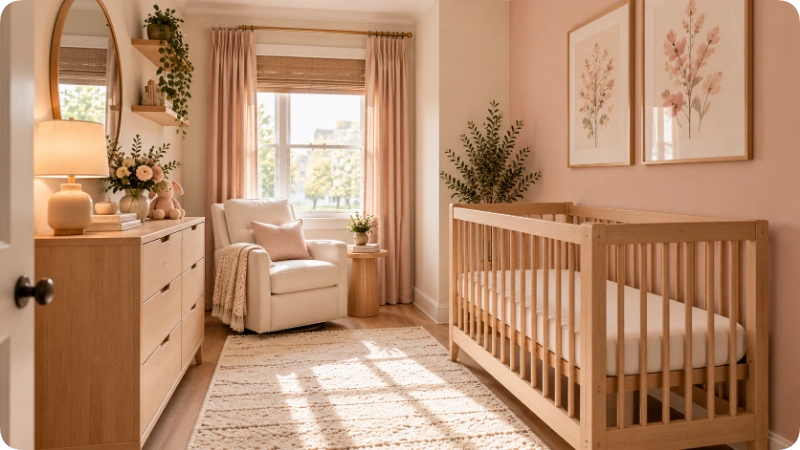
A small nursery benefits more from a practical layout than from additional decorative furniture.
Choose Furniture That Fits
Measure the room before purchasing a crib, dresser, or feeding chair. Include space for opening doors and drawers.
A compact crib may help in a narrow room, but check its applicable safety requirements, mattress compatibility, and manufacturer limits.
Make the Dresser Work Harder
A dresser can store clothing, diapers, and other essentials. When the manufacturer permits it, a compatible changing setup may allow the dresser to serve two functions.
Secure furniture against tipping and never leave your baby unattended on a raised changing surface.
Use Vertical Storage Carefully
Wall shelves can free up floor space, but install them with hardware suited to the wall and expected load.
Keep heavy objects, shelves, and framed artwork away from the crib and any area where they could fall onto your baby.
Keep the Layout Open
Avoid placing a small table or decorative basket in every available corner.
A crib, practical storage, and comfortable adult seating—if the room allows—may be enough.
For a very small nursery, the feeding chair can be placed elsewhere in your home.
Practical tip: Mark furniture dimensions on the floor with painter’s tape before buying. It helps reveal blocked walking paths and drawers that won’t open fully.
Budget-Friendly Baby Girl Nursery Decorating Ideas
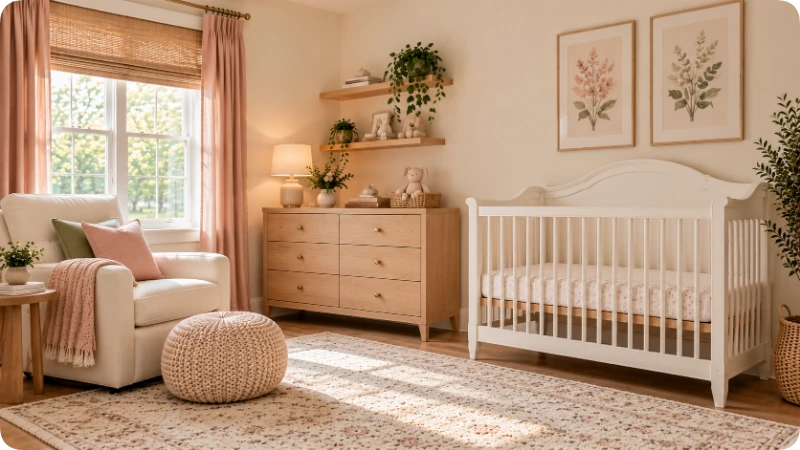
A well-designed nursery doesn’t require a matching furniture collection or expensive wallpaper.
The biggest improvements often come from wall color, furniture placement, and a few coordinated decorative details.
Refresh the Walls
Paint can change the atmosphere of a room without requiring a full renovation.
Choose an appropriate interior paint, follow ventilation instructions, and allow the room to air out according to the manufacturer’s directions before use.
In older homes, check for lead-based paint hazards before sanding or disturbing existing finishes.
Reuse Suitable Furniture
An existing dresser may work well if it is sturdy, in good condition, and properly anchored.
Updating the hardware can help it coordinate with the nursery.
Avoid using older cribs simply for their vintage appearance; select a crib that meets current applicable safety requirements.
Choose One Statement Feature
Instead of purchasing many decorative items, choose one feature that defines the room.
This could be a floral accent wall, a large framed illustration, or a carefully selected washable rug.
The surrounding furniture can remain simple.
Decorate in Stages
Start with the crib, essential storage, and any adult seating you need.
Once those pieces are in place, assess whether the room actually needs additional artwork, shelves, or accessories.
This approach reduces unnecessary purchases and helps you maintain a clear layout.
Essential Furniture for a Baby Girl Nursery
Choose nursery furniture that makes daily care easier while keeping the room safe, comfortable, and organized.
| Item | Purpose | Key Consideration |
|---|---|---|
| Crib | Safe sleep | Safety standards, mattress fit |
| Dresser | Clothes & supplies | Stability, wall anchoring |
| Changing setup | Diaper changes | Compatibility, supervision |
| Nursing chair | Feeding comfort | Support, size, easy cleaning |
| Rug | Floor comfort | Washability, trip hazards |
| Storage bins | Organization | Stability, safe placement |
| Lighting | Day & night care | Cord safety, secure fixtures |
You don’t need every piece of nursery furniture. A separate changing table or nursing chair may be unnecessary in smaller rooms. Focus on safe, practical essentials that fit your space, budget, and daily routine.
Baby Girl Nursery Layout Ideas That Make Everyday Care Easier
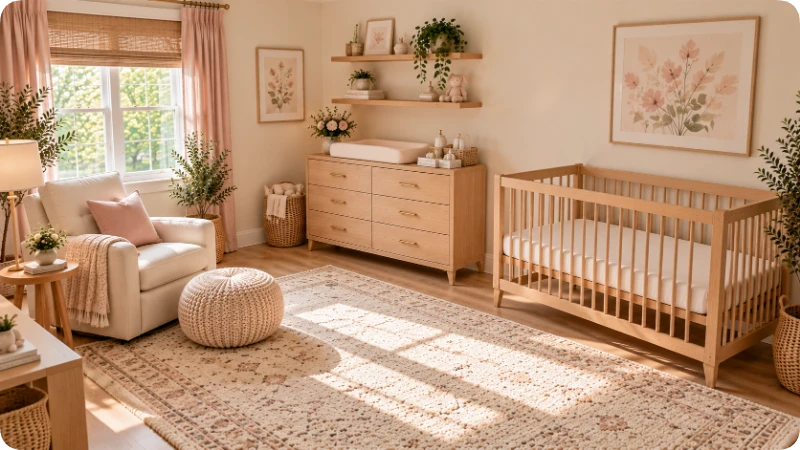
A nursery layout should make it easy to move between the crib, changing area, and storage without navigating around unnecessary furniture.
Position the Crib First
Place the crib away from windows, window-covering cords, heaters, and anything that could fall into the sleep space.
Avoid shelves, heavy frames, and mirrors above the crib.
For infant sleep, use a firm, flat, non-inclined sleep surface with a properly fitted sheet. Keep pillows, blankets, bumper pads, stuffed animals, and other loose items out of the crib.
The American Academy of Pediatrics recommends room-sharing without bed-sharing for at least the first six months.
Organize the Changing Area
Keep diapers, wipes, and clean clothing within adult reach.
Drawer organizers can help keep supplies separated and easy to find.
Never leave your baby unattended on an elevated changing surface.
Make Feeding Comfortable
If space allows, place a supportive chair near a stable surface for adult necessities.
Choose lighting that allows you to see during nighttime care without unnecessarily illuminating the entire room.
Secure charging cables and electrical cords away from the baby’s reach.
Leave Clear Walking Paths
Check that drawers, doors, and furniture can be used without blocking movement.
A clear floor matters especially when you’re carrying your baby at night.
Baby Girl Nursery Lighting and Window Treatments
Lighting should support both daytime activities and nighttime care.
A ceiling fixture can provide general illumination for cleaning and organizing. A softer secondary light can be useful during feeding or diaper changes.
Place lamps where they cannot be pulled down, and keep cords secured.
Cordless window shades can help manage daylight without creating dangling cord hazards.
If you need new electrical wiring or a ceiling fixture installed, use a qualified professional where appropriate.
Practical tip: Test the lighting from the feeding chair after dark. The room should be bright enough for safe care without requiring harsh overhead lighting every time.
Baby Girl Nursery Storage Ideas
The easiest nursery to maintain is one where everyday items have a clear place.
Divide Dresser Drawers
Use organizers to separate bodysuits, pajamas, socks, and changing supplies.
Store frequently used items in the most accessible drawers.
Organize Clothes by Size
Keep the current clothing size in the main dresser.
Store larger sizes separately until needed, and remove outgrown items regularly.
Use Closed Storage for Supplies
Closed drawers and cabinets help keep visual clutter under control.
Open shelves are better reserved for a small number of items that can be displayed safely.
Reassess Storage as Your Baby Grows
Furniture and objects that are out of reach for a newborn may become accessible to a crawling or standing child.
Anchor furniture that could tip, secure hazardous items, and reconsider low shelves and reachable decorations as your child develops.
Common Baby Girl Nursery Decorating Mistakes
A few design choices can make a nursery less functional or introduce avoidable hazards.
Using too many patterns: Floral wallpaper, patterned curtains, and a busy rug may compete visually. Choose one dominant pattern and let the others remain subtle.
Buying oversized furniture: A large rocking chair or dresser can make a small room difficult to navigate. Measure before purchasing.
Treating the crib as a decorative display: Pillows, blankets, stuffed animals, and bumper pads should not be placed in an infant’s sleep space.
Installing decorations above the crib: Heavy frames, mirrors, shelves, and hanging objects can create falling or entanglement hazards.
Ignoring furniture anchoring: Dressers, bookcases, and other furniture that could tip need appropriate securing.
Choosing materials only for appearance: Consider how easily rugs, upholstery, and storage surfaces can be cleaned.
Decorating every corner: Leaving some wall and floor space open can make the room more comfortable and easier to use.
How to Decorate a Baby Girl Nursery Step by Step
If you’re starting from an empty room, this order can help you make decisions without buying unnecessary items.
- Measure the space. Record wall lengths, window positions, door swings, and available floor area.
- Choose essential furniture. Select a suitable crib and storage before decorative pieces.
- Plan the layout. Place the crib safely and confirm clear walking paths.
- Select a color palette. Choose a main wall color, furniture finish, and one or two accents.
- Complete painting and installation. Follow product instructions for ventilation, curing, and secure mounting.
- Arrange and anchor furniture. Check stability and follow manufacturer instructions.
- Organize supplies. Make clothing, diapers, and changing essentials easy for adults to access.
- Add decorative details. Choose artwork, rugs, and lighting that support the room’s style without creating hazards.
- Review the room for safety. Check the crib, cords, furniture, windows, and reachable objects.
You can add decorative touches gradually. The room doesn’t need to be completely styled to be ready for your baby.
Frequently Asked Questions About Baby Girl Nursery Ideas
What is a good alternative to pink for a baby girl nursery?
Sage green, lavender, warm beige, terracotta, and soft yellow are all attractive alternatives. Sage green and cream are especially flexible if you want to change the room’s decorative theme later.
Should I choose wallpaper or paint for the nursery?
Paint is generally simpler to change, while wallpaper can introduce more detailed patterns. Choose wallpaper when you want a strong decorative feature, and paint when flexibility or easier updating matters more. Renters should check surface compatibility and lease restrictions before installing either.
How can I make a nursery feel feminine without using floral decor?
Try blush or lavender accents, curved furniture silhouettes, soft color contrasts, and understated abstract artwork. No single color or motif is required; the overall composition determines the room’s character.
What should I prioritize if I have a very small nursery?
Prioritize a suitable crib, practical storage, and clear access. Choose compact furniture only after checking dimensions and applicable safety requirements. Decorative furniture can be omitted if it interferes with everyday care.
How can I make the nursery easy to update as my daughter grows?
Choose neutral or adaptable larger furniture, then introduce themes through framed artwork, rugs, and other replaceable accessories. Avoid making every permanent surface dependent on one decorative motif.
Final Thoughts
The best baby girl nursery ideas aren’t necessarily the most elaborate. They’re the ones that make good use of your space, suit your decorating style, and remain practical during everyday care.
If you’re undecided, start with a flexible foundation: a safe crib, useful storage, comfortable lighting, and a wall color you genuinely like. Then choose one decorative direction floral, woodland, vintage, modern, or something personal and build around it.
A few well-placed details can give the room character without making it crowded. The goal is a nursery that feels welcoming today and can change naturally as your daughter grows.

I am Ethan Parker, a passionate Home Decor Researcher and Interior Design Writer at Decoridia. I create well-researched content on home décor, interior design, DIY decorating ideas, furniture selection, color palettes, home organization, and the latest design trends. My goal is to help homeowners transform their living spaces with practical, stylish, and inspiring ideas that make every home more beautiful and functional. Decoridia