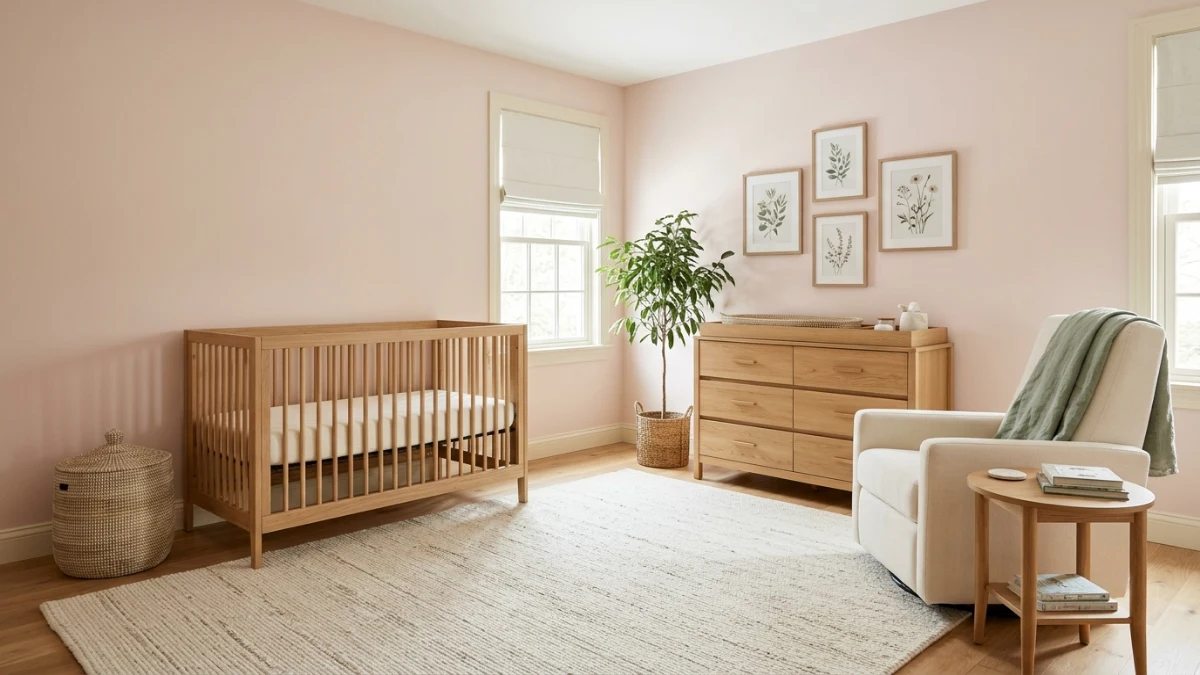
Quick Answer: How to Decorate a Baby Girl Nursery
The best baby girl nursery decor combines soft colors, charming wall art, cozy textures, practical storage, and safe, functional furniture. Choose a calming palette like blush pink, sage green, or warm neutrals, then add personality through wallpaper, rugs, curtains, and decorative accents. Keep the crib free of pillows, blankets, and soft toys for safer sleep.
How do you create a beautiful nursery for your baby girl that’s cozy, practical, and full of personality? From delicate floral wallpaper and soft neutral colors to playful woodland themes and modern furniture, the possibilities are endless.
The best baby girl nursery decor goes beyond pretty colors and charming accessories. It creates a welcoming space for late-night feedings, keeps everyday essentials within reach, and prioritizes safe sleep. Thoughtful furniture choices, practical storage, and flexible designs can also help the room grow with your child.
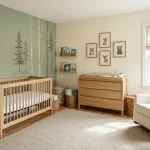
And who says a baby girl’s nursery has to be pink? Soft sage green, creamy whites, muted lavender, natural wood, and subtle patterns can feel just as warm and inviting.
If you’re decorating a small nursery, working with a tight budget, or planning a complete makeover, these inspiring ideas will help you bring everything together—from wall decor and lighting to furniture and those special finishing touches.
1. Choose a Soft Pink Nursery With Modern Details
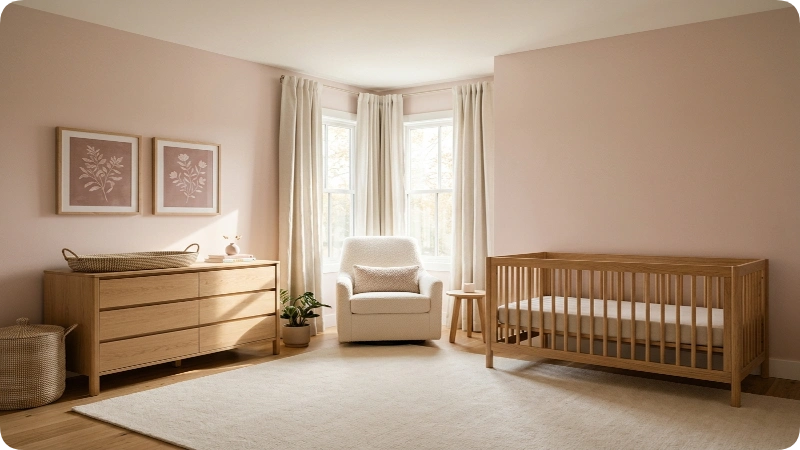
A soft pink nursery is a classic choice, but it doesn’t need to look overly sweet or crowded with decorative details.
Instead of using the same shade of pink throughout the room, combine blush, dusty rose, warm white, and natural wood. The variation gives the space depth while keeping the overall appearance gentle.
For a balanced design, consider painting one wall a muted blush color and leaving the remaining walls warm white. Add a natural oak dresser, an ivory upholstered nursing chair, and a simple crib in white or light wood.
You can introduce deeper rose tones through removable details such as framed artwork, curtains, or a rug.
Why it works: Soft pink pairs naturally with warm neutrals. Using pink as an accent rather than covering every surface helps the room feel more open and makes future decorating changes easier.
Best for: Parents who love traditional baby girl nursery colors but prefer a clean, contemporary look.
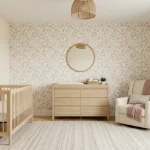
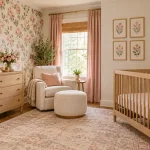
2. Create a Floral Nursery With Delicate Wallpaper
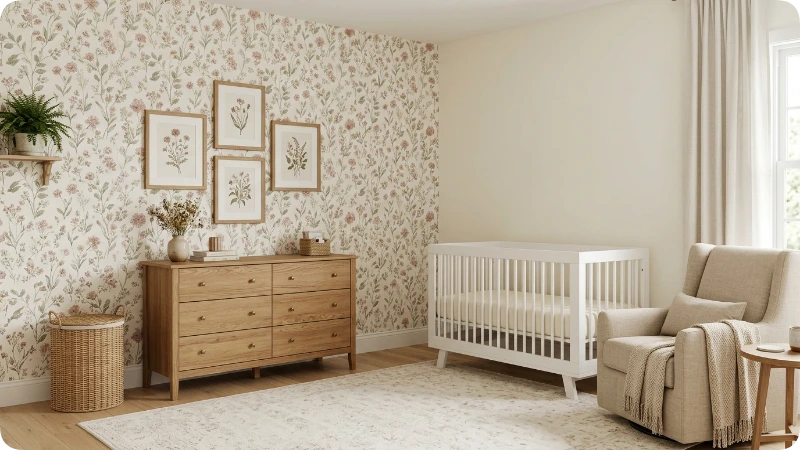
Floral wallpaper can turn a simple nursery into a charming, garden-inspired room without requiring many additional decorations.
Choose a pattern based on the size of the space. Small, scattered flowers can create a gentle background, while large botanical illustrations make a stronger statement.
For a small nursery, consider wallpapering the wall behind a dresser or another clear focal area. Pair it with solid-colored furniture so the pattern remains the main feature.
A floral palette might include:
- Dusty rose and sage green for a vintage garden atmosphere.
- Lavender and cream for a soft, romantic appearance.
- Peach and muted green for a warmer, cheerful room.
- Ivory and pale blue for a delicate, less traditional floral scheme.
Choose one or two colors from the wallpaper and repeat them in a rug, chair, or storage accessories. This connects the room visually without making everything match.
If you prefer removable wallpaper, check the manufacturer’s surface requirements and removal instructions. Some products can damage paint or may not adhere properly to textured walls.
Keep wallpaper securely installed, particularly as your child becomes mobile and able to reach or peel edges.
Best for: A nursery where you want one decorative feature to establish the entire color palette.
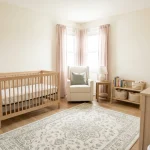
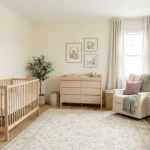
3. Design a Neutral Baby Girl Nursery
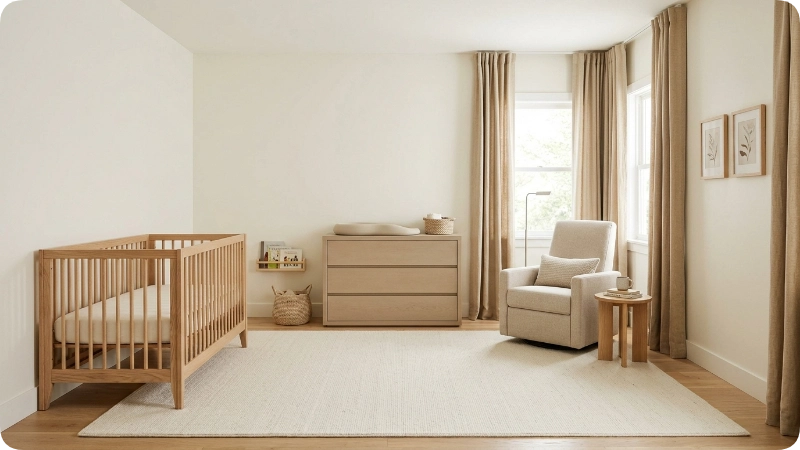
A neutral nursery offers a calm background that can adapt easily to changing tastes.
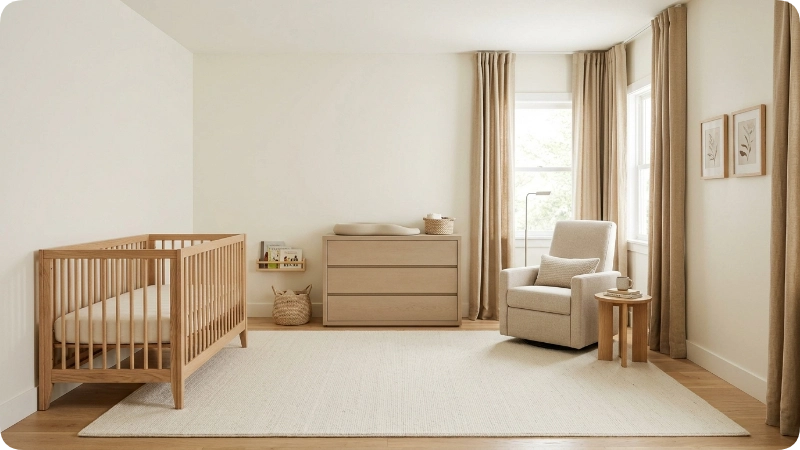
Start with warm white, oatmeal, beige, or light taupe walls. Add a natural wood crib, a comfortable nursing chair, and a low-pile rug in a complementary shade.
The secret to making a neutral room interesting is texture.
Instead of adding more colors, combine different materials: smooth painted furniture, linen curtains, a woven rug, and a soft upholstered chair. The subtle differences make the room feel layered rather than plain.
A neutral nursery also gives you freedom to introduce color later. A toddler who loves yellow, purple, or bright green can have those colors incorporated without requiring a complete redesign.
Practical tip: Choose washable fabrics and furniture finishes that are easy to wipe clean. Light colors can work in a nursery, but their maintenance requirements matter more than their appearance in photographs.
Best for: Minimalist homes, shared spaces, and parents who want decor that will last beyond infancy.
4. Bring Nature Indoors With a Woodland Nursery Theme
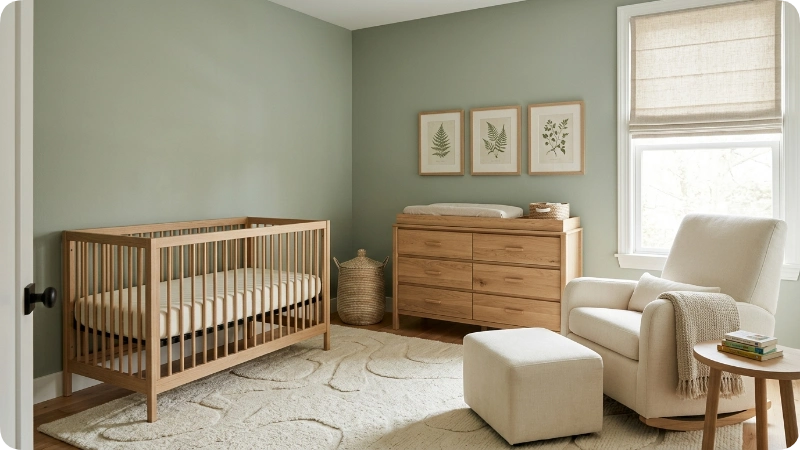
A woodland nursery creates a playful atmosphere through forest-inspired colors, animal illustrations, and natural materials.
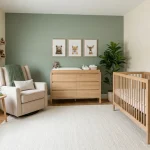
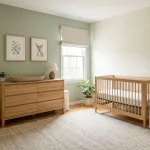
Sage green walls, warm wooden furniture, and illustrations of rabbits, deer, foxes, or birds can establish the theme without overwhelming the room.
For a subtle approach, use botanical prints and a few woodland illustrations rather than covering every surface with animal motifs.
Consider these combinations:
- Sage green walls with an oak crib and cream textiles.
- Forest-inspired wallpaper paired with simple white furniture.
- Mushroom and wildflower artwork above a securely anchored dresser.
- Earth-toned storage bins and a washable rug with a subtle leaf pattern.
Keep decorative objects out of the crib and away from areas where a baby can reach them.
Why it works: The natural palette feels gentle enough for a nursery, while woodland imagery can remain appealing as your child grows.
Best for: Parents who prefer earthy colors and a theme that isn’t strongly tied to traditional gender conventions.
5. Use Lavender for a Dreamy Nursery
Lavender is a beautiful alternative to pink, particularly when you want a room that feels soft but slightly unexpected.
Choose a muted lavender or gray-purple rather than an intensely saturated shade. Pair it with creamy white furniture, light oak, and small touches of dusty pink or pale green.
A lavender accent wall can work especially well with botanical artwork or subtle floral patterns.
For a more contemporary look, combine lavender with warm beige and clean-lined furniture. For a vintage-inspired nursery, introduce gently curved furniture and traditional floral prints.
Avoid relying on purple for every accessory. A few carefully placed accents create a stronger design than filling the entire room with matching items.
Best for: A gentle, feminine nursery with a color scheme that feels different from traditional blush pink.
6. Add Personality With a Vintage-Inspired Nursery
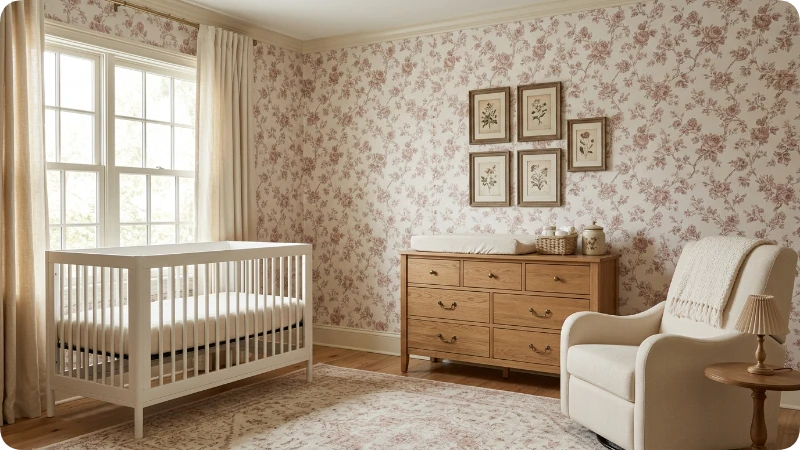
Vintage-inspired nursery decor combines traditional shapes, gentle patterns, and warm materials.
A spindle-style crib, floral wallpaper, an antique-look dresser, and framed botanical prints can create a room with plenty of character.
You don’t need genuinely antique nursery furniture to achieve this look. In fact, buying a new crib that meets current safety requirements is the better choice.
Use vintage style through decorative elements instead:
- A traditional floral wallpaper pattern.
- A dresser with classic drawer fronts.
- Framed botanical illustrations.
- A softly patterned rug.
- A nursing chair with gently curved arms.
If you repurpose an older dresser, inspect its condition, secure it against tipping, and consider If its existing paint or finish may contain hazardous materials. In older U.S. homes, also check for potential lead-paint hazards before disturbing painted surfaces.
Why it works: Vintage-inspired details add character, while modern nursery furniture provides the functionality needed for daily use.
Best for: Parents who enjoy traditional interiors, cottage-style decorating, or furniture with a handcrafted appearance.
7. Try a Modern Minimalist Nursery
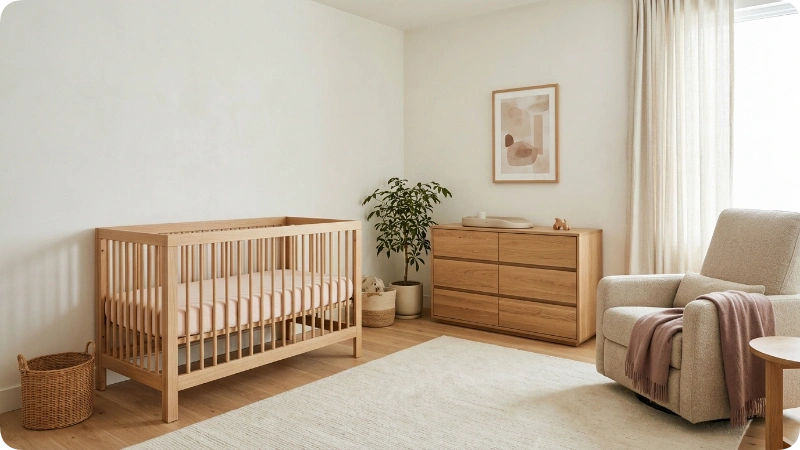
A minimalist nursery focuses on a few functional pieces rather than numerous decorations.
Start with the essentials: a safe crib, an anchored dresser, a comfortable feeding chair, and appropriate lighting.
Choose furniture with simple lines and a limited color palette, such as warm white, pale gray, and natural wood.
Instead of filling every wall, select one meaningful focal point. This could be a large piece of securely mounted artwork above a dresser or a painted accent wall.
Use closed storage to reduce visual clutter. Drawer organizers, cabinets, and storage bins help keep diapers, clothing, and feeding supplies organized without displaying everything.
Minimalism doesn’t mean removing personality. A distinctive rug, subtle wall color, or carefully selected artwork can make the space feel personal.
Best for: Small nurseries, contemporary homes, and parents who prefer uncluttered spaces.
8. Decorate a Small Baby Girl Nursery Without Making It Feel Crowded
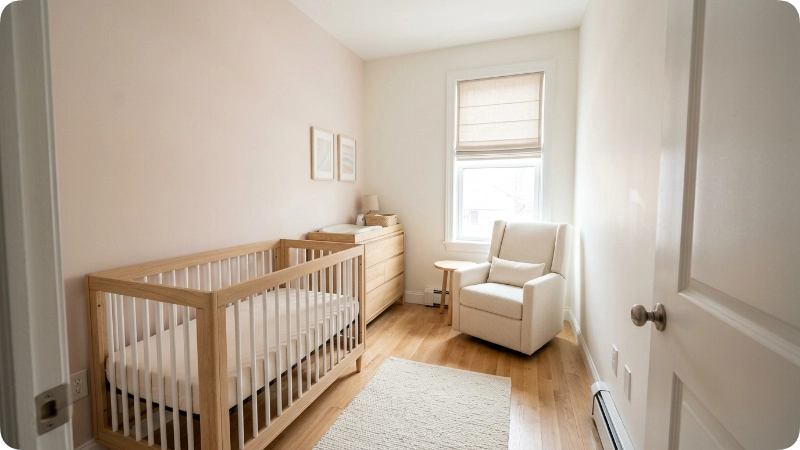
A small nursery benefits from thoughtful furniture choices more than elaborate decorations.
Before purchasing furniture, measure the room, including door swings, windows, closet access, and the space needed to open drawers.
A compact crib or mini crib may work better than a full-size crib, provided it meets applicable safety requirements and you understand its size and use limits.
Choose a dresser that can also function as a changing station with a compatible, securely installed changing setup. Follow the manufacturer’s instructions and never leave your baby unattended during a diaper change.
A narrow nursing chair can save space, but check that it remains comfortable for feeding and that you have room to get in and out while holding your baby.
For visual openness, use light wall colors and keep large furniture finishes relatively consistent.
Vertical storage can be helpful, but tall furniture must be anchored, and wall-mounted shelves should be securely installed with appropriate hardware. Avoid placing shelves or heavy decorative items above the crib.
Small-room design tip: Prioritize clear walking space between the crib, changing area, and doorway. A nursery that is easy to navigate during nighttime care is more useful than one filled with decorative furniture.
9. Make a Statement With a Painted Accent Wall
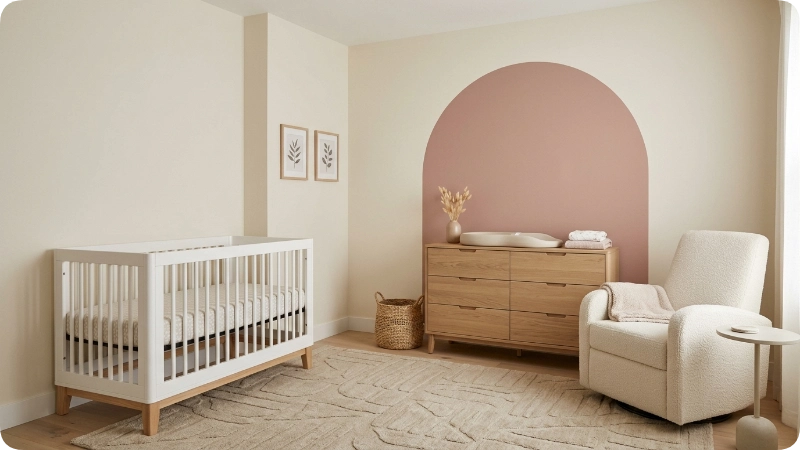
An accent wall can establish the nursery’s character without adding more objects to the room.
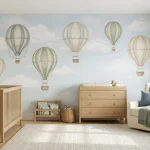
Consider a muted sage green, dusty pink, warm peach, or pale lavender wall paired with lighter surrounding walls.
You can also create visual interest with a simple painted arch or color-blocked design. A broad arch behind a dresser can provide a soft architectural effect without requiring additional wall decor.
For a subtle look, choose colors with similar levels of saturation. For example, dusty rose and warm beige feel more connected than bright pink and stark white.
Use paint appropriate for interior walls, follow the manufacturer’s drying and ventilation instructions, and complete painting well before the room is occupied. If the home may contain lead-based paint, avoid sanding or disturbing old painted surfaces without proper assessment and precautions.
Best for: Renters with permission to paint, budget-conscious decorating, and parents who want a strong visual change without expensive accessories.
10. Choose Nursery Wall Decor That Feels Personal
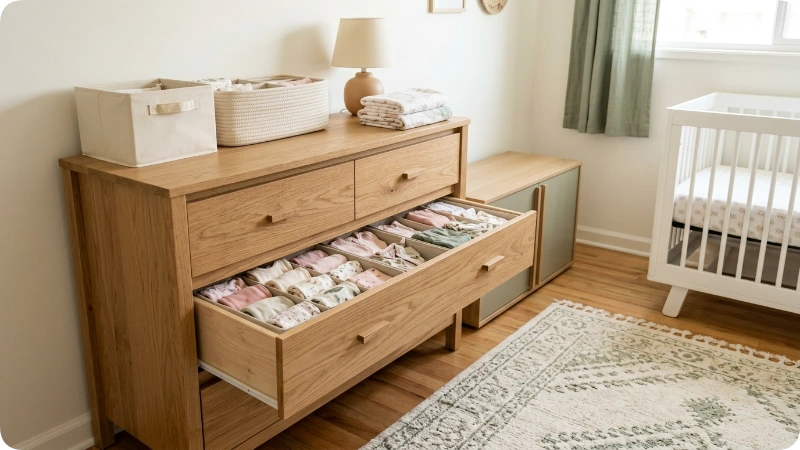
Wall decor can make a nursery feel more individual, but placement matters as much as appearance.
Botanical illustrations, abstract shapes, gentle landscapes, and original animal artwork can all work beautifully in a baby girl’s room.
Choose artwork that complements the color palette instead of competing with it.
For example, three small botanical prints can create a coordinated gallery above a dresser. Alternatively, one larger framed print may suit a minimalist nursery better than several small pieces.
Personalized name signs can also be appealing, but choose lightweight materials and mount them securely in a location your child cannot reach. Avoid hanging signs, frames, or other potentially falling objects above the crib.
For a less permanent approach, consider painted shapes or decorative artwork placed in an area away from the sleeping space.
Design tip: Keep some empty wall space. A room doesn’t need artwork on every surface to feel finished.
11. Add Warmth With Thoughtful Nursery Lighting
Nursery lighting should support different activities throughout the day.
Natural daylight is useful for daytime play and care, while softer lighting can make nighttime feedings and diaper changes more comfortable.
A layered lighting plan might include a ceiling fixture for general illumination and a dimmable light near the feeding area.
Choose fixtures that don’t create harsh glare when you’re sitting in the nursing chair or standing beside the changing station.
For nighttime use, a low-level light can help you move around the room without switching on bright overhead lighting.
Make sure lamps are stable, electrical cords are inaccessible to children, and lighting products are used according to their instructions. Keep cords away from the crib and other places where a child may reach them.
Avoid decorative string lights draped over cribs or furniture within a child’s reach.
Best for: Any nursery, especially one used frequently for nighttime feeding and changing.
12. Choose a Comfortable Nursing and Feeding Corner
A feeding corner can become one of the most frequently used areas of the nursery.
Start with a supportive chair that allows you to sit comfortably while holding your baby. The right chair depends on your height, preferred feeding position, and available floor space.
A small side table can provide a convenient place for water, a burp cloth, or other essentials. Keep hot drinks and hazardous objects out of children’s reach.
If you use an ottoman, make sure it doesn’t obstruct the main walking route.
Position the chair where you can reach the light controls easily. A nearby dresser or storage cabinet can hold extra burp cloths and feeding supplies.
Keep pillows and blankets used by adults out of the baby’s sleep space. If you feel sleepy while feeding, follow current safe-sleep guidance and return your baby to an appropriate separate sleep surface.
Why it works: A comfortable, organized feeding area reduces unnecessary movement during nighttime care and makes the nursery more practical.
13. Use Smart Storage That Blends With the Decor
Storage is an essential part of nursery design, especially as clothing, diapers, toys, and care supplies accumulate.
Instead of relying entirely on decorative baskets, combine accessible everyday storage with closed cabinets and drawers.
A dresser with divided drawers can keep small clothing items organized. Use the top drawers for items needed most often, such as diapers, wipes, and clean outfits.
Lower drawers can hold larger clothing sizes or extra linens, provided any contents that become accessible to a mobile child are safe for them.
Decorative baskets work well for organizing lightweight items, but choose designs without hazardous loose components and place them appropriately for your child’s developmental stage.
Avoid storing heavy objects high above the changing area or crib.
All dressers and other furniture that could tip should be properly anchored according to the manufacturer’s instructions. Check that wall anchors and hardware are suitable for your wall construction.
Practical tip: Leave some storage space empty. A nursery that has room for future clothing sizes and supplies will be easier to maintain.
14. Add Texture With Rugs and Window Treatments
Rugs and window treatments can soften the appearance of a nursery and make the space feel more complete.
A low-pile, washable rug is often a practical choice because it is easier to clean and provides a defined area for supervised floor play.
Choose a rug large enough to visually connect nearby furniture without interfering with door clearance or creating a tripping hazard. Secure it appropriately so it doesn’t slip or bunch.
For window treatments, consider cordless shades or curtains installed with secure hardware.
Light-filtering treatments can keep the room bright during the day, while blackout options may help control incoming light during naps.
Make sure curtain cords, blind cords, and hanging fabric cannot be reached from the crib or other furniture your child may climb.
If you choose long curtains, place the crib well away from the window and any reachable fabric.
Best for: Nurseries that need a softer appearance, better light control, or a more defined play area.
15. Create a Nursery That Can Grow Into a Toddler Room
A nursery doesn’t need to be completely redesigned when your baby becomes a toddler.
The easiest way to create flexibility is to invest in adaptable furniture and use decorative accessories for age-specific themes.
Choose a dresser that will remain useful for years rather than a piece designed only for infant supplies.
A neutral wall color or subtle botanical wallpaper can work with different bedding, artwork, and toys as your child’s interests change.
If you’re considering a convertible crib, check the manufacturer’s conversion options, compatible components, and safety instructions before buying. Do not assume that every crib can be converted or that third-party conversion parts are suitable.
As your child grows, reassess furniture anchoring, accessible storage, electrical cords, window treatments, and small decorative objects.
Design tip: Let permanent features stay relatively simple, then express personality through items that are easy to replace.
How to Choose the Right Baby Girl Nursery Decor Style
With so many decorating ideas available, the best choice is the one that fits your space, preferences, and daily routine.
| Nursery style | Main visual features | Best suited for |
| Soft pink | Blush walls, ivory furniture, rose accents | Classic, gentle interiors |
| Floral | Botanical wallpaper, muted colors, vintage details | Romantic or cottage-inspired rooms |
| Neutral | Cream, beige, natural wood, textured fabrics | Flexible, minimalist designs |
| Woodland | Sage green, forest animals, earthy materials | Nature-inspired spaces |
| Lavender | Muted purple, white furniture, botanical accents | Soft, colorful interiors |
| Vintage-inspired | Traditional furniture shapes, floral patterns | Character-filled nurseries |
| Modern minimalist | Clean lines, restrained colors, closed storage | Small or contemporary rooms |
Before committing to a theme, consider which elements you’re willing to change later.
Wallpaper, paint, and large furniture require more effort or money to replace. Artwork, rugs, and decorative accessories are generally easier to update.
If you’re unsure about a bold theme, start with neutral furniture and introduce the theme through one accent wall or a small collection of coordinated accessories.
Baby Girl Nursery Decor on a Budget
You can create a beautiful nursery without purchasing matching furniture sets or expensive decorative accessories.
The key is to spend on safety, comfort, and functionality first, then use affordable decorating choices to give the room personality.
A simple approach is to keep existing furniture that is suitable for nursery use, repaint the walls if appropriate, and add a few coordinated decorative details.
For example, a white crib, an existing securely anchored dresser, and a comfortable chair can form the foundation of the room. A soft-colored wall, framed prints, and a washable rug can establish the design.
Secondhand dressers and decorative furniture may offer savings, but inspect their condition, finishes, stability, and anchoring needs.
Be especially careful with secondhand cribs. Verify the model, recall status, current safety compliance, completeness of parts, and availability of the original manufacturer’s instructions. Avoid older cribs that cannot be verified as compliant.
For inexpensive wall decor, consider original prints or artwork that can be securely displayed away from the crib.
Where to prioritize spending: Put your budget toward a compliant crib and mattress, safe furniture, a comfortable feeding arrangement, and storage that works. Decorative accents can be added gradually.
Nursery Decorating Mistakes to Avoid
Some nursery decorating choices look appealing in photographs but create practical problems in everyday use.
Overdecorating the crib: Pillows, quilts, stuffed animals, bumpers, and decorative cushions should not be placed in an infant’s sleep space. Keep decorative textiles elsewhere.
Placing decor above the crib: Heavy frames, shelves, mirrors, and other objects that could fall should not be installed over the sleeping area.
Choosing appearance over storage: A room filled with decorative accessories but lacking organized storage can quickly become difficult to use.
Ignoring nighttime lighting: A beautiful ceiling fixture may not provide the softer, accessible light needed for late-night care.
Buying furniture without measuring: Always check furniture dimensions, doorway clearance, drawer access, and walking space before purchasing.
Forgetting future mobility: A decoration that is out of reach for a newborn may become accessible to a crawling, standing, or climbing child. Review the room as your child develops.
How to Keep a Beautiful Nursery Safe
A thoughtfully decorated nursery should also follow current infant sleep and product safety guidance.
For U.S. families, the American Academy of Pediatrics (AAP) recommends placing babies on their backs for sleep on a firm, flat, non-inclined sleep surface with a fitted sheet and no loose bedding or soft objects. The AAP also recommends room-sharing without bed-sharing for at least the first six months.
Choose a crib and mattress that meet applicable U.S. Consumer Product Safety Commission (CPSC) requirements, and follow the manufacturer’s instructions for assembly, mattress compatibility, and use.
Keep the crib away from windows, blind cords, electrical cords, hanging decorations, and furniture that could create hazards.
Anchor dressers and other furniture that could tip, and ensure wall-mounted objects are securely installed.
Decorative canopies, hanging mobiles, and other items above or near a crib deserve particular caution. Follow product-specific age, reach, and removal instructions, and avoid anything that could fall into the crib or become entangled with the baby.
Because safety guidance, recalls, and product requirements can change, verify current recommendations and product information before purchasing or installing nursery items.
Frequently Asked Questions About Baby Girl Nursery Decor
What colors are best for a baby girl’s nursery?
Blush pink, sage green, lavender, cream, beige, and warm white are all attractive choices. The best color depends on the mood you want and how much natural light the room receives. For a flexible design, choose a neutral base and add color through artwork, rugs, or other accessories.
Can I decorate a baby girl’s nursery without using pink?
Absolutely. A baby girl’s nursery can feature woodland green, warm beige, soft yellow, muted blue, or a combination of earthy colors. Floral artwork, interesting textures, and thoughtfully chosen furniture can create a charming space without relying on traditional pink decor.
When should I start decorating the nursery?
Start early enough to allow time for furniture delivery, assembly, painting, ventilation, and safety checks before your baby arrives. Complete major painting or renovation work in advance, and follow product instructions regarding drying, curing, and ventilation. You don’t need every decorative detail finished before bringing your baby home.
Should a newborn sleep in the nursery?
The AAP recommends that babies sleep in the same room as their parents, but on a separate safe sleep surface, for at least the first six months. You can still prepare a dedicated nursery for changing, feeding, storage, and daytime activities while keeping your baby’s sleep space in your bedroom initially.
How can I make a nursery look beautiful without spending too much?
Focus on one or two noticeable design changes, such as painting an accent wall or adding a coordinated rug and artwork. Reuse suitable furniture, choose affordable decorative prints, and avoid buying accessories simply to fill empty space. Prioritize safe furniture and practical storage before decorative purchases.
Final Thoughts
Beautiful baby girl nursery decor isn’t about following a particular color scheme or buying everything from a matching collection. It’s about creating a room that feels welcoming, functions well during everyday care, and can change as your child grows.
Start by choosing a color palette and one main design feature, such as floral wallpaper, a soft accent wall, or natural wood furniture. Build the rest of the room around essential furniture, convenient storage, comfortable lighting, and safe placement.
If you prefer soft pink, neutral minimalism, vintage florals, or woodland charm, the most successful nursery will be one that feels personal to your family and remains practical long after the newborn stage.

I am Emma Brooks, a passionate Interior Design Writer and Home Décor Enthusiast at Decoridia. I share well-researched content on home décor, interior design, DIY decorating ideas, furniture selection, color palettes, home organization, and seasonal styling, helping readers create beautiful, functional, and inspiring living spaces for every lifestyle.