Quick answer:
The best nursery ideas for boys include woodland, safari, ocean, outer space, and modern neutral themes. But creating a beautiful nursery isn’t just about choosing a theme it’s about designing a space that works for everyday life. Start with a safe crib, a comfortable feeding corner, and practical storage, then add personality through coordinated colors, artwork, and washable textiles. Choose versatile furniture that grows with your child, and keep the crib free of pillows, toys, loose blankets, and hanging decorations.
What makes a baby boy’s nursery feel thoughtfully designed rather than simply decorated? It’s often not the theme, expensive furniture, or trendy accessories, but how well everything works together in the space you have.
Creating a nursery can be exciting, but it’s easy to get caught up in beautiful inspiration photos that don’t reflect everyday life. A dark accent wall might look stunning online but make a small room feel cramped. A large dresser may offer plenty of storage yet leave little space to move comfortably during nighttime feedings.
The good news? You don’t need a spacious room, a big budget, or a traditional blue color scheme to create something special. Small design choices, from furniture placement to lighting and storage, can make a noticeable difference in how the nursery looks and functions.
These nursery ideas for boys explore different decorating styles while addressing real-life challenges. You’ll discover ways to work with your room’s size, avoid common design mistakes, and create a welcoming space that feels personal, practical, and adaptable as your child grows.
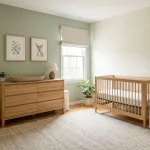
1. Woodland Nursery With Forest Green and Natural Wood
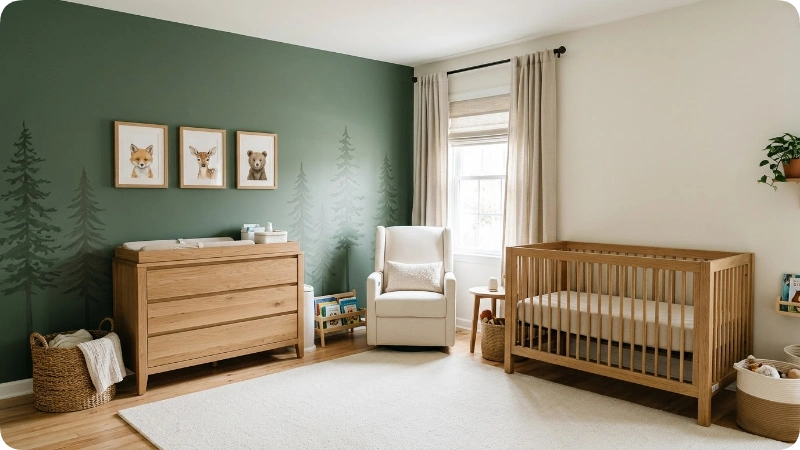
A woodland nursery uses earthy colors, animal illustrations, and natural-looking materials to create a peaceful, outdoors-inspired room.
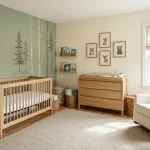
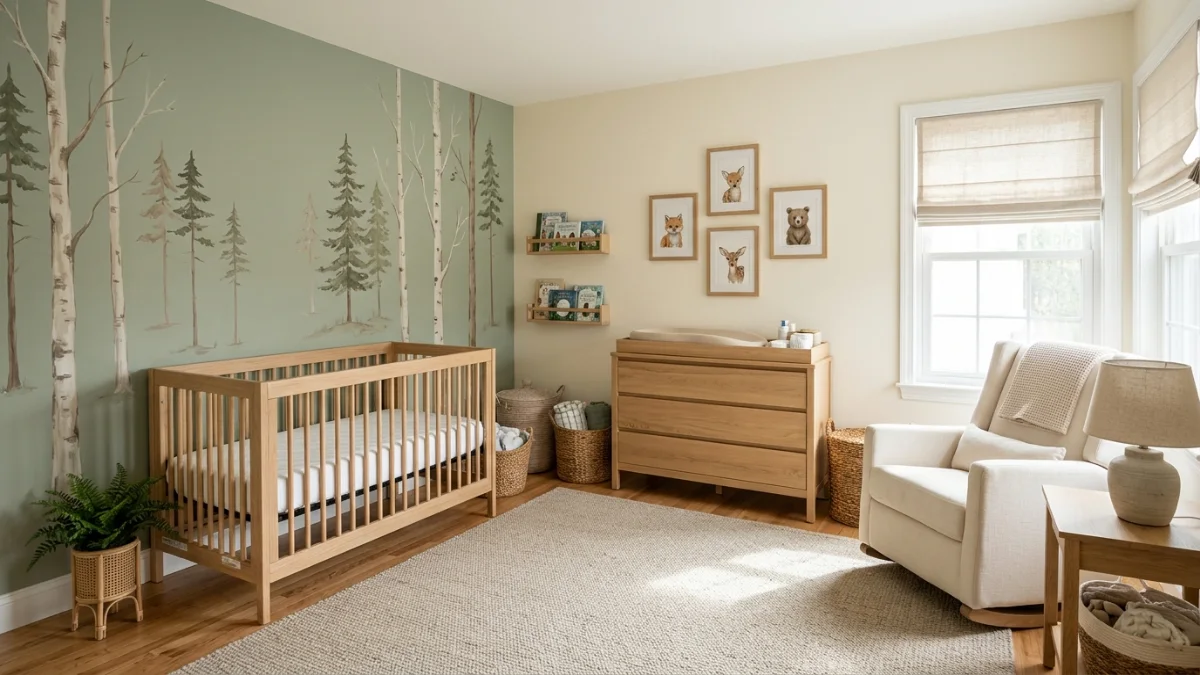
Start with sage green or a deeper forest green on one wall. Pair it with a natural oak crib, warm white bedding, and a cream or beige rug.
For decoration, choose framed illustrations of foxes, bears, deer, or woodland trees. A simple forest landscape mural can also establish the theme without requiring several smaller accessories.
How to create the look:
- Paint an accent wall in muted sage or forest green.
- Choose natural wood furniture with simple shapes.
- Add framed woodland animal illustrations away from the crib.
- Use cream curtains and a low-pile washable rug.
- Keep baskets and storage containers in coordinating neutral tones.
A woodland theme is especially suitable if you want a room that can transition into a toddler bedroom. The forest palette can remain while baby-focused artwork changes.
Design tip: If you use a dark green accent wall, balance it with lighter furniture and textiles. This prevents the room from feeling too enclosed, particularly when natural light is limited.
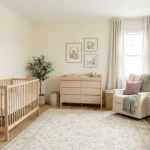
2. Modern Neutral Nursery With Beige, Cream, and Oak
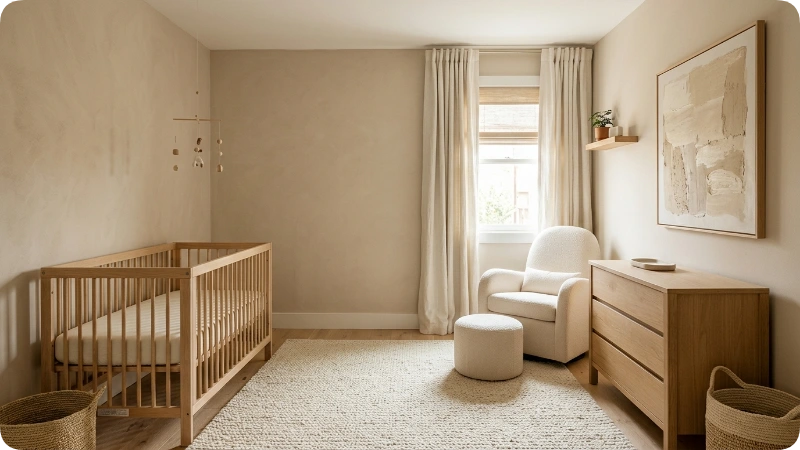
A modern neutral nursery is a good choice if you prefer a calm, uncluttered room without an obvious theme.
Instead of relying on character prints or colorful wallpaper, this design uses subtle differences in texture and material.
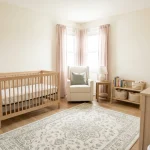
Warm white walls, light oak furniture, cream curtains, and a beige rug create a simple foundation.
To keep the room from looking flat, combine smooth painted surfaces with woven storage baskets, upholstered seating, and soft-looking textiles used outside the crib.
A single large piece of abstract artwork or a simple landscape illustration can provide a focal point.
This style also works well in shared spaces because the nursery furniture blends with the surrounding home decor.
Design tip: Choose warm neutrals with compatible undertones. A creamy white wall beside a cool gray-beige rug may look mismatched, while ivory, oatmeal, and warm oak usually feel more cohesive.
3. Safari Nursery With Playful Animal Illustrations
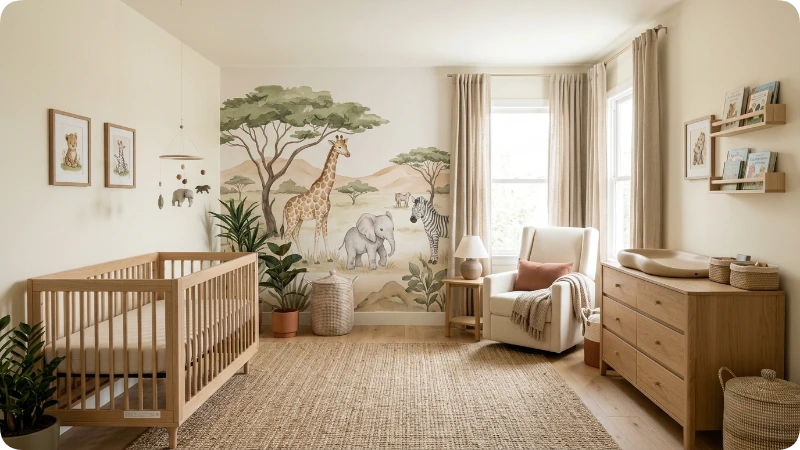
A safari nursery creates a cheerful atmosphere using animal artwork, warm earth tones, and subtle landscape details.
Giraffes, elephants, lions, and zebras are recognizable motifs that work particularly well in illustrated wall art.
Rather than covering the room with animal patterns, choose one main feature.
A large savanna-inspired mural behind a dresser can create a strong visual statement. Alternatively, three coordinated animal prints can introduce the theme more quietly.
Use a palette of sand, cream, muted olive, and terracotta.
Natural wood furniture complements these colors without making the room feel overly themed.
For a small nursery, choose simple animal illustrations against a pale background. Large areas of open space around the illustrations help the wall feel less crowded.
Avoid using decorative stuffed animals inside the crib. Plush toys can be displayed in closed storage or other appropriate locations outside the baby’s sleep area.
4. Blue and White Coastal Nursery
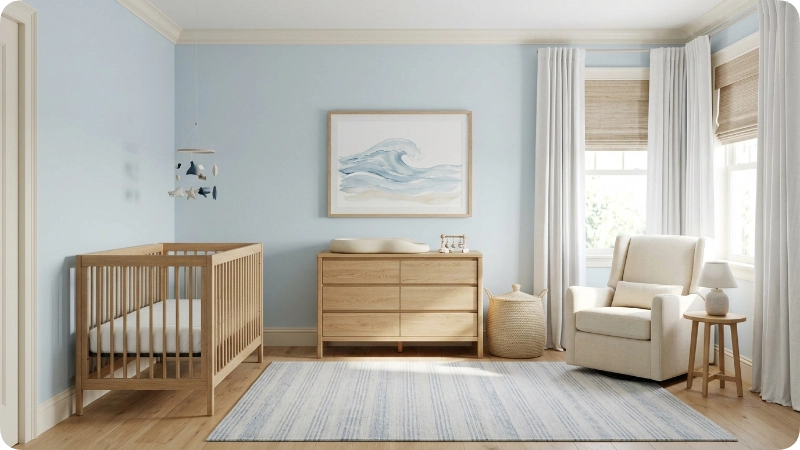
A coastal nursery uses soft blue, white, sandy beige, and light wood to create an airy room inspired by the seaside.
Unlike a nautical theme, which often features boats and anchors, a coastal design can remain subtle.
Think pale blue walls, natural wood furniture, white curtains, and artwork featuring gentle ocean waves.
For a more playful interpretation, add illustrations of whales, sea turtles, or small fish.
A striped rug can introduce pattern without competing with the wall decor.
A balanced coastal nursery might include:
- Pale blue walls with white trim
- A light oak or white crib
- One framed ocean illustration
- A cream upholstered nursing chair
- A washable blue-and-white striped rug
- Simple closed storage
Keep the color palette restrained. Combining several bright blues, bold stripes, and numerous sea creatures can make the room visually busy.
If you prefer a softer appearance, use dusty blue rather than saturated navy.
5. Outer Space Nursery With Stars and Planets
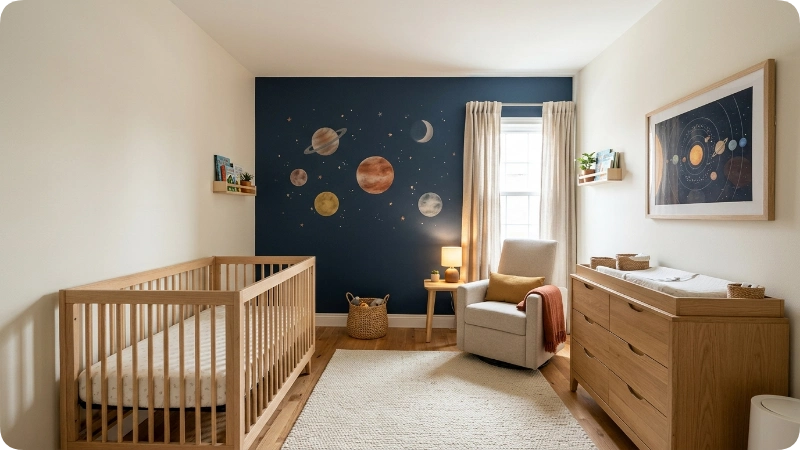
An outer space nursery offers a more imaginative decorating direction while remaining easy to adapt as your child grows.
Start with a deep blue or muted charcoal accent wall, then add simple illustrations of planets, stars, or rockets.
For a lighter version, use warm white walls with framed solar system prints.
This theme works particularly well when the artwork becomes the main decorative feature.
You could place a large planet illustration above a securely anchored dresser and use small accents of mustard yellow or muted orange elsewhere.
Avoid hanging heavy planets or star decorations from the ceiling above the crib. Painted designs or securely installed wall artwork are safer alternatives when positioned appropriately.
Design tip: Dark walls can work in a nursery, but use them selectively if the room is small or receives little daylight. Light-colored furniture and a pale rug help balance the deeper tones.
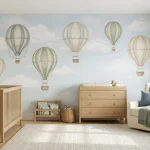
6. Vintage Adventure Nursery With Maps and Hot Air Balloons
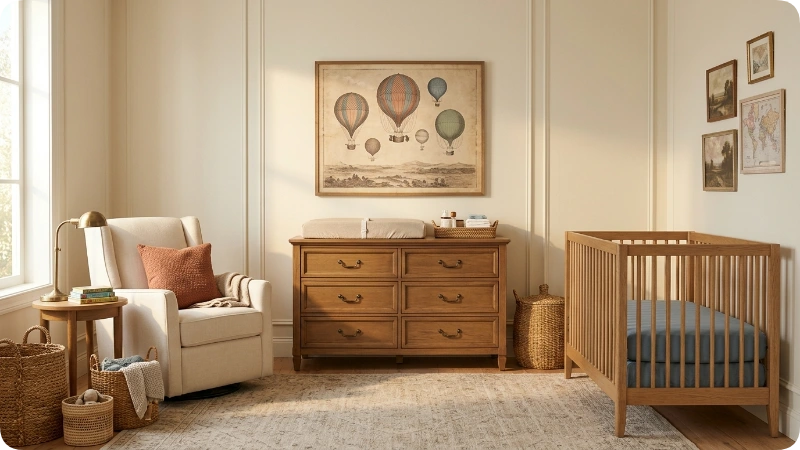
A vintage adventure nursery combines old-fashioned travel illustrations, warm colors, and classic furniture.
Hot air balloons, illustrated maps, mountains, and antique-style landscapes provide visual interest without relying on bright patterns.
Choose warm ivory walls, a wooden dresser, and muted shades of dusty blue, terracotta, and olive green.
A large framed hot air balloon illustration can become the main focal point. Smaller travel-inspired prints can be added elsewhere if the room needs more detail.
This theme works especially well with natural wood and woven textures.
For a more traditional appearance, use furniture with gently rounded shapes and classic hardware, provided all pieces meet current safety requirements.
Avoid buying an antique crib for its appearance. Choose a crib that meets applicable current safety standards instead.
The adventure theme can eventually grow into a bedroom featuring maps, geography, or outdoor exploration.
7. Dinosaur Nursery With Earthy Colors
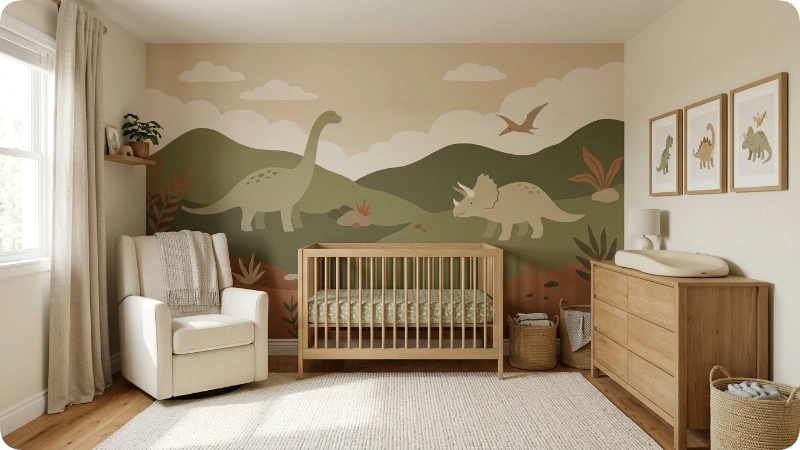
A dinosaur nursery does not have to use bright green walls or oversized cartoon characters.
A softer design can combine olive green, clay, beige, and cream with illustrated dinosaur prints.
Start with a warm neutral wall color and introduce dinosaurs through artwork or a carefully chosen mural.
For example, a row of three framed dinosaur illustrations above a dresser can create a recognizable theme without covering the room in patterns.
Natural wood furniture and a simple cream rug keep the design balanced.
For a bolder room, use one large prehistoric landscape mural with muted green hills and oversized dinosaur silhouettes.
Design tip: Choose dinosaur illustrations with a consistent drawing style. Mixing realistic prehistoric artwork with several unrelated cartoon styles can make the room feel disconnected.
8. Mountain Nursery With a Painted Landscape Wall
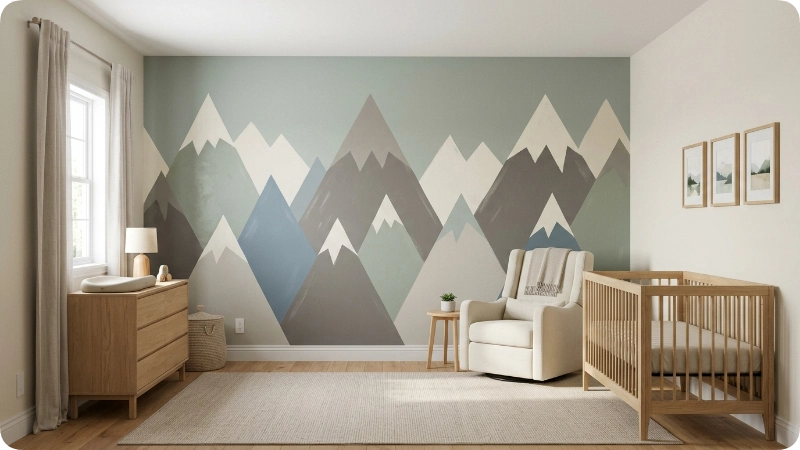
A mountain nursery is ideal if you want a nature-inspired design without animal prints.
Its defining feature is a layered mountain landscape, often painted in muted shades of blue, gray, green, or beige.
You can create the effect with wall paint, wallpaper, or large removable decals.
A simple arrangement might feature three overlapping mountain shapes in gradually darker colors.
Place the landscape on a wall that is clearly visible from the doorway, allowing it to act as the room’s focal point.
Pair it with natural wood furniture, cream textiles, and minimal accessories.
Mountain designs are particularly useful for rooms with low visual interest because the large geometric shapes add depth without requiring additional furniture.
If you are painting the mural yourself, use appropriate interior paint, ventilate the room, and follow the manufacturer’s drying and curing instructions before normal nursery use.
9. Classic Navy and White Nursery
A navy and white nursery offers a more structured, traditional look.
Deep navy creates contrast against white furniture, pale walls, and warm wood accents.
Instead of painting the entire room dark blue, consider using navy on one wall or introducing it through curtains and artwork.
For a classic appearance, pair navy with narrow stripes, simple framed illustrations, and natural wood.
A small amount of warm tan or muted brass-colored detailing can soften the contrast.
This design can work particularly well in a larger nursery with good natural light.
In a small or darker room, use navy as an accent rather than the dominant wall color.
Design tip: Repeat navy in two or three locations, such as the accent wall, rug, and artwork. This makes the color feel intentional without requiring every accessory to match.
10. Farmhouse Nursery With Rustic Wood Details
A farmhouse nursery uses simple furniture, warm neutrals, and understated rustic details.
The look works best when the room feels comfortable and functional rather than filled with decorative signs and distressed accessories.
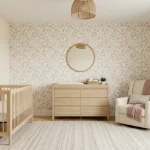
Start with off-white walls and a natural or medium-tone wood dresser.
Add a cream upholstered chair, woven baskets, and a simple landscape or animal illustration.
A muted plaid pattern can introduce a traditional farmhouse detail without overwhelming the room.
Avoid decorative wooden ladders, unsecured vintage crates, or heavy wall objects within a child’s reach.
If you like reclaimed materials, use them selectively and make sure they are suitable for a nursery environment.
The strength of farmhouse styling is its flexibility. You can change the artwork later while keeping the same furniture and neutral textiles.
11. Minimalist Scandinavian Nursery
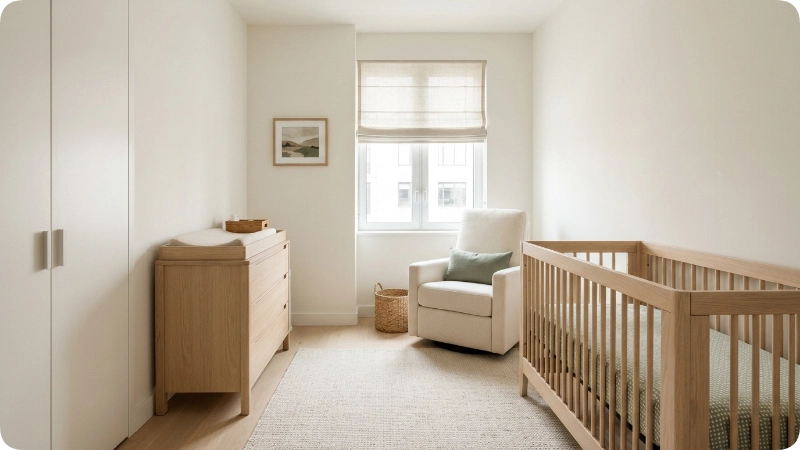
Scandinavian-inspired nurseries emphasize simple shapes, light wood, practical storage, and a restrained color palette.
This approach is particularly useful in small rooms where unnecessary furniture can quickly make the space feel crowded.
Choose warm white walls, pale wood furniture, and one or two muted accent colors.
A simple geometric print or abstract landscape can provide decoration without introducing a strong theme.
Prioritize closed storage to keep diapers, spare clothing, and other supplies out of sight.
Choose furniture with a clear purpose rather than filling empty corners with decorative pieces.
For example, a compact dresser that can accommodate a manufacturer-approved changing setup may be more useful than a separate changing table.
Design tip: Leave some walls undecorated. Empty space can make the nursery feel more spacious and helps the few chosen accessories stand out.
12. Colorful Rainbow Nursery With Muted Tones
A rainbow nursery offers a playful alternative to traditional blue or green designs.
Instead of using highly saturated rainbow colors, choose muted terracotta, mustard, sage, dusty blue, and cream.
A large painted rainbow on an accent wall can establish the theme.
Pair it with natural wood furniture and simple neutral textiles so the room does not feel overly colorful.
Another option is to use framed rainbow illustrations, which are easier to replace as your child’s interests change.
The theme works well in a nursery that receives plenty of daylight because the different colors remain visible without needing strong artificial lighting.
For a smaller room, choose a single rainbow illustration rather than repeating the pattern on walls, curtains, and rugs.
13. Sports-Inspired Nursery With Subtle Details
A sports-inspired nursery can reflect a family’s interests without making the room look like a themed merchandise display.
Choose one sport or a general athletic theme, then introduce it through a few decorative elements.
For example, a baseball-inspired room might feature cream walls, navy accents, and framed vintage-style baseball illustrations.
A basketball-inspired nursery could use warm wood, muted orange, and simple geometric artwork.
Keep the furniture neutral so the theme can change as your child grows.
Avoid displaying loose sports equipment, heavy memorabilia, or objects with cords near the crib.
A small collection of securely mounted artwork is usually more practical than filling shelves with decorative equipment.
14. Storybook Nursery With Gentle Illustrations
A storybook nursery uses illustrated landscapes, animals, and imaginative scenes to create a warm, playful setting.
Choose artwork that resembles watercolor paintings or traditional children’s book illustrations.
A pale green woodland scene, a soft blue sky, or a collection of illustrated animals can establish the mood.
For a cohesive appearance, select prints with similar colors and drawing styles.
Warm white walls and natural wood furniture provide a quiet background.
This approach is especially flexible because the artwork can change as your child develops new interests.
If you want to feature recognizable book characters, choose properly licensed decorations rather than reproducing copyrighted illustrations yourself.
15. Terracotta and Sage Nursery With Earthy Warmth
Terracotta and sage green make an appealing combination for parents who prefer warm, natural colors. The terracotta introduces warmth, whereas sage green provides a cooler contrast.
Use cream or warm white as the main background to prevent the colors from competing.
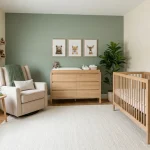
For example, choose warm white walls, a sage green accent wall, and terracotta details in framed artwork or a rug.
Natural oak furniture connects the two accent colors.
This palette works with botanical, woodland, desert, or minimalist nursery themes.
It also adapts easily to a toddler bedroom because the colors are not tied to a specific age or character.
How to Choose the Right Nursery Theme for Your Room
The best nursery theme depends on more than personal taste. Room size, natural light, existing furniture, and how long you want the design to last all affect the result.
Use this comparison to narrow your choices.
| Nursery theme | Overall feel | Best suited for | Ease of updating |
| Woodland | Natural and peaceful | Earthy, nature-inspired homes | Easy |
| Modern neutral | Calm and uncluttered | Small or shared rooms | Very easy |
| Safari | Playful and warm | Animal-themed spaces | Easy |
| Coastal | Light and airy | Bright rooms | Easy |
| Outer space | Imaginative and bold | Rooms with a feature wall | Moderate |
| Vintage adventure | Nostalgic and detailed | Traditional interiors | Easy |
| Dinosaur | Playful and earthy | Characterful rooms | Easy |
| Mountain | Scenic and understated | Rooms needing a focal wall | Moderate |
| Navy and white | Classic and structured | Well-lit rooms | Easy |
| Farmhouse | Warm and traditional | Rustic interiors | Very easy |
| Scandinavian | Simple and functional | Compact nurseries | Very easy |
| Muted rainbow | Colorful and cheerful | Neutral rooms needing color | Easy |
| Sports-inspired | Personal and classic | Family-interest themes | Easy |
| Storybook | Gentle and imaginative | Soft, illustrated interiors | Easy |
| Terracotta and sage | Warm and grounded | Modern earthy interiors | Very easy |
The ease-of-updating ratings are practical design judgments, not product performance measurements. A painted mural generally requires more effort to change than framed artwork.
If you are unsure which theme to choose, start with neutral furniture and one decorative focal point. This allows you to develop the room gradually.
Best Nursery Colors for Boys
Blue remains a familiar nursery choice, but it is far from the only option.
The right color depends on the mood you want and how the room receives light.
| Color | Effect | Works well with |
| Sage green | Gentle and natural | Cream, oak, beige |
| Dusty blue | Soft and airy | White, sand, pale wood |
| Navy | Deep and structured | White, tan, warm wood |
| Warm beige | Calm and flexible | Sage, terracotta, ivory |
| Olive green | Earthy and grounded | Cream, brown, muted orange |
| Terracotta | Warm and inviting | Sage, sand, oak |
| Muted mustard | Cheerful and warm | Gray, navy, cream |
| Warm white | Bright and adaptable | Almost any accent color |
Before committing to a wall color, test a sample in the room.
Look at it during the morning, afternoon, and evening. A muted green may appear gray in low light, while a warm beige can look more yellow under some lamps.
For a small nursery, light walls can help the room feel open, although deeper colors can also work when balanced with pale furniture and adequate lighting.
Avoid choosing paint solely from a digital photograph because screens cannot reliably show how the color will appear on your walls.
How to Arrange a Baby Boy Nursery for Everyday Use
A beautiful nursery is easier to enjoy when the furniture layout supports daily routines.
Start with the crib, then plan the changing area, feeding chair, and storage.
Position the crib carefully
Choose a location away from windows, accessible blind cords, heaters, and decorations that could fall or be pulled into the crib.
Avoid placing shelves, heavy artwork, or hanging decorative objects above the sleeping area.
Use a crib that meets applicable current safety requirements and follow the manufacturer’s assembly instructions.
Create a practical changing station
Keep diapers, wipes, and spare clothing organized near the changing area.
Use an appropriate changing surface according to the manufacturer’s instructions.
Never leave a baby unattended on an elevated changing surface, even for a moment.
Choose storage that allows you to reach supplies while keeping one hand available to steady your baby.
Make the feeding area comfortable
A supportive chair can make nighttime feeding and soothing more manageable.
Place a small stable table nearby for adult essentials, keeping drinks, cords, and other potentially hazardous items away from the baby.
Choose lighting that is gentle enough for nighttime care but bright enough for safe movement.
Plan storage around your routine
Store frequently used items where caregivers can access them easily.
Keep extra clothing and less frequently used supplies in drawers or closed cabinets.
Secure dressers and other tip-prone furniture to the wall using appropriate hardware.
As your baby becomes mobile, review what can be pulled, opened, climbed, or reached.
Small Nursery Ideas for Boys
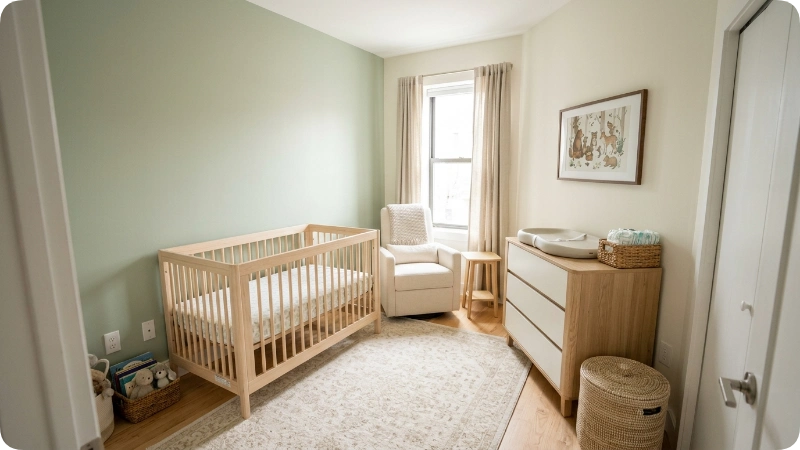
A compact nursery benefits from fewer furniture pieces, well-planned storage, and carefully chosen decorations.
The goal is not to make the room appear empty. It is to preserve enough space for safe movement and everyday care.
Choose furniture that serves more than one purpose
A compact dresser can provide clothing storage and, when appropriately designed and used, support a changing setup.
This may eliminate the need for a separate changing table.
Measure the room before buying furniture, including the clearance needed to open drawers and move comfortably.
Use vertical space carefully
Wall storage can be useful for items that caregivers need but children should not reach.
Install shelves with hardware suitable for the wall construction and expected load.
Keep shelves and their contents away from the crib and other places where falling objects could cause injury.
Keep the main colors simple
Warm white, cream, light sage, and dusty blue are useful choices for compact rooms.
A consistent palette can make different furniture pieces feel more coordinated.
Introduce stronger colors through a single artwork or small accent rather than covering every surface.
Choose one decorative feature
A medium-sized framed print, simple mural, or accent wall may be enough to establish the theme.
Too many small decorations can make a limited space feel crowded.
Budget-Friendly Nursery Ideas for Boys
You can create a coordinated nursery without purchasing matching furniture collections or custom decorations.
The key is to spend on essential, suitable furniture first and introduce the theme through less expensive, replaceable elements.
| Budget priority | What to focus on | Why it matters |
| Essential | Safe crib and appropriate mattress | Supports safe infant sleep |
| High | Practical storage and changing setup | Makes daily care easier |
| High | Comfortable caregiver seating | Supports feeding and soothing |
| Flexible | Paint or one decorative wall feature | Establishes the room’s style |
| Optional | Themed artwork and accessories | Adds personality |
Reuse furniture where appropriate
An existing dresser may work well in a nursery if it is stable, suitable for the intended use, and securely anchored.
Inspect secondhand furniture carefully for damage, recalls, missing parts, and suitability.
Do not assume that older cribs or other nursery products meet current safety requirements.
Choose inexpensive wall art
Simple framed illustrations can create a strong theme without requiring wallpaper.
For example, three coordinated woodland prints can give a neutral room a recognizable identity.
Choose secure mounting hardware and keep frames away from the crib.
Paint one wall instead of the whole room
An accent wall can create a focal point while using less paint and labor than a full-room makeover.
If you rent, confirm If painting is permitted before starting.
For older homes, avoid disturbing potentially lead-containing paint without appropriate precautions.
Buy fewer decorative accessories
A nursery does not need matching themed lamps, pillows, wall signs, and storage containers.
One focal feature and a few coordinated colors are usually enough.
Put the remaining budget toward practical items that support daily care.
Nursery Safety Mistakes to Avoid
Decorating decisions should never interfere with safe sleep or create unnecessary hazards.
The American Academy of Pediatrics recommends a firm, flat sleep surface with a fitted sheet and no loose bedding, pillows, stuffed toys, or similar soft objects in the infant sleep area.
The U.S. Consumer Product Safety Commission provides guidance on crib safety, furniture tip-over prevention, and window-covering hazards.
Keep these precautions in mind:
- Do not decorate the inside of the crib. Avoid pillows, bumpers, quilts, loose blankets, and stuffed animals.
- Keep cords inaccessible. Window blind cords, monitor cords, and electrical cables should be positioned where children cannot reach them.
- Secure tall furniture. Dressers, bookcases, and other tip-prone furniture need appropriate anti-tip protection.
- Avoid heavy objects above the crib. Artwork, shelves, mirrors, and suspended decorations can create falling-object hazards.
- Install wall decor properly. Follow manufacturer instructions for adhesives, anchors, mounting hardware, and load limits.
- Use suitable lighting. Keep lamps stable and electrical cords out of reach.
- Reassess the room as your child grows. A decoration that is inaccessible to a newborn may become reachable by a standing toddler.
Before purchasing or installing nursery products, verify current guidance from the AAP and CPSC and follow the applicable product instructions.
Frequently Asked Questions About Nursery Ideas for Boys
What is the easiest nursery theme to update as a boy grows?
A modern neutral, woodland, or adventure-inspired nursery is relatively easy to update when the theme is introduced mainly through framed artwork and replaceable accessories. Neutral furniture and practical storage can remain as your child’s interests change.
Can I create a boy’s nursery without using blue?
Yes. Sage green, warm beige, terracotta, cream, olive, and muted mustard are all suitable choices. The room’s overall balance matters more than following a traditional gender-based color scheme.
Should nursery furniture match?
No. Furniture does not need to come from the same collection. Pieces can look coordinated when they share similar wood tones, proportions, or finishes. Prioritize safety, function, and appropriate dimensions over an exact match.
When should I update nursery decorations?
Review decorations whenever your child’s mobility changes, especially as they begin rolling, sitting, pulling to stand, and climbing. Remove or relocate objects that become reachable or could be pulled down. Follow the manufacturer’s age and developmental limits for all nursery products.
Conclusion
The best nursery ideas for boys are the ones that fit your space, budget, and daily routine.
A woodland room with natural wood furniture, a bright coastal nursery, or a modern neutral design can all work beautifully when the layout is practical and the decorations are thoughtfully chosen.
Start with the essentials: a safe sleep space, accessible storage, and a comfortable area for feeding and care. Then choose one theme and introduce it through color, artwork, or a feature wall.
You can always add more personality later. A nursery that begins with a functional, flexible foundation will be easier to adapt as your child grows.

I am Emma Brooks, a passionate Interior Design Writer and Home Décor Enthusiast at Decoridia. I share well-researched content on home décor, interior design, DIY decorating ideas, furniture selection, color palettes, home organization, and seasonal styling, helping readers create beautiful, functional, and inspiring living spaces for every lifestyle.