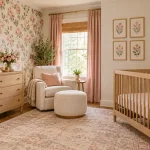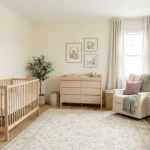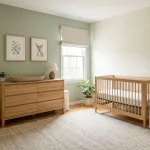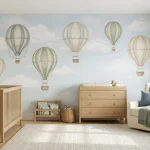
Quick answer:
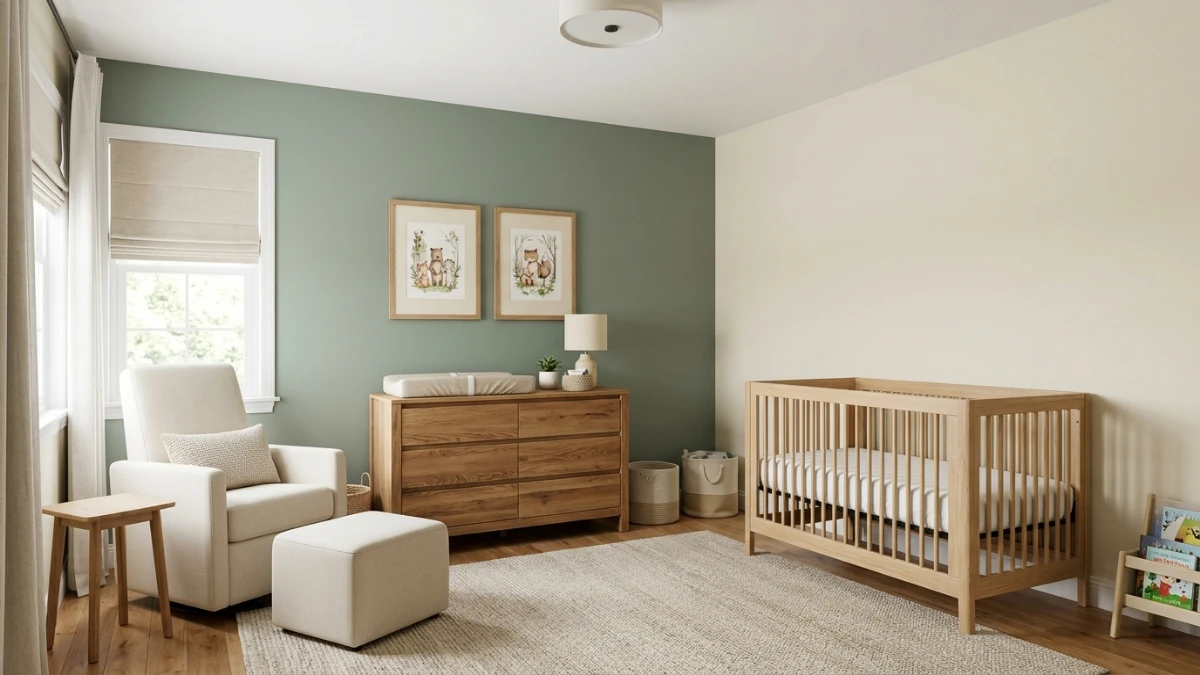
Quick Answer: The best baby boy nursery decor combines calming colors, charming wall art, cozy textures, and personal touches to create a beautiful, welcoming space. Try nature-inspired prints, a soft washable rug, warm lighting, or playful accents that complement your chosen theme. Keep decorations securely installed and away from the crib, and leave the baby’s sleep space free of pillows, toys, and loose bedding.
Decorating a baby boy’s nursery doesn’t mean covering every wall in blue or filling the room with matching accessories. Sometimes, the smallest details make the biggest difference.
A thoughtfully chosen print can bring personality to a plain wall, while a cozy rug can tie together furniture in different finishes. Even simple touches, like woven storage baskets or soft, layered textures, can make the room feel warmer and more inviting.
But how do you choose decorations that actually improve the space instead of making it feel crowded?
These 17 baby boy nursery decor ideas explore creative ways to add color, texture, charm, and personality without sacrificing practicality. Whether you’re working with a spacious nursery, a small bedroom, or a shared space, you’ll find achievable decorating inspiration that makes every detail count.
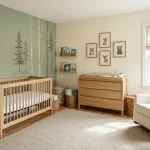
Create a Feature Wall With Paint
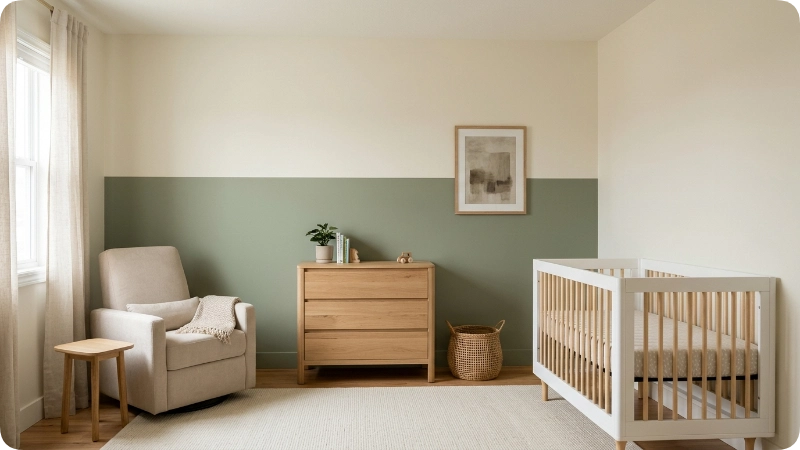
A painted feature wall is one of the simplest ways to give a nursery character without adding more furniture.
Choose the wall behind a dresser, feeding chair, or another area you want to highlight.
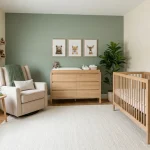
Muted sage green, dusty blue, warm beige, and soft terracotta can all create attractive backgrounds for nursery furniture.
For a modern look, paint one wall a deeper shade while keeping the others warm white. The contrast helps the furniture stand out and gives the room a clear focal point.
You can also try a two-tone wall, with a darker shade below and a lighter color above. This works particularly well in rooms with simple furniture.
Best for: Parents who want a noticeable design change without purchasing many accessories.
Practical tip: Test paint samples in daylight and under your nursery lighting. Follow manufacturer instructions for ventilation and drying, and check for lead-paint hazards before disturbing old paint in older homes.
Decorate With Framed Nursery Wall Art
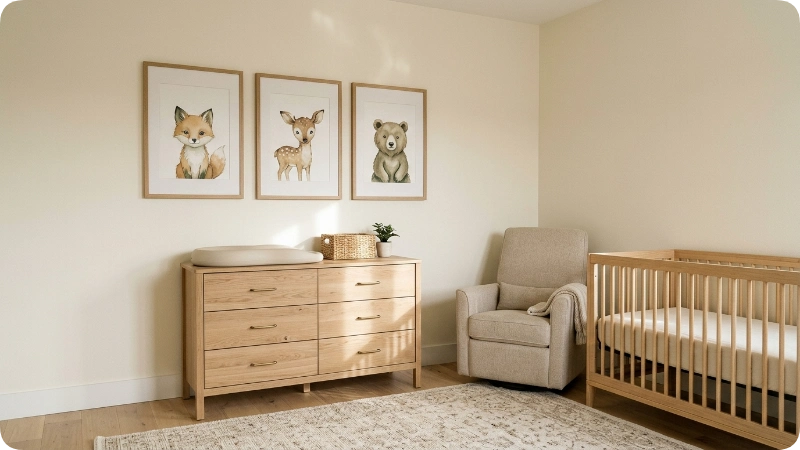
Framed artwork adds personality without requiring permanent decorative changes.
Choose illustrations that reflect your preferred style, such as woodland animals, mountains, ocean landscapes, dinosaurs, or abstract shapes.
For a coordinated look, use frames in the same wood finish or color.
A pair of medium-sized prints above a dresser can feel more balanced than several small pieces scattered across the room.
If you prefer a minimalist nursery, one larger framed illustration may be enough.
Best for: Renters and parents who want decorations they can easily replace as their child grows.
Practical tip: Hang artwork securely with hardware appropriate for the wall. Avoid placing frames, mirrors, or heavy decorations above the crib or where they could fall into the sleeping area.
Add Warmth With a Washable Nursery Rug
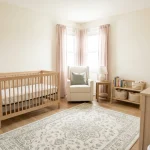
A rug can make a nursery feel more comfortable while visually connecting the furniture.
If the room has wood or tile flooring, a rug adds a softer surface underfoot.
Choose a low-pile or flatwoven design that is easier to clean and less likely to interfere with furniture movement.
For a neutral nursery, consider cream, beige, or a subtle geometric pattern.
If the walls and furniture are simple, a patterned rug can introduce color without overwhelming the room.
Best for: Nurseries with hard flooring or furniture that needs a visual connection.
Practical tip: Position the rug so its edges don’t create a trip hazard. Use an appropriate nonslip backing and check that chairs and other furniture remain stable.
Choose Curtains That Complement the Decor
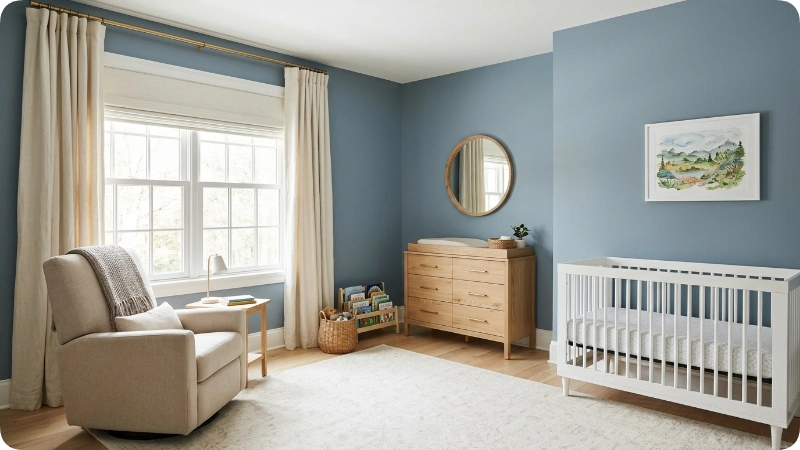
Window treatments can soften a room and help control daylight.
For a nursery with blue or green walls, warm white curtains create a gentle contrast.
If the walls are neutral, curtains in muted sage, dusty blue, or beige can introduce color.
Choose a simple fabric that complements the room rather than competing with the artwork or rug.
Light-filtering curtains can work well where privacy is needed without completely blocking daylight.
If you want greater light control, consider suitable blackout window treatments.
Best for: Rooms that receive strong sunlight or need additional privacy.
Safety consideration: Choose cordless window coverings and keep the crib and other climbable furniture away from windows and cords. Secure curtain hardware properly.
Use a Coordinated Color Palette
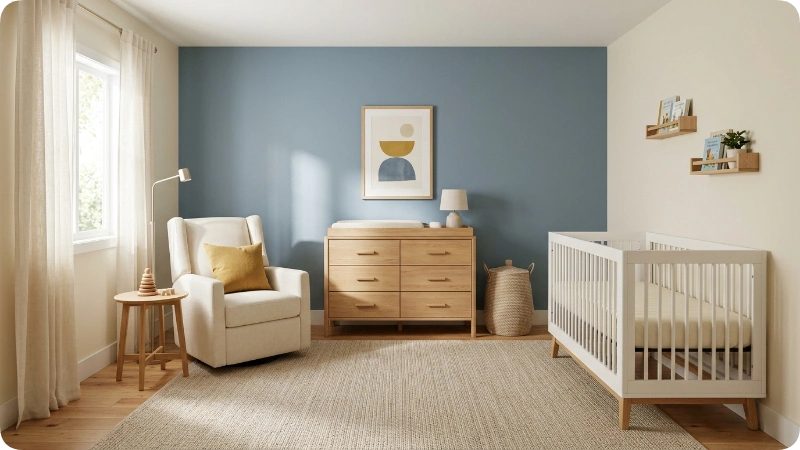
A nursery looks more intentional when the decorative elements share a limited range of colors.
You don’t need everything to match exactly.
Instead, choose one main color, one neutral, and one accent.
For example, sage green walls can work with natural wood furniture and cream textiles.
A dusty blue nursery might combine white furniture, warm beige, and a small amount of muted mustard.
The goal is to create a visual connection between the walls, rug, artwork, and furniture.
Best for: Parents who are decorating with furniture and accessories purchased at different times.
Practical tip: Start with the largest fixed elements flooring, walls, and furniture before choosing smaller decorations.
Add Personality With Personalized Name Art
Personalized artwork can make a nursery feel special without requiring a completely custom design.
A framed name print, illustrated initial, or simple birth announcement artwork can become a meaningful feature.
Choose typography and colors that coordinate with the room.
For a modern nursery, use a simple letterform in a natural wood frame.
For a traditional design, a watercolor name print may fit better.
Best for: Parents who want a personal touch without adding many accessories.
Practical tip: Display personalized artwork on a wall away from the crib. Avoid hanging wooden letters or heavy name signs above the sleeping area.
Introduce Natural Wood Accents
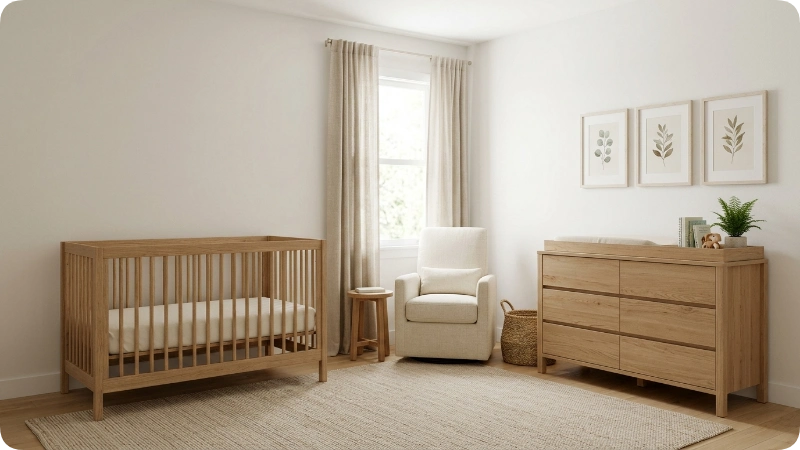
Natural wood adds warmth and texture to a nursery, especially when the walls are white, gray, or pale blue.
A light oak dresser, wood picture frames, or a simple wooden side table can soften a modern room.
You don’t need to purchase a matching furniture set.
Different wood finishes can work together when their undertones are similar.
For example, pale oak and warm birch often create a cohesive appearance, while mixing very orange wood with cool gray finishes may require more careful balancing.
Best for: Minimalist, Scandinavian, woodland, and neutral nurseries.
Practical tip: Keep large furniture stable and properly anchored. Avoid placing heavy decorative wood objects on shelves above the crib.
Use a Comfortable Nursing Chair as Part of the Design
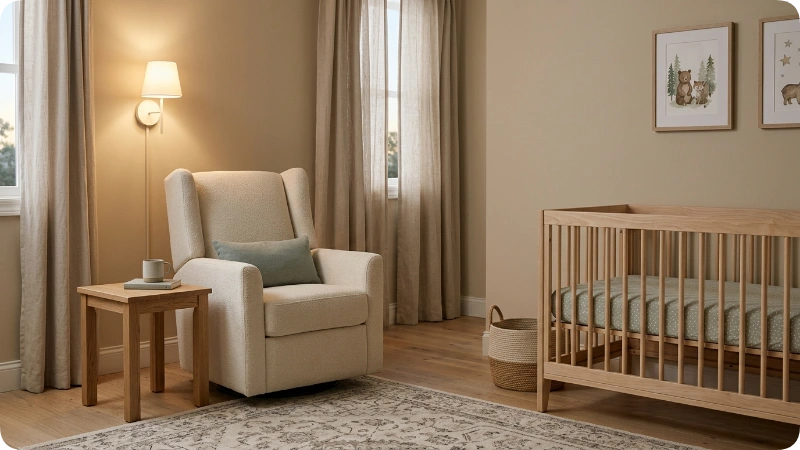
A nursing or feeding chair is primarily functional, but it can also help define the nursery’s style.
Choose upholstery that coordinates with the walls and rug.
Cream, beige, and warm gray are versatile choices because they work with many color palettes.
A chair with a supportive back and comfortable armrests can make feeding sessions easier for caregivers.
Consider the space required for reclining or rocking before purchasing.
Best for: Nurseries with enough room for dedicated feeding seating.
Practical tip: Measure the chair’s full movement range and keep cords, unstable tables, and other hazards away from the seating area. Avoid falling asleep while holding a baby in an armchair or sofa.
Add Decorative Storage Baskets
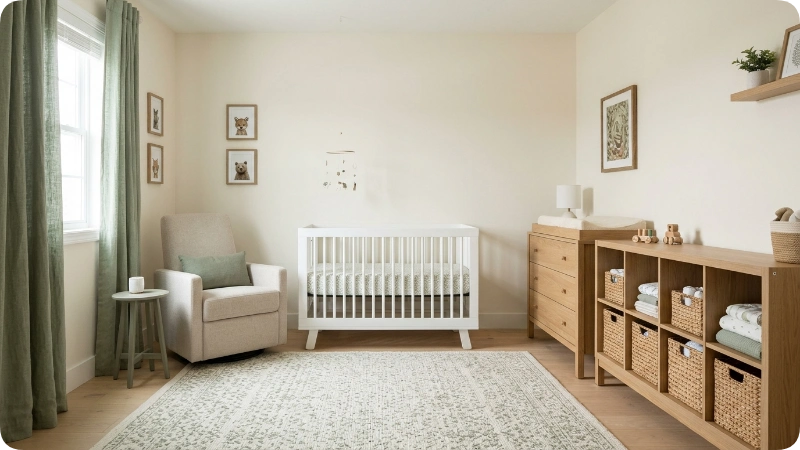
Storage baskets can keep nursery supplies organized while contributing texture to the room.
Choose sturdy baskets in neutral colors or woven-look materials.
Use them for spare blankets, clothing, or other supplies stored outside the baby’s reach.
Place baskets inside stable shelving units or on the floor in an area that doesn’t block walking paths.
For a cohesive appearance, choose baskets with similar materials or finishes.
Best for: Nurseries that need flexible storage without additional large furniture.
Practical tip: Avoid baskets with loose cords, long tassels, sharp edges, or small detachable decorations. Reassess their placement as your child becomes mobile.
Style a Nursery Dresser
A dresser can become an attractive part of the nursery without losing its practical purpose.
Start with a simple, sturdy dresser in white or natural wood.
Organize clothing and supplies inside the drawers, using dividers where helpful.
If the dresser has enough surface space, you can display one lightweight decorative object or a small framed print when it is securely positioned away from the baby’s reach.
For a more functional setup, use a compatible changing arrangement if the manufacturer permits it.
Best for: Parents who want furniture that combines storage and everyday care.
Safety consideration: Anchor the dresser according to its instructions. Never leave a baby unattended on a raised changing surface, and keep small or heavy objects away from the changing area.
Decorate With Subtle Wallpaper
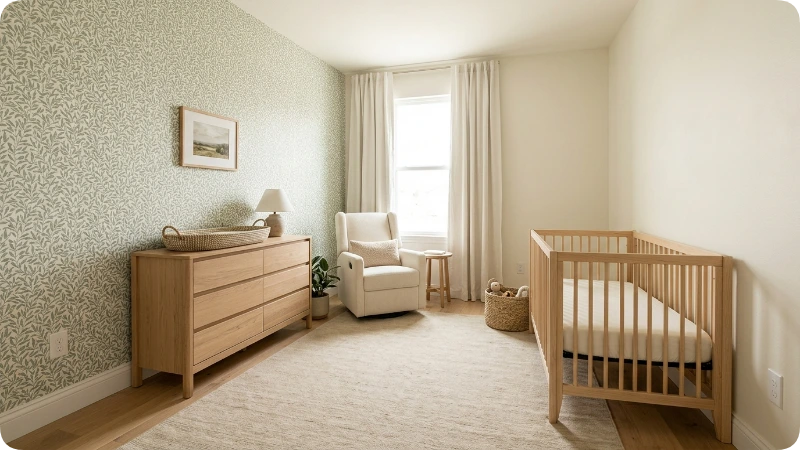
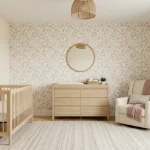
Wallpaper can introduce a nursery theme without requiring many additional accessories.
For a woodland room, choose a soft tree pattern.
For a coastal nursery, consider understated waves or small sailboat illustrations.
A modern nursery might use a simple geometric print in beige, sage, or dusty blue.
One accent wall is often enough, particularly when the pattern is detailed.
Place the wallpaper on a wall that won’t compete with several other decorative features.
Best for: Parents who want a strong decorative statement.
Practical tip: Check wallpaper compatibility with your wall finish. Renters should confirm lease restrictions, and all installations should follow product instructions. Avoid loose or peeling material in areas accessible to children.
Choose Soft, Practical Lighting
Lighting affects how comfortable the nursery feels during the day and how easy it is to use at night.
A ceiling fixture provides general light for cleaning and organizing.
A softer secondary light can help during nighttime feeding or diaper changes.
Choose fixtures with simple shapes and finishes that coordinate with the room.
For example, a warm white lamp can complement a neutral nursery, while a wood-accented fixture can support a nature-inspired design.
Best for: Every nursery, particularly rooms used for nighttime care.
Practical tip: Keep lamp cords secured and out of reach. Place lamps on stable surfaces, and use a qualified professional for electrical installation when needed.
Add a Gentle Pattern With Wall Trim
Wall trim can make a nursery feel more finished without relying on themed decorations.
Simple board-and-batten-style detailing, picture-frame molding, or a painted lower wall can introduce architectural interest.
For a traditional nursery, consider warm white trim with pale blue walls.
For a contemporary room, use the same color on the trim and wall to create subtle texture.
This approach works particularly well when the furniture and artwork are simple.
Best for: Homeowners who want a more permanent decorative feature.
Practical tip: Consider the wall construction and existing finishes before installation. Secure trim properly and take appropriate precautions when working around older paint or electrical wiring.
Create a Small Reading Corner
A reading corner can make the nursery feel more personal while creating a useful place for caregivers.
Place a comfortable chair near a securely anchored bookcase or storage unit.
Choose a small collection of books with colorful covers and organize them neatly.
You can add framed storybook-inspired artwork on a nearby wall.
The space doesn’t need to be large. Even one chair and a small amount of accessible adult-managed book storage can work.
Best for: Families who want the nursery to develop into a reading-friendly bedroom.
Practical tip: Keep books and shelving outside the crib area. As your child grows, check furniture anchoring and remove items that could be pulled down.
Decorate With a Neutral Theme
Not every nursery needs a strong animal, vehicle, or adventure theme.
A neutral nursery can use warm ivory, beige, taupe, and natural wood.
Introduce texture through a washable rug, upholstered chair, and framed abstract artwork.
Keep the furniture shapes simple and avoid unnecessary accessories.
This creates a flexible background for future changes.
Best for: Parents who prefer understated interiors or plan to reuse the furniture.
Practical tip: Combine several textures rather than several similar shades of beige. Wood grain, smooth painted surfaces, and upholstery help the room feel layered instead of flat.
Add a Meaningful Gallery Wall
A gallery wall can bring together personal photographs, illustrations, and decorative prints.
Choose a consistent frame finish or a coordinated color palette.
For example, a gallery wall might include a landscape print, a family photograph, and an illustrated animal.
Arrange the frames on the floor first to check the spacing before mounting them.
Keep the composition focused rather than covering an entire wall with unrelated pieces.
Best for: Parents who want a personal, collected appearance.
Practical tip: Use secure mounting hardware and choose a wall away from the crib and changing area. Avoid placing heavy frames where they could fall onto your baby.
Use Decorative Details That Can Grow With Your Child
The most useful nursery decorations are often the ones that can remain in the room as your child grows.
Choose framed artwork that can be replaced, a rug that works with different color schemes, and furniture with a simple finish.
Avoid investing heavily in accessories that only suit one short-lived nursery theme.
For example, a woodland nursery can later become an outdoor adventure bedroom by changing the animal illustrations to mountain landscapes.
A space-themed nursery can evolve through new artwork without requiring a new crib or dresser.
Best for: Parents who want a flexible room and fewer major decorating changes.
Practical tip: Keep the permanent features relatively neutral and use smaller, replaceable pieces for the most distinctive parts of the design.
How to Coordinate Baby Boy Nursery Decor
Decorating individual parts of a nursery is easier when you have a clear plan for how they will work together.
Start with the room’s existing features, especially flooring, natural light, and furniture.
Then choose a color palette and decide where the main decorative feature will go.
| Decor element | Main purpose | What to consider |
| Wall color | Establishes the room’s mood | Natural light and furniture finishes |
| Artwork | Adds personality | Scale, placement, secure mounting |
| Rug | Adds texture and visual connection | Washability, size, slip resistance |
| Curtains or shades | Controls daylight and privacy | Cord safety and installation |
| Lighting | Supports everyday care | Brightness, placement, cord safety |
| Storage baskets | Organizes supplies | Stability and accessibility |
| Furniture finishes | Creates visual consistency | Durability and flexibility |
| Personal accessories | Adds individual character | Safety and ease of replacement |
A useful approach is to let one element attract attention while the others support it.
When choosing patterned wallpaper, keep the rug simple. Colorful artwork pairs best with a quieter wall color, while furniture with a strong wood grain looks balanced alongside plain fabrics and understated accessories.
This creates a room that feels coordinated without requiring every piece to match.
Baby Boy Nursery Decor for Small Spaces
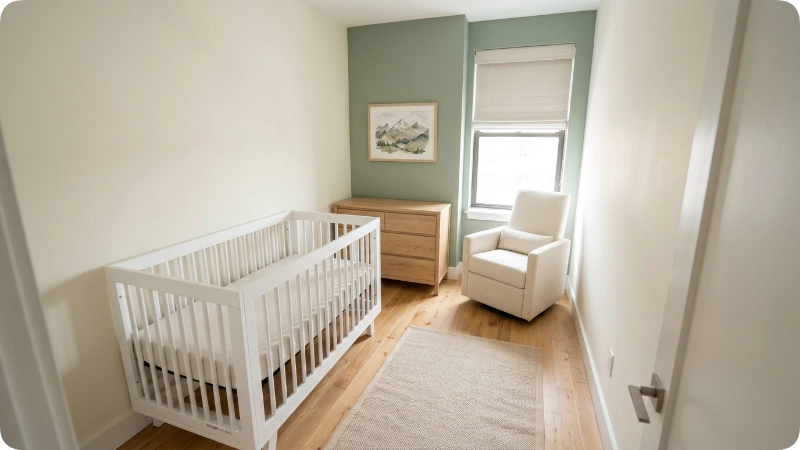
Small nurseries benefit from decorations that don’t take up valuable floor space.
Framed artwork, paint, and carefully chosen window treatments can add personality without requiring extra furniture.
Choose a crib and dresser that fits comfortably, leaving clear walking paths and enough room to open drawers.
Avoid filling narrow spaces with small tables, decorative stands, or unnecessary storage units.
Use the dresser for closed storage rather than adding multiple freestanding shelves.
A single washable rug can visually connect the main furniture pieces.
For wall decor, one large print may create a cleaner appearance than several smaller decorations.
Small-room decorating tip: Before purchasing furniture, mark its dimensions on the floor with painter’s tape. Include the space required for drawers, doors, and chair movement.
Budget-Friendly Baby Boy Nursery Decor
You can create a well-decorated nursery without buying an entire matching collection.
Start with the items that have the greatest effect on the room’s appearance.
Refresh the Walls
Paint can establish a color palette without requiring new furniture.
Choose a shade that complements your existing crib or dresser.
Use Affordable Framed Prints
Simple illustrations can introduce a theme without permanent changes.
Choose coordinated artwork rather than purchasing numerous unrelated accessories.
Reuse Suitable Furniture
An existing dresser may work well if it is sturdy, in good condition, and properly anchored.
Updating compatible hardware can help it coordinate with the room.
Decorate Gradually
Buy essential furniture first.
Once everything is arranged, decide If the room actually needs additional artwork, a rug, or decorative storage.
This prevents unnecessary purchases and reduces clutter.
Common Baby Boy Nursery Decorating Mistakes
A nursery can look attractive while still being difficult to use.
Avoid these common problems:
- Too many patterns: Busy wallpaper, patterned curtains, and a detailed rug can compete for attention.
- Oversized furniture: Large chairs and dressers can block walking paths in small rooms.
- Decorations above the crib: Heavy frames, shelves, mirrors, and hanging objects can create falling hazards.
- Decorative bedding: Pillows, blankets, stuffed animals, and bumper pads should not be placed in an infant’s sleep space.
- Unsecured storage: Dressers and bookcases can tip if not appropriately anchored.
- Poor lighting: A room may look attractive in daylight but be difficult to use during nighttime care.
- Too many accessories: Decorative objects can create clutter and become hazards as your child grows.
Choose fewer pieces that serve a clear purpose.
Nursery Decor Safety: What Parents Should Know
Decorating choices should always support a safe sleeping and living environment.
For infant sleep, the American Academy of Pediatrics recommends a firm, flat, non-inclined sleep surface with a properly fitted sheet and no loose bedding or soft objects.
Keep pillows, stuffed animals, decorative blankets, and crib bumpers out of the crib.
Avoid placing shelves, heavy artwork, mirrors, or hanging decorations above the sleeping area.
Secure dressers, bookcases, and other furniture that could tip.
Keep electrical cords and window-covering cords outside the baby’s reach.
Use appropriate hardware for wall-mounted decorations and follow the manufacturer’s instructions for furniture and nursery products.
As your baby grows and becomes mobile, reassess decorations and storage areas that may become accessible.
Before purchasing or installing nursery products, verify current guidance from the American Academy of Pediatrics and the U.S. Consumer Product Safety Commission.
Frequently Asked Questions About Baby Boy Nursery Decor
What colors work best for baby boy nursery decor?
Dusty blue, sage green, warm beige, cream, terracotta, and muted gray can all work well. The best choice depends on your room’s lighting, flooring, and furniture finishes rather than the baby’s gender.
How can I decorate a baby boy nursery without using blue?
Choose a neutral foundation of ivory, beige, or warm white, then introduce sage green, terracotta, mustard, or natural wood accents. Botanical prints and abstract artwork can add personality without relying on traditional blue decor.
What nursery decorations are easiest to change later?
Framed prints, rugs, and other removable accessories are generally easier to update than permanent murals or built-in decorative features. Choose neutral furniture if you want flexibility.
How can I make a baby boy nursery feel cozy?
Use warm lighting, natural wood, comfortable adult seating, and a washable rug. A restrained palette and a few contrasting textures can create a welcoming atmosphere without adding clutter or unsafe crib accessories.
Should nursery decor match the crib and dresser?
No. Furniture doesn’t need to match exactly. Coordinating colors, wood undertones, and decorative materials can create a cohesive appearance even when the pieces come from different collections.
Final Thoughts
Baby boy nursery decor works best when it balances appearance with everyday usefulness.
You don’t need to fill every wall or purchase matching accessories to create a welcoming room.
Start with furniture that fits the space, choose a simple color palette, and add one or two decorative features that reflect your style.
A washable rug, thoughtfully placed artwork, practical storage, and comfortable lighting can make a meaningful difference.
The result should be a nursery that’s pleasant to spend time in, easy to maintain, and flexible enough to change as your child grows.

I am Emma Brooks, a passionate Interior Design Writer and Home Décor Enthusiast at Decoridia. I share well-researched content on home décor, interior design, DIY decorating ideas, furniture selection, color palettes, home organization, and seasonal styling, helping readers create beautiful, functional, and inspiring living spaces for every lifestyle.